


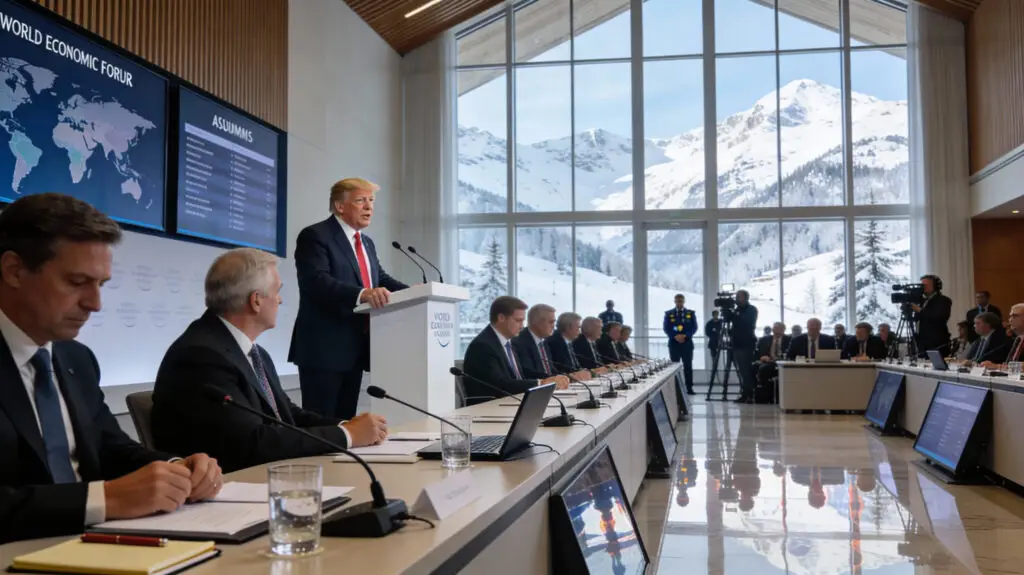
Global Market Hook: A Turning Point for the World Order
In our analysis of the current geopolitical landscape, the 2026 meeting of the World Economic Forum in Davos signals more than a routine gathering—it marks a potential inflection point in global power dynamics.
The return of Donald Trump to the summit comes amid rising tensions over trade, security alliances, and geopolitical strategy.
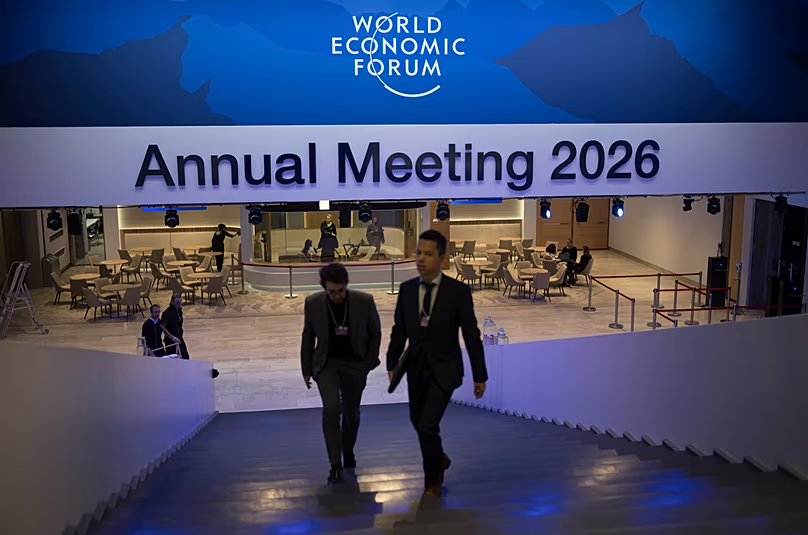
Source: Euronews.com
Why This Year’s Davos Is Different
Unlike previous years, this summit unfolds against a backdrop of structural uncertainty.
Key pressures include:
- Strained US-Europe relations
- Ongoing war involving Ukraine
- Rising protectionism and tariff threats
- Shifts in global security architecture
In our evaluation, Davos 2026 is less about coordination and more about confrontation and recalibration.
Trump’s Agenda: Domestic Focus, Global Impact
Trump’s keynote is expected to emphasize domestic economic priorities while reshaping global expectations.
Core themes:
- Reducing housing and affordability pressures in the US
- Promoting US economic dominance
- Challenging Europe’s economic model
This dual strategy reflects a broader shift—using domestic policy as leverage in international negotiations.
Europe’s Strategic Dilemma
European leaders are facing one of their most complex strategic moments in decades.
Concerns center on:
- US pressure over Greenland
- Potential tariffs targeting NATO allies
- Erosion of transatlantic trust
Countries including Denmark, France, and Germany have warned of a “dangerous downward spiral,” highlighting the fragility of long-standing alliances.
Ukraine, Russia, and the Search for a Deal
The war involving Ukraine remains central to discussions.
Volodymyr Zelenskyy is expected to seek security guarantees, with speculation of a potential agreement involving the US.
In our analysis, any breakthrough would likely redefine the geopolitical balance across Europe.
New Power Structures: The “Board of Peace”
One of the most controversial proposals is Trump’s “Board of Peace” initiative.
Key features include:
- $1 billion contribution for permanent membership
- Focus on rebuilding conflict zones like Gaza
- Participation invitations to multiple global leaders
Critics argue this could function as an alternative to the United Nations, raising concerns about centralized influence.
Expanding Geopolitical Flashpoints
Beyond Europe, multiple global tensions are converging at Davos:
- US military actions in Venezuela
- Potential negotiations involving Iran
- Arctic tensions over Greenland
These overlapping issues reinforce the idea that global stability is increasingly interconnected.
Davos as a Strategic Crossroads
Davos 2026 is shaping up as more than a policy forum—it is a stage where competing visions of global leadership are being tested.
In our evaluation, the outcome will not be defined by speeches alone, but by whether global powers can navigate rising tensions without fragmenting the existing international system.