



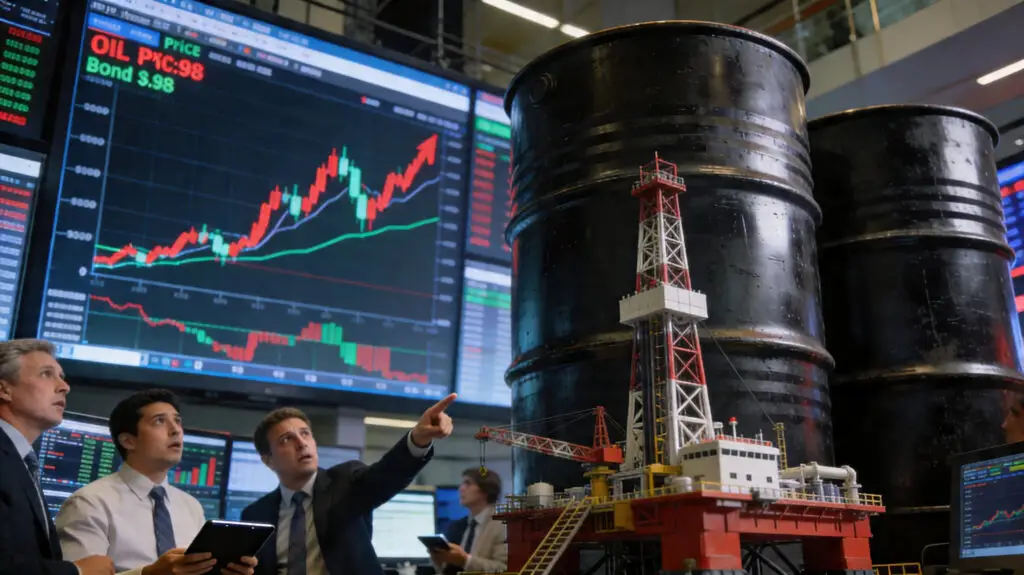
Global Markets Hook Conflict Sparks Economic Repricing
Written by a macroeconomic strategist specializing in global markets, energy shocks, and monetary policy transmission, this analysis evaluates how geopolitical escalation is reshaping financial conditions.
In our analysis of the global financial landscape, conflict involving Iran is forcing investors to rapidly reassess inflation risk, growth outlook, and asset pricing across markets.
The reaction highlights how geopolitical shocks propagate through energy, bonds, currencies, and credit simultaneously.
Oil Prices Surge Amid Supply Disruption
Energy markets reacted immediately to escalation risks.
Key developments include:
- Oil prices spiking toward $119 per barrel
- Brent crude stabilizing near $108
- Attacks targeting critical energy infrastructure
In our evaluation, supply disruption risk—not actual shortages yet—is driving volatility.
Broad Market Selloff Signals Rising Concern
The shock extended beyond energy into global risk assets.
Key movements include:
- Declines across global equity indices
- Sharp selloff in government bonds
- Weakness in traditional safe havens like gold during liquidity stress
This pattern reflects simultaneous concern over inflation and economic slowdown.
Central Banks Shift Toward Hawkish Outlook
Monetary policy expectations are being repriced.
Key shifts include:
- Reduced expectations for rate cuts from the Federal Reserve
- Rising expectations of tightening from the European Central Bank
- Markets pricing higher-for-longer interest rates
Energy-driven inflation is constraining central bank flexibility.
Bond Yields Spike Across Major Economies
Fixed-income markets experienced significant volatility.
Key data points include:
- UK short-term yields jumping sharply
- US and European yields rising before partial stabilization
- One of the largest bond moves since recent macro shocks
In our analysis, higher yields signal tightening global financial conditions.
Global Market Reaction Across Asset Classes
Cross-Asset Impact of Iran Conflict Shock
| Asset Class | Direction | Key Driver | Market Signal |
|---|---|---|---|
| Oil (Brent) | ↑ Sharp spike | Supply disruption fears | Inflation risk rising |
| Global Equities | ↓ Decline | Growth + rate concerns | Risk-off sentiment |
| Government Bonds | ↓ (prices) / ↑ (yields) | Hawkish repricing | Tightening conditions |
| Gold | Mixed / ↓ initially | Liquidity selling | Short-term stress |
| US Dollar | ↓ vs peers | Rate divergence expectations | Policy shift signal |
| Credit Markets | ↑ spreads | Default risk concerns | Financial stress building |
This table shows how a single geopolitical shock cascades across multiple financial systems.
Currency Markets Reflect Shifting Expectations
Foreign exchange markets are adjusting rapidly.
Key movements include:
- Weakening of the US dollar
- Strengthening of the Japanese yen and euro
- Divergence driven by central bank expectations
This indicates shifting capital flows and macro positioning.
Energy Shock Raises Inflation Risks
The most immediate macro effect is inflation pressure.
Key factors include:
- Higher oil prices feeding into transport and production costs
- Risk of prolonged disruption to supply chains
- Historical parallels with past oil shocks
In our evaluation, sustained energy inflation could delay global disinflation trends.
Markets May Be Underestimating Risk
Despite volatility, some analysts see complacency.
Key concerns include:
- Equity declines still relatively limited
- Risk of supply shock evolving into demand destruction
- Potential for deeper correction if conflict escalates
Markets may not yet fully price worst-case scenarios.
Credit Markets Show Signs of Stress
Early signs of financial tightening are emerging.
Key indicators include:
- Widening credit spreads
- Weakness in high-yield bonds
- Rising cost of insuring against default
This suggests stress is spreading beyond equities into funding markets.
Impact on Households and Borrowing Costs
The effects are beginning to reach consumers.
Key implications include:
- Rising mortgage and loan rates
- Higher borrowing costs across economies
- Potential slowdown in consumption
In our analysis, these transmission effects could dampen economic growth.
Outlook Markets Enter Uncertain Phase
Market direction now depends heavily on geopolitical developments.
Short-term volatility is likely to persist, particularly if energy infrastructure remains under threat.
Geopolitics Driving Financial Markets
The escalation involving Iran reinforces a key structural shift.
From a macro perspective, geopolitical risk is once again a dominant force shaping global markets.
Until there is clarity on conflict duration and energy supply stability, markets will remain highly sensitive to geopolitical developments, with oil prices and central bank reactions driving the next phase of financial conditions.
This analysis is provided for informational purposes only and does not constitute financial or investment advice.