



A Real-World Analysis of the US-Imposed Peace Timeline
Written by a geopolitical risk analyst specializing in conflict diplomacy, international negotiations, and security policy, this analysis examines the implications of a proposed U.S.-driven timeline for ending the war between Ukraine and Russia.
The United States is no longer positioned solely as a mediator—it is increasingly applying structured pressure to accelerate movement in prolonged negotiations.
In our analysis of conflict diplomacy, the introduction of deadlines signals a shift from passive facilitation toward more active, outcome-driven engagement.
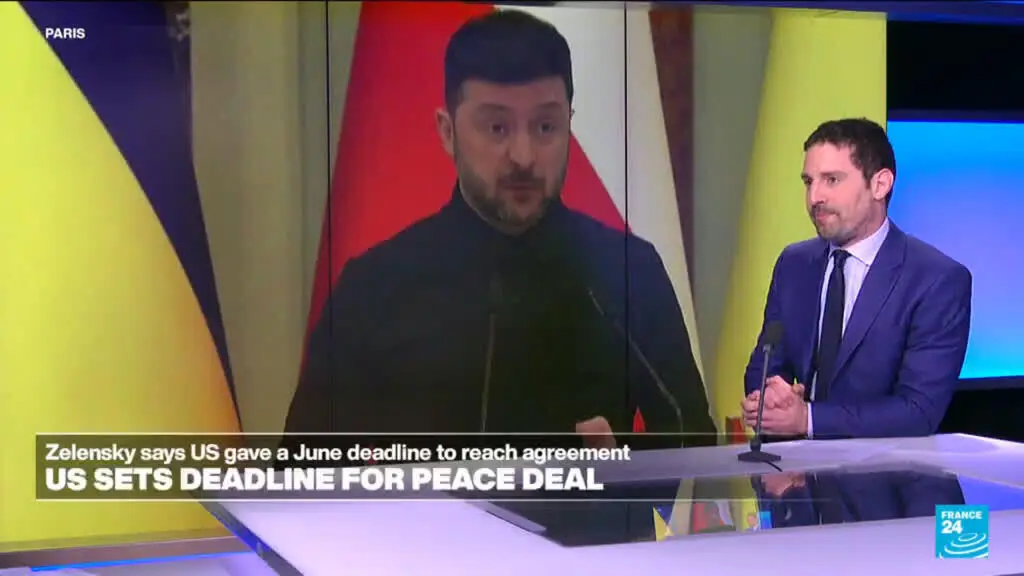
Source: France24/Website
What Did the US Propose for Ukraine and Russia?
According to Volodymyr Zelensky, the United States has pushed for a defined timeline aimed at advancing peace negotiations.
The proposal includes:
- A target timeframe to accelerate progress toward a potential agreement
- Continued negotiations involving Ukraine and Russia
- Potential escalation of diplomatic pressure if talks fail to advance
This approach introduces structure into what has largely been an open-ended negotiation process.
Why Is the Deadline Significant?
Deadlines are commonly used in diplomacy to force clarity and accelerate stalled negotiations.
In our evaluation, limited progress in prior rounds of talks has prompted a more assertive U.S. posture.
Key implications include:
- Encouraging both sides to clarify negotiating positions
- Reducing prolonged and inconclusive dialogue cycles
- Increasing urgency for potential compromise
However, deadlines can also entrench positions if parties perceive pressure as unfavorable.
What Are the Main Obstacles to a Peace Deal?
Core issues remain unresolved and highly contentious.
In our analysis, disagreements over territory, sovereignty, and long-term security arrangements continue to block progress.
Key sticking points include:
- Control over disputed regions such as Donbas
- Recognition of sovereignty and territorial integrity
- Security guarantees for both parties
These are structural disputes that are not easily resolved within fixed timelines.
Ukraine Peace Negotiation Timeline and Key Risks
| Factor | Current Status | Risk Level |
|---|---|---|
| Negotiations | Ongoing, limited progress | High |
| Territorial Dispute | Unresolved | Very High |
| US Pressure | Increasing | Moderate |
| Diplomatic Outcome | Uncertain | High |
How Is the US Applying Pressure?
The approach reflects a more intervention-oriented diplomatic strategy.
Under the administration of Donald Trump, the United States appears willing to use leverage to push negotiations forward.
Possible pressure mechanisms include:
- Diplomatic influence in shaping negotiation positions
- Conditional support tied to progress in talks
- Coordination with allies to reinforce negotiation incentives
This indicates a shift toward results-focused diplomacy.
Why Previous Talks Have Failed
Recent negotiation efforts have not produced a breakthrough.
In our analysis, both sides remain committed to positions that are fundamentally difficult to reconcile.
Key reasons include:
- Mutually exclusive territorial and political demands
- Limited trust between negotiating parties
- Ongoing strategic and military considerations
Without compromise, deadlines alone may not alter outcomes.
What Happens If the Deadline Is Missed?
Failure to meet a proposed timeline could increase diplomatic and geopolitical pressure.
In our evaluation, missed deadlines often lead to escalation in engagement rather than resolution.
Potential consequences include:
- Intensified diplomatic intervention from major powers
- Adjustments in U.S. support strategy
- Continued or prolonged conflict with rising costs
The outcome depends on how strongly external actors enforce the timeline.
Why This Reflects a Broader US Foreign Policy Shift
The use of deadlines reflects a broader shift toward more structured and time-bound diplomatic strategies.
In our analysis, U.S. foreign policy is increasingly emphasizing measurable outcomes over open-ended commitments.
Key trends include:
- Greater reliance on deadlines in negotiations
- Focus on accelerating conflict resolution timelines
- Reduced tolerance for prolonged engagements without progress
This approach introduces both efficiency and strategic risk.
What Should Observers Watch Next?
Upcoming negotiation developments will be critical in determining whether progress is achievable.
In our evaluation, early signs of compromise will indicate whether a meaningful agreement is possible.
Key indicators include:
- Shifts in negotiation positions from either side
- Willingness to compromise on key issues
- Level of U.S. and allied involvement in talks
These factors will shape the trajectory of the conflict.
Pressure Without Guarantees
The introduction of a U.S.-driven timeline adds urgency but does not resolve the underlying causes of the conflict.
From a geopolitical perspective, success depends on whether external pressure can overcome entrenched positions.
The key takeaway is clear:
Deadlines can accelerate negotiations, but without substantive compromise, they risk becoming markers of continued stalemate rather than resolution.
This analysis is provided for informational purposes only and does not constitute political or strategic advice.