Strategic Timing Behind Renewed US Pressure On Caracas
As the US’s geopolitical, economic, and electoral interests quickly came together, they stepped up their actions against Venezuela. This escalation is not a sudden change in long-standing tensions between the two countries; it is a planned move. Old grievances are now mixed up with modern competition over resources, alliances, and regional power.
Military pressure, diplomatic isolation, and economic measures all show that the U.S. wants to change Venezuela’s political path in a big way. These actions are part of the US’s larger efforts to regain power in Latin America as other powers gain ground. Washington seems determined to take advantage of Venezuela’s internal problems.
Source: Aljazeera
Vast Oil Reserves Anchor Venezuela’s Global Strategic Value
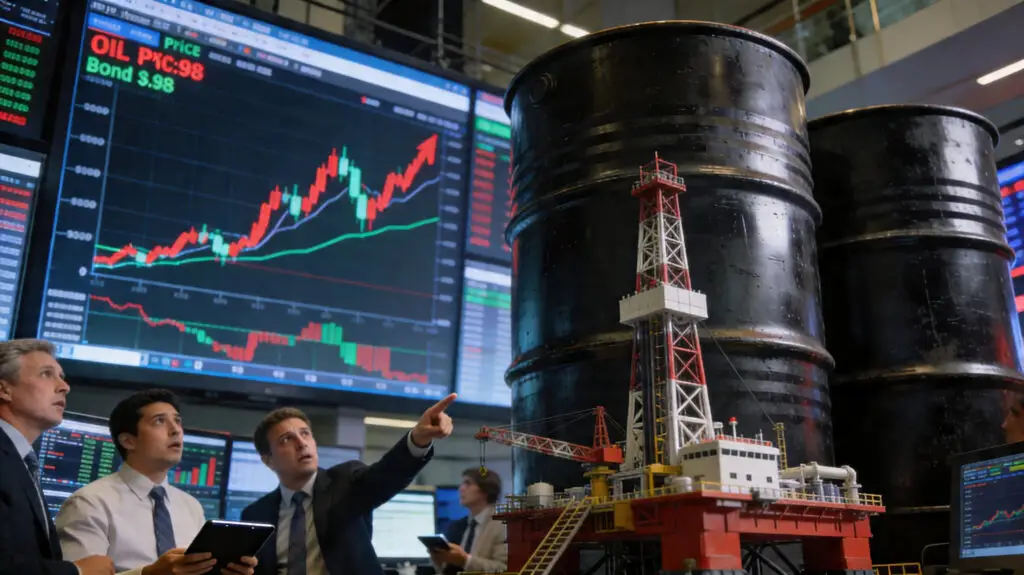
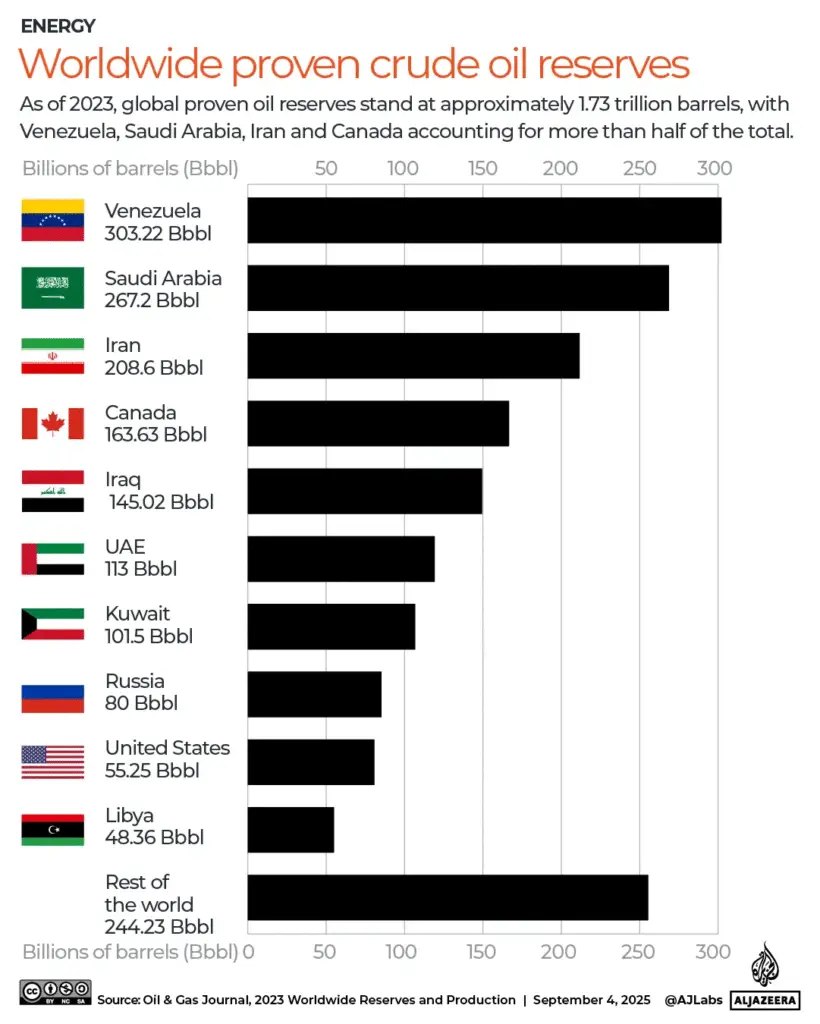
Venezuela has the world’s largest proven oil reserves, which means it has a lot of long-term energy potential. Even though production has dropped, these reserves are still very important for global energy security calculations. Having control over these kinds of resources affects the power of prices in the market and in geopolitics.
But a lot of Venezuela’s crude is heavy, which means it needs expensive refining and special infrastructure. Low oil prices around the world and old facilities make it hard to make money right away, which keeps private investors from putting money into the business. Strategic planners still put long-term access to resources ahead of short-term gains, though.
Critical Minerals Intensify Competition With China
Venezuela has more than just oil; it also has large deposits of gold, rare earth elements, and strategic minerals. These materials are the building blocks of advanced manufacturing, defense systems, and new technologies that are important for national security. China’s dominance in mineral processing makes it even more important for the US to find other ways to get the minerals it needs.
Washington sees less reliance on resources controlled by China as a strategic must. Because of its mineral wealth, Venezuela is even more important in the larger technological and military competition. Access to resources is becoming a bigger part of power struggles in the twenty-first century.
Recommended Article: Palestine Advocates Praise Mamdani First-Day Policy Shift
Domestic US Politics Shape Foreign Policy Calculations
Targeting Venezuela also has an effect on US elections, especially on Hispanic voter groups. Changes in policy have an effect on Venezuelan, Nicaraguan, and Cuban communities that have a lot of power in key states’ elections. Stories about regime change promise to get back the support of people who have lost faith in the government because of policies that make it harder for people to move.
Political symbolism is important, just like material interests that show strength against socialist governments in other countries. Reasserting hemispheric leadership appeals to core constituencies that value national strength and ideological clarity. Foreign policy is now linked to managing coalitions at home.
Bringing Back The Ideas Behind The Monroe Doctrine In A New Way
The US’s actions are similar to a new reading of the Monroe Doctrine, which says that the US has exclusive control over the Americas. This approach sends warnings to outside powers that are growing their military, political, and financial presence in the region. This strategic messaging heavily features China and Russia.
Today’s doctrine is different from those of the past because it combines economic pressure, information dominance, and selective military force. The goal is still to stop rival groups from coming together near US borders in today’s global climate. Venezuela becomes a key part of this strong strategy for the whole hemisphere.
Oil Mismanagement Explains Venezuela’s Economic Collapse
Venezuela is very poor compared to how rich it is in resources because of decades of bad management. State control grew stronger, but there was no investment in technology or institutional accountability. Extraction was all about making as much money as possible, but it didn’t care about reinvesting or making operations more efficient.
The removal of skilled workers further hurt production capacity, speeding up the decline before the most recent sanctions. The collapse hurt the credibility of public services and the government as a whole. Rebuilding institutions of expertise and investor confidence is necessary for long-term recovery.
Uncertain Future After Regime Change And Intervention
After the intervention, Venezuela faces huge problems in restoring political legitimacy, economic functionality, and social cohesion. Institutional decay infiltrates military bureaucracy, business networks, and local governance frameworks. Resistance from armed groups and divided elites makes it harder to stabilize the situation.
Regional spillovers, such as refugee flows, security threats, and economic disruptions, will continue to affect neighboring countries. People are still unsure if outside pressure can lead to long-lasting change or make things worse. Venezuela’s path will affect the strategic landscape of Latin America for decades to come.