


President Signals Critical Deadline As Negotiations Enter Tense Period
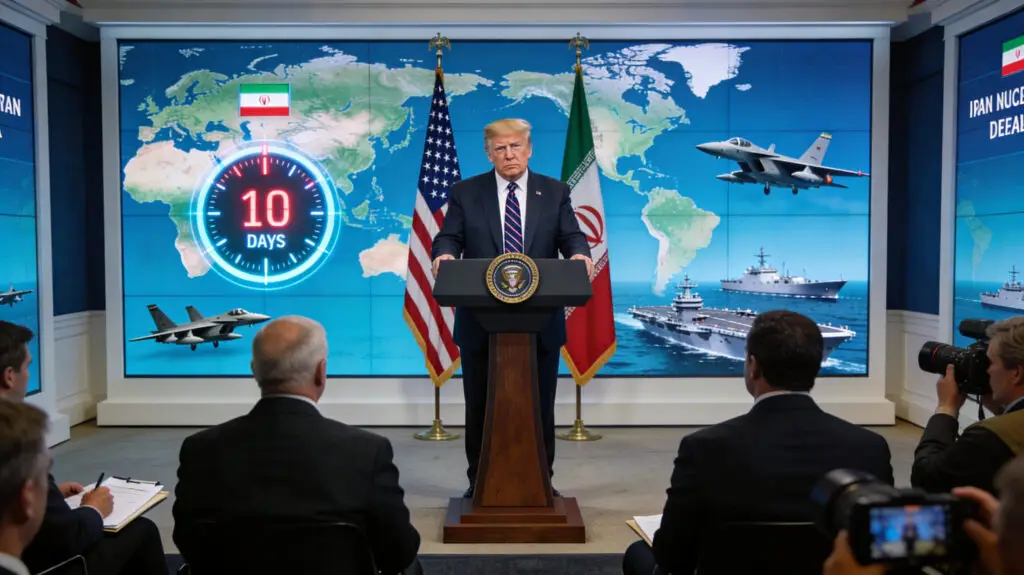
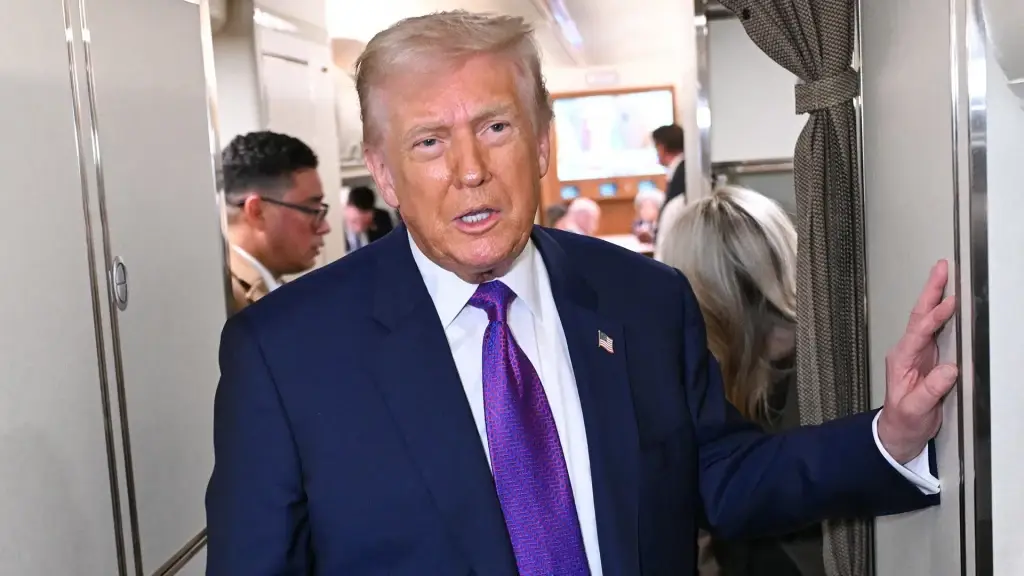
President Donald Trump of the United States said that the world will know in 10 days if talks with Iran are successful. He said that without a real agreement, “bad things” could happen that he did not want to name. His comments show that there is more and more doubt about nuclear talks and tensions in the region are rising.
During the first meeting of his Board of Peace in Washington, Trump spoke. He said that talks with Iranian officials have been hard in the past but have been going well lately. People who watch the administration’s messages say they show both urgency and strategic pressure.
Source: Today.com
US Deploys Military Assets While Diplomatic Talks Continue In Switzerland
The US has sent more troops to the Middle East in the last few days. More planes and ships, including a big carrier group, have moved toward the area. These changes come after reports of progress in talks between American and Iranian teams in Switzerland.
Iran has said that US bases used in any attack would be fair game. Tehran sent a letter to António Guterres, the Secretary General of the United Nations, saying they were worried about the rising level of rhetoric. Iranian officials say they do not want a full-blown war, even though they have been warned.
Domestic Political Opposition Grows Against Potential Military Action
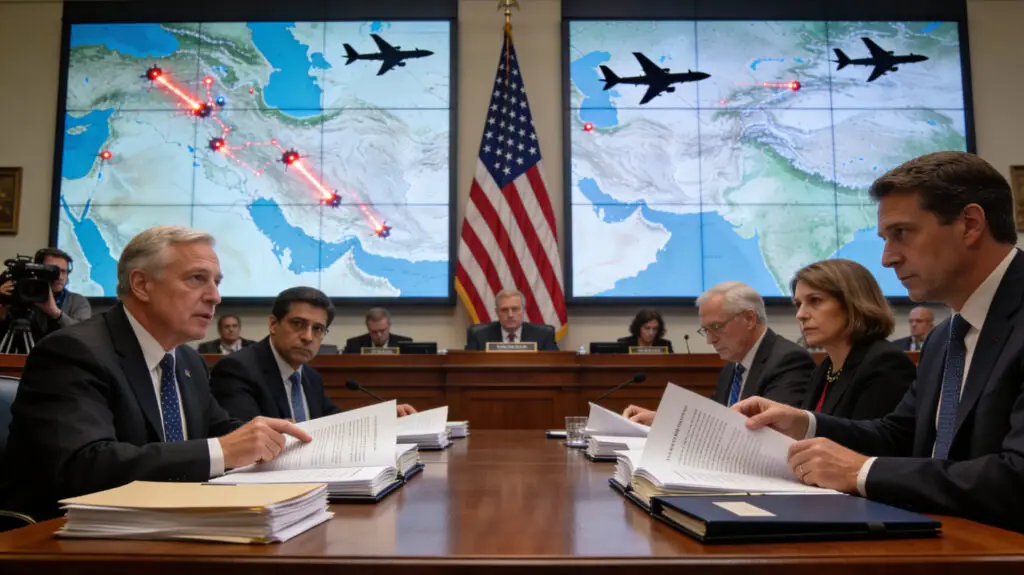
Some Democratic lawmakers and some Republicans spoke out against military action without the approval of Congress. They say that starting a war needs permission from the legislature according to constitutional and statutory rules. Critics say that taking action on your own could upset the balance of power in the region and lead to a wider conflict.
Trump says that diplomacy is still the best way to go. But he says that the US needs to either get a real deal or take strong action. Some analysts think that congressional opposition could make operational planning more difficult.
Recommended Article: Trump And Netanyahu Push Full-Force Pressure On Iran Strategy
Special Envoys Report Progress But Acknowledge Historic Challenges
Trump talked about how Special Envoys Steve Witkoff and Jared Kushner had recently met with Iranian officials. He said that those talks went well, but he also admitted that it has always been hard to reach an agreement with Iran. Previous attempts by different administrations have met with deep distrust and geopolitical tension.
People thought that the Board of Peace would mostly deal with the fight between Israel and Hamas. Its mission now seems to include more diplomatic issues, such as Iran’s nuclear program. Some people wonder if the board is an informal alternative to established international organizations.
Iran Reinforces Military Facilities As Tensions Rise Across Region
Satellite pictures show that Iran has strengthened many important military bases. These actions come after the US hit 3 nuclear-related sites last year. Ayatollah Ali Khamenei, the Supreme Leader of Iran, has made strong public threats about American military movements.
In one message, he said that weapons that can sink US warships are more dangerous than the ships themselves. These kinds of statements show how nationalistic language gets stronger when there is outside pressure. Regional observers are worried that a mistake could cause things to get worse very quickly.
US Allies Consider Limitations Amid Strategic Uncertainty And Risk
The British government has not given the US permission to use UK bases for possible strikes. In the past, the US used RAF Fairford and Diego Garcia for operations in the Middle East. The current hesitation shows that people are worried about legal limits and strategic effects.
Still, American troops are still growing their presence in the area. Officials say that these deployments are meant to stop threats and help diplomacy. Allies still cannot agree on the best way to respond to changing political situations.
Congress Weighs War Powers Debate As Lawmakers Push For Constraints
A few members of Congress want to use the War Powers Act of 1973 to force a vote. Ro Khanna, a Democrat from California, and Thomas Massie, a Republican from Kentucky, say that military action needs clear approval. They say that fighting Iran would be terrible because of the size of the country and its ability to defend itself.
Khanna stressed that the presence of 90 million civilians and a strong military infrastructure makes any possible operation more difficult. He also said that thousands of American troops could be attacked in nearby areas. Similar resolutions have failed in the past, such as those about Venezuela earlier this year.