


A Real-World Analysis of the Panama Canal Dispute
Written by a geopolitical risk analyst specializing in global trade routes, infrastructure strategy, and great-power competition, this analysis examines how recent developments around Panama Canal port operations are intensifying U.S.-China tensions.
Control over the Panama Canal is no longer purely logistical—it represents strategic geopolitical leverage.
In our analysis of global trade chokepoints, infrastructure assets such as ports and canals are increasingly becoming focal points of competition between major powers.
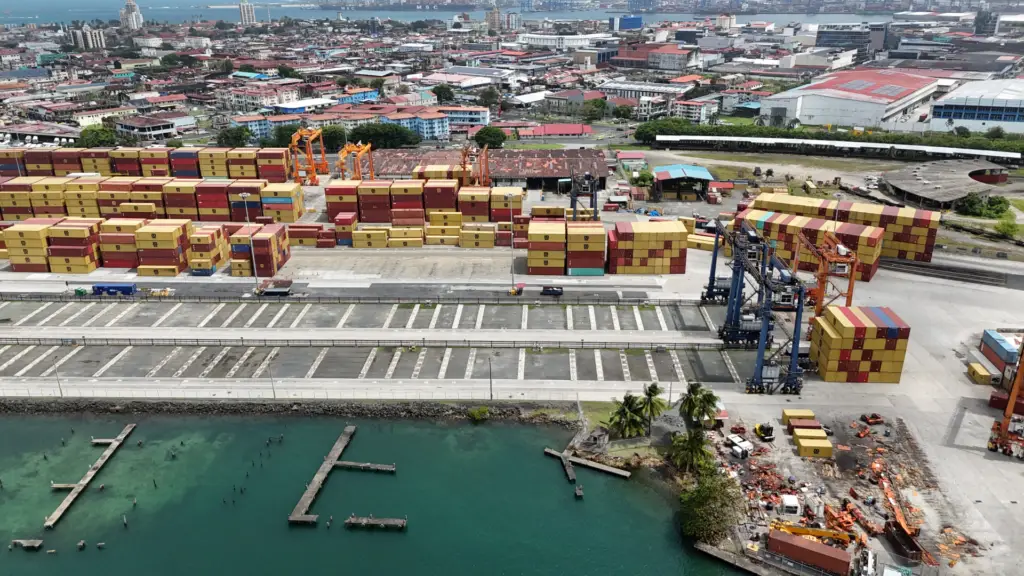
Source: Al Jazeera
What Happened at the Panama Canal Ports?
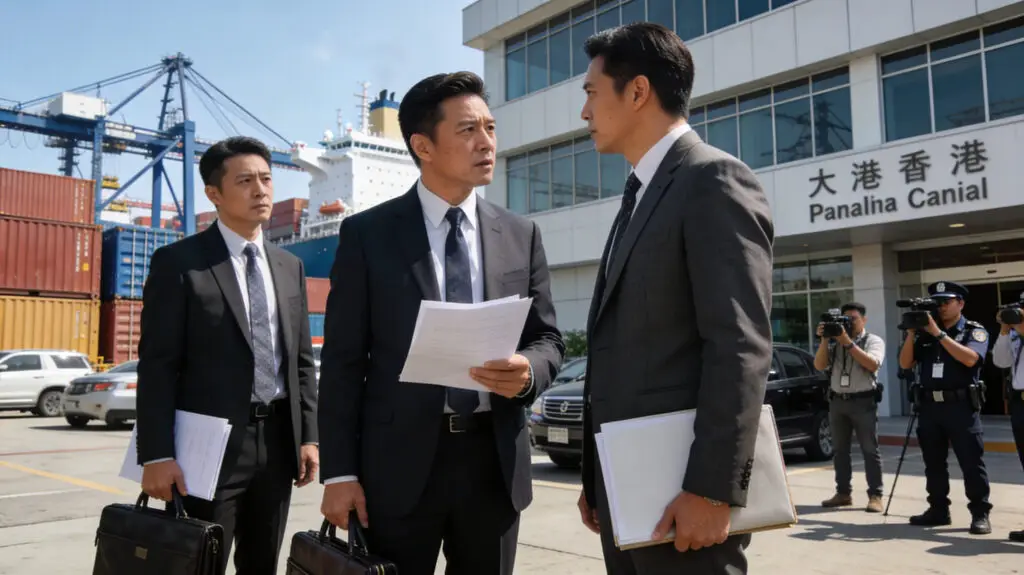
Authorities in Panama conducted a search involving a subsidiary of CK Hutchison, which operates key facilities through Panama Ports Company.
The company has claimed that the action violated legal protections and involved the seizure of property and sensitive operational data.
Key developments include:
- Search conducted at port-related facilities
- Allegations regarding lack of due process
- Escalation of tensions surrounding port ownership
This development represents a new flashpoint in an already sensitive geopolitical environment.
Why Are These Ports Strategically Important?
The ports are located at critical entry points to the Panama Canal, one of the most important global shipping corridors.
In our evaluation, control over port operations translates into influence over shipping efficiency, cost structures, and global trade flows.
Strategic importance includes:
- Handling a significant share of Panama’s container traffic
- Positioning at both Atlantic and Pacific canal entrances
- Serving as key nodes within international supply chains
Even partial operational influence can affect global logistics networks.
Panama Canal Port Control and Global Trade Impact
| Factor | Current Situation | Global Impact |
|---|---|---|
| Port Ownership | Under dispute | Trade uncertainty |
| US-China Rivalry | Intensifying | Supply chain risk |
| Legal Environment | Contract challenges | Investment instability |
| Shipping Operations | Transitional management | Potential delays |
How Is the US Involved in This Dispute?
Concerns raised by Donald Trump and other U.S. policymakers have highlighted perceived strategic risks linked to foreign control of key infrastructure.
In our analysis, U.S. influence has contributed to increased scrutiny of port ownership structures and operational control.
Key actions include:
- Public criticism of Chinese-linked infrastructure presence
- Support for alternative operators and investors
- Strategic interest in maintaining influence over key trade routes
This reflects broader efforts to counter perceived geopolitical risks.
What Role Does China Play in the Conflict?
China has rejected claims of excessive influence over the canal’s operations.
Beijing has also expressed concern over legal actions affecting companies linked to its broader global investment strategy.
Key considerations include:
- Opposition to cancellation or restructuring of port concessions
- Concerns over reduced operational presence
- Implications for initiatives such as global infrastructure investment strategies
This dispute aligns with broader patterns of strategic competition.
Why Legal Decisions Are Driving the Conflict
Panama’s judicial system has become a central factor in the evolving situation.
In our evaluation, legal rulings affecting port concessions have triggered cascading political and commercial consequences.
Key outcomes include:
- Contracts challenged or declared invalid
- Transition to interim operators, including firms like Maersk
- Increased uncertainty among international investors
Legal processes are now directly influencing geopolitical and economic outcomes.
What Does the $23 Billion Port Deal Signal?
A major transaction involving global financial institutions adds another layer of complexity to the situation.
A consortium led by BlackRock is positioned to acquire port-related assets previously linked to CK Hutchison.
Implications include:
- Shift toward Western-aligned financial control
- Reduction in Chinese-linked operational influence
- Increased geopolitical scrutiny of strategic infrastructure investments
This highlights the financial dimension of global power competition.
Why This Matters for Global Trade Stability
The Panama Canal remains a critical artery for international commerce.
In our analysis, disruptions or uncertainty in port control can ripple across global supply chains and trade systems.
Key risks include:
- Delays in shipping and logistics operations
- Increased transportation and operational costs
- Realignment of supply chains across regions
Even localized disputes can generate global economic consequences.
What Should Investors and Policymakers Watch?
The situation remains fluid, with multiple stakeholders influencing the outcome.
In our evaluation, developments will depend on legal resolutions, geopolitical positioning, and commercial negotiations.
Key indicators include:
- Final outcomes of legal decisions on port ownership
- Stability and performance of interim operators
- Escalation or de-escalation of U.S.-China tensions
These factors will determine the long-term strategic and economic impact.
Infrastructure as a Geopolitical Battleground
The Panama Canal dispute illustrates how critical infrastructure is increasingly tied to global power dynamics.
From a geopolitical and economic perspective, control over trade routes is becoming as influential as traditional military or financial power.
The key takeaway is clear:
As competition between major powers intensifies, strategic infrastructure such as ports and canals will remain central to global geopolitical and economic competition.
This analysis is provided for informational purposes only and does not constitute financial or geopolitical advice.