



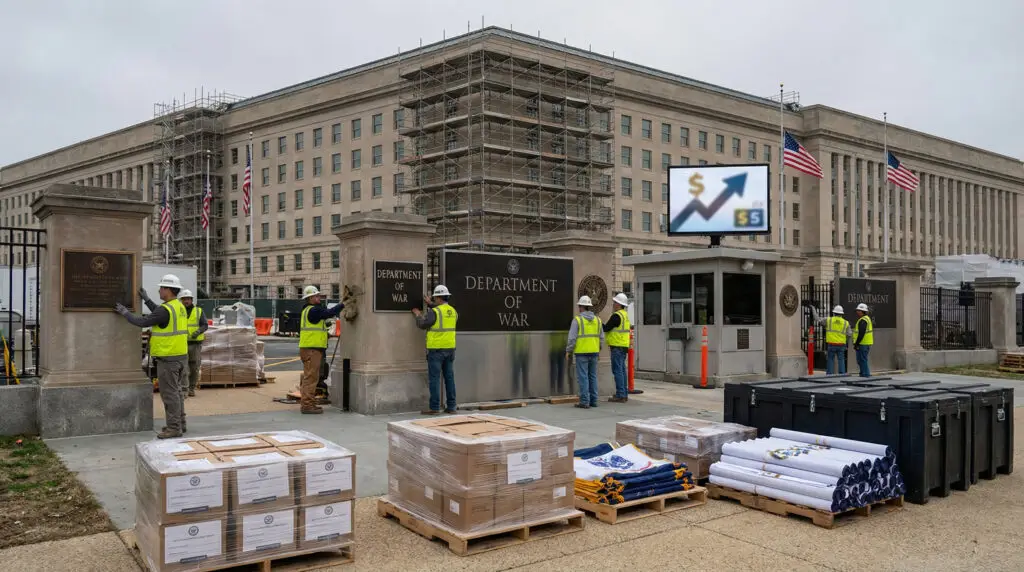
Pentagon Faces Major Costs Over Trump’s Renaming Directive
The Congressional Budget Office (CBO) has said that President Donald Trump’s order to change the name of the Department of Defense to the “Department of War” could cost anywhere from a few million dollars to $125 million, depending on how extensive the change becomes. The estimate highlights uncertainty within the Pentagon over how the directive would be implemented and how broadly the rebranding would apply across military branches.
The CBO reviewed early spending data showing that five Defense Department offices had already spent $1.9 million within 30 days of the order on items such as flags, plaques, and revised training manuals. CBO Director Phillip Swagel cautioned that this figure is likely understated, as several agencies have not yet reported their expenditures.
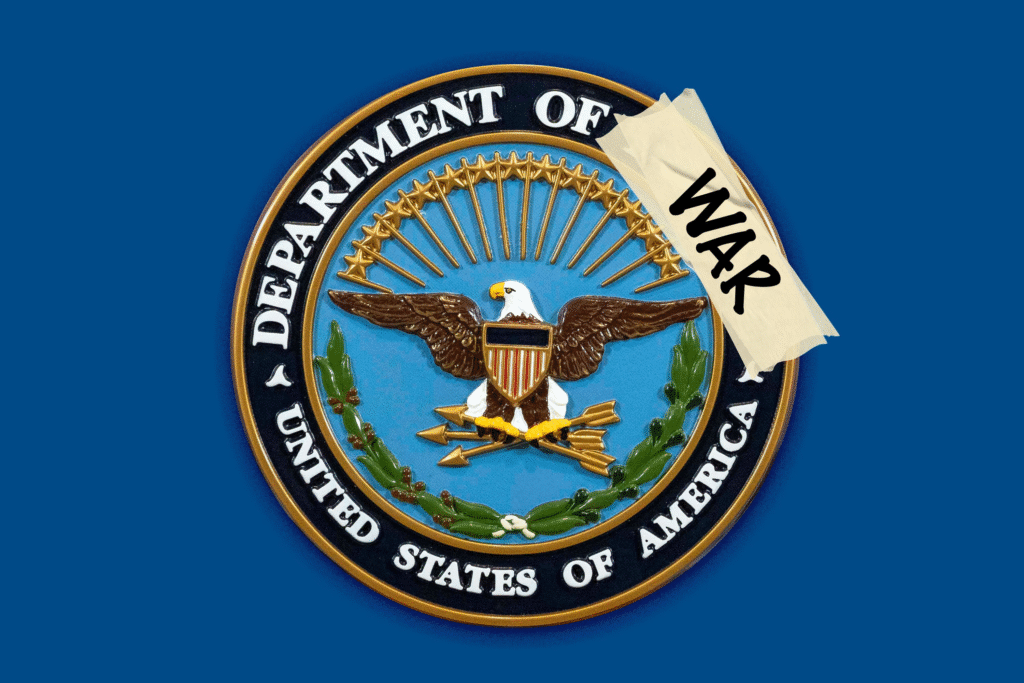
Source: The Washington Post
Congressional Oversight and Unclear Legal Authority
The title “Department of War” is not a legally recognized name, since only Congress has the authority to formally establish or rename cabinet departments. Instead, the designation would function as an unofficial secondary title. Defense Secretary Pete Hegseth has nevertheless embraced the language, describing it as part of a “fight-to-win” philosophy that the Trump administration says reflects a tougher military posture.
In a letter to Democratic senators, Swagel explained that much of the cost uncertainty stems from the Pentagon’s lack of a detailed implementation plan. Without clarity on scope and timing, projected expenses could vary widely depending on whether the rebranding is limited or applied across multiple defense agencies.
Democrats Condemn Move as Wasteful Spending
Democratic lawmakers have sharply criticized the proposal, calling it wasteful and symbolic rather than practical. Senator Jeff Merkley of Oregon, the top Democrat on the Senate Budget Committee, said the plan reflects misplaced priorities. He argued that the administration is focused on vanity projects instead of addressing everyday economic pressures such as grocery and healthcare costs.
Merkley added that the renaming “does nothing to improve national security” and risks wasting taxpayer funds at a time when many Americans are struggling with high living expenses and inflation.
Recommended Article: Iran Signals Openness to Talks with US Amid Ongoing Crackdown
CBO Outlines Three Cost Scenarios
According to the CBO, a limited rebranding confined to the defense secretary’s office would cost roughly $10 million. This scenario would include updating letterheads, websites, signage, and ceremonial materials, with costs potentially reduced through a phased rollout.
However, if the Pentagon pursued a department-wide rebranding across all military branches and defense agencies, costs could exceed $125 million. The CBO warned that a global rollout involving new regulations, contracts, and signage could drive total expenses into the hundreds of millions of dollars.
Lessons From Past Federal Renaming Efforts
The analysis referenced the Biden administration’s 2021–2023 initiative to rename U.S. Army bases associated with the Confederacy. That effort ultimately cost $39 million, nearly double initial estimates. On average, each base renaming cost about $5 million, offering a benchmark for how Trump’s proposal might escalate in cost.
These past examples show that logistical changes, such as updating contracts, reissuing uniforms, and modifying digital databases, often end up costing far more than originally projected.
Critics Question Strategic Value
Some defense experts have questioned whether the symbolic name change aligns with real operational needs. The CBO noted that the Pentagon has not demonstrated how the rebranding would improve military readiness or morale.
Neither the White House Office of Management and Budget nor the Pentagon has indicated whether additional funding requests will be submitted to support the effort. Observers suggest the administration may attempt partial implementation through executive action while awaiting possible congressional approval.
Congress May Ultimately Decide
If Congress chooses to formally authorize the name change through legislation, costs could rise significantly. Federal regulations, defense contracts, and signage at installations worldwide would require updates, demanding extensive coordination across agencies.
For now, the CBO’s estimate underscores the potential financial impact of reviving the “Department of War” label. Critics argue it is a largely symbolic move that could cost taxpayers tens of millions of dollars without delivering tangible national security benefits.