Leaders Strike Agreement to Cool Escalating US-China Trade Conflict
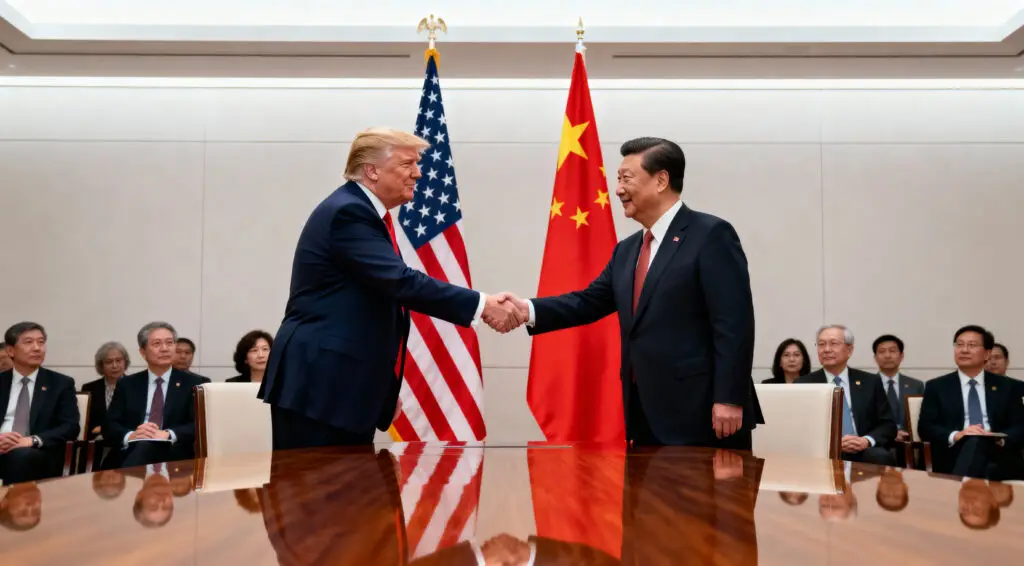
Donald Trump, the President of the United States, and Xi Jinping, the President of China, have agreed to stop the trade war from getting worse. After meeting in person at the APEC summit in Busan, South Korea, the leaders agreed to a one-year ceasefire.
The deal momentarily calms things down between the two biggest economies in the world. It brings stability after months of tariff threats and problems with the supply chain. Both presidents said the meeting was useful and will help improve relations between the two countries.

Source: Bloomberg
Trade Deal Settles Rare Earths Dispute and Fentanyl Tariff Reduction
China will put off its planned export limits on rare earth materials, which are very important to companies throughout the world, as part of the arrangement. In exchange, Washington will put on hold its plan to charge a 100% tariff on Chinese imports and cut the fentanyl-related levy in half to 10%.
Trump said the meeting was “amazing” and that the problem of rare earths was “settled.” He was hopeful that the deal would help lower the amount of fentanyl coming in while discussions proceeded.
China Confirms Commitment to Implement Agreed Measures
The Ministry of Commerce in China announced that export curbs will be put off for a year and commended the positive tone of the talks. The government said the arrangement showed that both countries wanted to help stabilize the world’s economy.
Xi stressed that follow-up initiatives must “offer tangible results” and bring back corporate confidence. Beijing also said that both sides will stop charging extra port fees and adding to their blacklists during the ceasefire.
Recommended Article: Argentina Heads to Polls Amid Economic Crisis and Trump Tension
Markets React Cautiously as Tariffs and Controls Remain in Place
Even if there is a deal, most tariffs between the two countries are still in place, which makes many firms nervous. As investors waited for more information on enforcement, benchmark stock indexes across Asia finished flat or slightly down.
The average US tax on goods coming from China is currently over 47%, while China’s is still at 32%. Analysts stated that the markets liked the break, but they also cautioned that structural problems that haven’t been fixed might come back.
Analysts Describe Agreement as Temporary but Stabilizing Move
Experts called the arrangement a “partial freeze” rather than a full end to trade hostilities. Dennis Wilder, a Georgetown University professor and former CIA expert on China, stated that both sides “agreed to stop firing” but still had power.
Cameron Johnson from Tidalwave Solutions said that the yearly review provision in the treaty lets both nations adjust their plans. He said, “It’s probably the best that both sides could have done given the current political and economic situation.”
Economic Impact Extends Beyond Tariffs to Global Supply Chains
China’s control over rare earth shipments is still a major worry for firms throughout the world. Its temporary lifting of limits eases worries about problems with making technology and defense.
The US wins from the return of soybean exports and cheaper costs for businesses that depend on Chinese parts. Analysts think there will be some economic respite, but they warn that supply chain resilience will still be a big problem.
A Temporary Pause in a Complex and Competitive Rivalry
The deal lowers trade tensions in the short term, but it doesn’t tackle the main problems with technology, security, and market access. Both countries have long blacklists that make it hard for hundreds of international companies to do business with them.
The pact shows that both sides are willing to work together instead of trying to make things right, which shows that they both understand how dependent their economies are on each other. For now, the truce is a strategic break in a competition that will shape the future of commerce and innovation throughout the world.