



Central Bank Keeps Benchmark Rate Steady at February Meeting
The Bank of Korea held its benchmark interest rate at 2.5% during its latest monetary policy meeting. Officials emphasized that maintaining stability was appropriate given current economic conditions. Market analysts had widely anticipated the decision earlier this month.
Policymakers indicated that rates are unlikely to shift significantly over the next six months. Their guidance reflects confidence in existing stability while acknowledging lingering uncertainties. The cautious tone reinforces the bank’s commitment to a gradual policy approach.
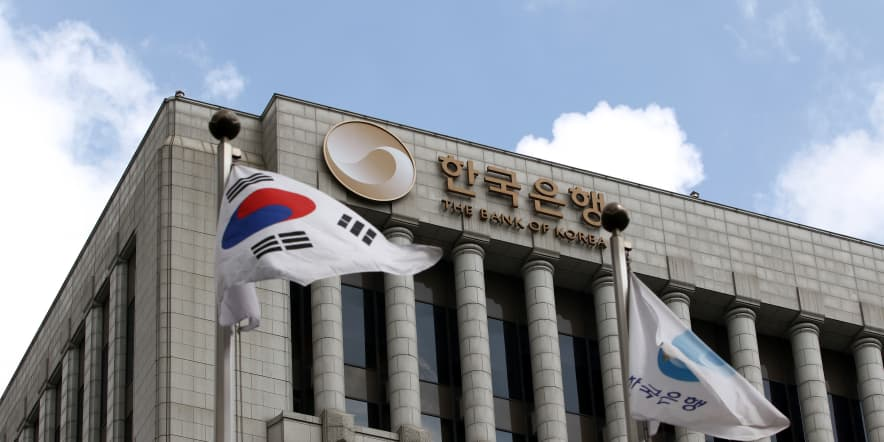
Source: CNBC/Website
Balanced Economic Risks Guide Policy Decisions
Officials stated that economic risks appear evenly distributed across potential outcomes. There is no compelling evidence supporting either immediate tightening or easing. Updated forecasts suggest that both growth and inflation trends are stabilizing.
As a result, the central bank prefers observation over intervention at this stage. Future adjustments will depend on domestic data and global developments. Current indicators suggest that the present policy stance remains appropriate.
Growth Momentum Improves as Inflation Nears Target
Inflation has gradually moved closer to the official target range, reducing pressure for further action. South Korea’s export sector continues to perform strongly, particularly in semiconductor shipments. These gains contribute to optimism about near-term growth prospects.
A Reuters survey showed that most economists expect rates to remain unchanged through 2026. Concerns about economic resilience have tempered expectations for rate cuts. Elevated housing prices and household debt remain key reasons for caution.
Recommended Article: South Korea Leads Global AI Slop Consumption
Financial Stability Limits Scope for Rate Reductions
Officials continue to monitor household leverage due to its implications for long-term stability. High real estate valuations also require regulatory vigilance. Premature rate cuts could intensify existing financial vulnerabilities.
Maintaining stability remains a guiding principle in policy formulation. The bank seeks to balance prudent oversight with sustainable expansion. Careful calibration helps prevent imbalances that might trigger future instability.
Currency and Bond Markets React Positively
Following the announcement and forward guidance, the South Korean won strengthened noticeably. Investors interpreted the stable rate outlook as supportive for currency performance. Reduced speculation about imminent cuts improved overall sentiment.
Government bond yields declined as expectations of prolonged stability solidified. Financial markets welcomed the clarity provided by the central bank. The response underscores confidence in the institution’s disciplined strategy.
Global Factors Continue to Influence Strategy
Policymakers remain attentive to international economic developments. Slower global growth, fluctuating exchange rates, and shifting commodity prices add complexity. As an export-driven economy, South Korea remains sensitive to external demand conditions.
The Bank of Korea evaluates global signals alongside domestic indicators. This integrated approach helps mitigate risks from external shocks. Maintaining steady rates provides a buffer amid uncertain global trends.
Measured Approach Reflects Confidence in Economic Path
Officials expressed confidence that growth and inflation will remain broadly aligned. This equilibrium supports a continued pause in monetary adjustments. Policymakers emphasize patience as a tool for clarity during transitional periods.
With inflation near target and growth improving, caution takes precedence over intervention. The steady stance reflects trust in the economy’s resilience. Barring major disruptions, South Korea appears positioned for continued stability.