


Planned Negotiations Postponed Following Sudden US Tariff Ruling
The US and India put off a meeting that was supposed to finalize their temporary trade agreement. The delay came after the Supreme Court ruled that earlier tariff actions were not valid. Officials said both sides need more time to figure out what the changing legal situation means for them.
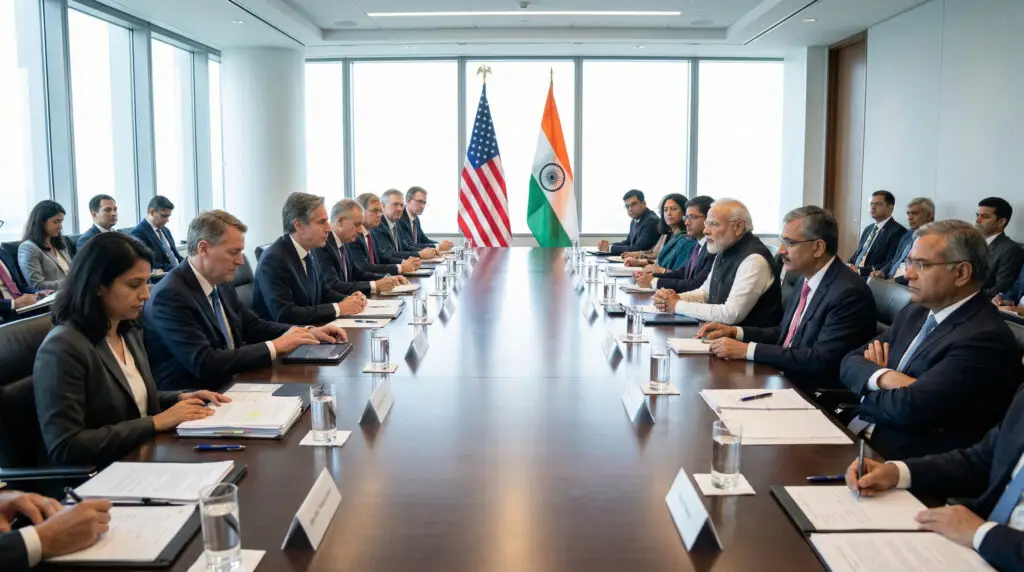
The Indian delegation was supposed to start talking on February 23. Darpan Jain, the chief negotiator, had planned to spend three days in Washington at first. The ruling messed up the timelines for both governments’ preparations, forcing them to rethink their strategies.
Source: Reuters/Website
Supreme Court Declares Earlier IEEPA Tariffs Unauthorised Legally
The court said that tariffs put in place by the International Emergency Economic Powers Act went beyond what the law allowed. The decision was a big blow to the administration’s broader tariff plan. Judges stressed that emergency powers should not be used too much when it comes to general trade measures.
Trump responded by saying that he would put new uniform tariffs in place, even though the law said he couldn’t. A later update quickly raised global tariffs from 10% to 15%. These changes made ongoing negotiations more difficult, and trading partners had to adjust their plans.
Immediate US Tariff Changes Create Uncertainty For Indian Exports
India had to deal with many layers of tariffs in earlier policy rounds. In 2025, the United States added duties of 50% to certain sectors. Recent talks included ideas to lower overall rates and get rid of harsh penalties.
There is now a lot of uncertainty about which tariff schedule will control future trade. Officials say that the new levels are still not clear and will stay that way until the administration makes things clearer. Because of this lack of clarity, negotiations had to be put on hold until things got better.
Recommended Article: India US Interim Trade Deal Moves Toward Lower Tariffs Now
Both Governments Seek Time To Assess Policy And Legal Outcomes
Sources say that both delegations agreed that putting things off is in their best strategic interests. Before talking about it in public again, officials want some time to think about what it means. The delay makes sure that both sides fully understand what they are getting into.
They stressed that the talks will start up again once the new frameworks are clearer. Scheduling will happen on a date that works for both sides and is agreed upon through diplomatic channels. The main goal is still to make sure everything is clear before finishing the final legal text.
Existing Framework For Tariff Reductions Now Faces Reevaluation
Earlier deals would have cut the duties on Indian goods to 18%. The plan called for getting rid of an extra 25 percent tariff that had been in place before. After things got worse last year, these rules were meant to bring things back into balance.
The most recent changes to the law and government may change those negotiated commitments. Officials are waiting for instructions to see if the earlier concessions are still in effect. Depending on how Washington sees it in the end, the structure of the future could change a lot.
SCOTUS Ruling Allows Sector Specific Tariffs To Remain Active
The court said no to broader tariff authority, but sector tariffs are still legal. Under current laws, measures aimed at steel, cars, and aluminum continue. Trump used parts of the Trade Act of 1974 to keep tariffs the same across the board.
The president said that the trade deal between the US and India should stay the same. But changing global tariff rates make it much harder to carry out the details. Analysts say that more information is needed before commitments can be made with confidence.
Trade Talks Expected To Resume Once Policy Landscape Stabilizes
The US and India keep talking about how committed they are to working together on economic issues for a long time. Negotiators are still working hard to reach a fair deal that will help both economies. The delay is a sign of caution, not a sign that relations between the two countries are getting worse.
Officials expect things to get better once tariff structures become a lot more predictable. Washington’s clearer direction will make it possible to write the final legal language. Both sides will keep a close eye on what happens until then and plan their next steps in the negotiations.