




US Market Hook Immigration Policy Now Directly Impacts Industry
Written by a labor economics and industrial policy analyst specializing in supply chains, workforce dynamics, and regulatory risk, this analysis evaluates how immigration enforcement is increasingly shaping U.S. industrial output.
In our analysis of the current U.S. economy, immigration enforcement is no longer operating in isolation—it is directly influencing production capacity, supply chains, and labor availability.
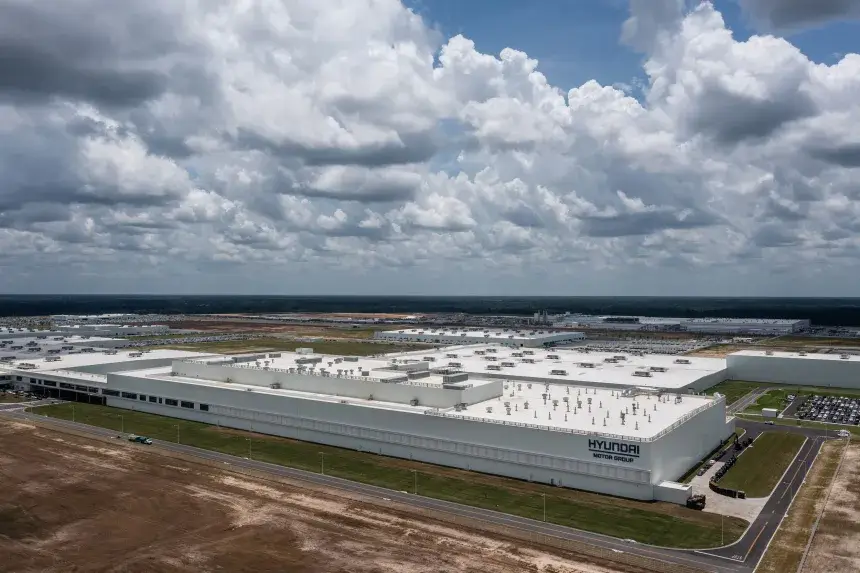
The large-scale enforcement action at a Hyundai-linked facility in Georgia signals a structural shift: workplace-focused enforcement is becoming a material economic variable.
What Happened at the Hyundai Metaplant?
A major immigration raid at a facility associated with Hyundai Motor Company in Georgia resulted in approximately 475 detentions, making it one of the largest recent worksite operations.
The action involved multiple agencies, including Immigration and Customs Enforcement, the Federal Bureau of Investigation, and the Drug Enforcement Administration.
Key facts include:
- Around 475 individuals detained
- Majority identified as foreign nationals
- Workers included subcontractors and temporary staff
- Construction activity at the site was disrupted
Hyundai stated that those detained were not direct employees but were likely connected to third-party contractors.
Why This Raid Matters for the US Economy
This event reflects broader enforcement priorities associated with the policy direction of Donald Trump.
In our evaluation, the economic implications extend beyond immigration policy into labor markets and industrial execution.
Key impacts include:
- Immediate labor shortages at critical infrastructure projects
- Delays in electric vehicle and battery plant construction timelines
- Increased compliance and verification costs for corporations
These effects are particularly relevant as the U.S. accelerates domestic manufacturing initiatives.
Supply Chain Risk The Hidden Vulnerability
Modern industrial projects rely heavily on multi-layered subcontracting systems.
In our analysis, this structure creates compliance blind spots, especially in large-scale construction and manufacturing environments.
Key risk factors include:
- Limited visibility into subcontractor hiring practices
- Dependence on migrant labor for technical and semi-skilled roles
- Fragmented accountability across supply chains
This incident demonstrates how enforcement actions can disrupt entire operational ecosystems.
Labor Market Reality vs Policy Direction
A structural tension is emerging between labor demand and enforcement intensity.
In our evaluation, sectors such as construction and manufacturing remain reliant on migrant labor to meet workforce needs.
Key tension points include:
- Strong demand for skilled and semi-skilled workers
- Tight labor markets in industrial regions
- Reduced workforce availability due to enforcement actions
This creates a paradox where compliance increases while production capacity may be constrained.
International Implications South Korea Reacts
The geopolitical dimension adds another layer of complexity.
South Korea has raised concerns regarding the treatment of its nationals, highlighting potential diplomatic sensitivities.
Key considerations include:
- Protection of foreign workers’ rights
- Impact on foreign direct investment confidence
- Sensitivity surrounding multinational industrial projects
This is particularly important given the role of Korean firms in U.S. electric vehicle supply chains.
Corporate Response and Compliance Shift
Following the incident, Hyundai initiated a review of its contractor and supplier compliance systems.
In our analysis, this reflects a broader shift toward stricter internal governance across industries.
Expected corporate actions include:
- Enhanced vetting and auditing of subcontractors
- Implementation of stricter employment verification systems
- Increased legal and regulatory oversight
Companies are likely to prioritize risk mitigation over rapid expansion.
What This Means for Investors and Industry
The development introduces enforcement risk as a core variable in industrial planning.
In our evaluation, investors must now incorporate regulatory exposure alongside traditional factors such as demand and cost structures.
Key takeaways include:
- Project timelines may face unexpected regulatory disruptions
- Labor availability becomes a strategic constraint
- Compliance costs are likely to rise across sectors
This shifts how capital is allocated within industrial projects.
Enforcement Is Now an Economic Variable
The Georgia enforcement action is more than a legal development—it signals a structural change in how immigration policy intersects with the U.S. economy.
From a macroeconomic perspective, enforcement now influences supply chains, labor markets, and international business relations.
The key insight is clear:
Immigration policy is no longer solely political—it is becoming a core driver of industrial performance and economic outcomes.
This analysis is provided for informational purposes only and does not constitute legal or investment advice.