


Strategic Merger to Power Artificial Intelligence
Elon Musk said that SpaceX has bought his AI company, xAI. The merger was sold as a smart way to deal with the quickly growing energy needs of AI. Musk said that the choice was necessary for AI to keep growing in the long term.
Musk says that the current infrastructure on Earth can’t handle the future power needs of AI without hurting people and the environment. He said that computing that uses a lot of energy will put more and more stress on communities and ecosystems. The merger is meant to speed up an alternative solution that is not on Earth.
Source: Mashable/Website
The Main Idea: Data Centers in Space
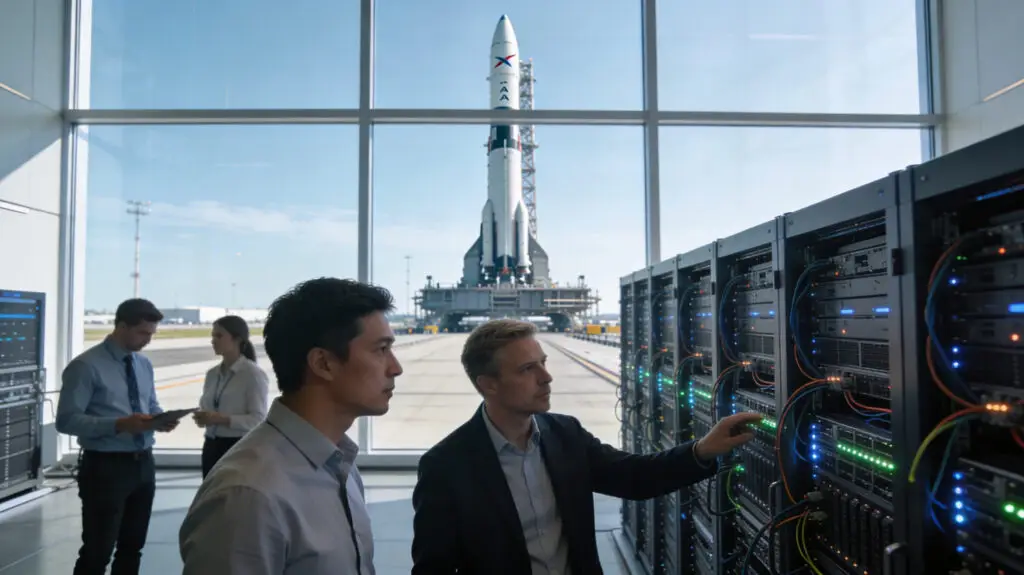
Musk said that AI needs a lot of power and cooling to work well on a large scale. He said that meeting these demands on Earth would put too much strain on the environment. It was said that space-based infrastructure was the only long-term option that would work.
Using solar energy in space would give us access to huge, never-ending power sources. Musk said that even getting a small amount of energy from the Sun would be more than the world uses now. This abundance makes orbital data centers a key part of his plan.
Timeline for Orbital AI Computing
Musk said that in 2 to 3 years, computing in space could be the cheapest way to make AI capacity. He stressed that this timeline is possible because launch costs are going down and rockets can be used again. The merger is meant to speed up that change.
Musk thinks that moving data centers off-planet will allow AI development to grow without limits on Earth. He said that space has the best physical space and energy availability. These benefits support the aggressive deployment schedule.
Recommended Article: Google Project Genie Promises Full Games Generated From Text
Consolidation of Musk’s Technology Ecosystem
The merger combines Musk’s interests in space travel, AI, and digital platforms. xAI’s computing goals will be helped by SpaceX’s launch systems. This integration brings together engineering, data, and infrastructure into one framework.
The Grok chatbot was made by xAI, which also bought the social media site X. SpaceX adds the ability to launch Falcon and Starship rockets. These assets work together to create a vertically integrated AI and space operation.
Government Contracts and Strategic Implications
SpaceX and xAI both have contracts with US government agencies, such as NASA and the Department of Defense. The Starshield unit at SpaceX works directly with military and intelligence partners. These connections make the merger more important from a business point of view.
Orbital data centers could help meet the government’s need for safe communications and advanced computing. Space-based AI infrastructure might be able to keep working even when things go wrong on Earth. This position strengthens SpaceX’s role in national security systems.
Growing Industry Interest in Space Energy Solutions
Musk isn’t the only one looking into space-based power for advanced computing. Jeff Bezos started Blue Origin, which is working on similar ideas. Google is also supporting Project Suncatcher, which aims to use solar energy in space.
These two efforts happening at the same time point to a larger shift in the industry toward infrastructure in space. Technology leaders are having to rethink how they get energy because AI workloads are growing. People are starting to see space as a scalable option more and more.
Starship, Satellites, and Expanding the Network
Musk set high launch goals to help build up the infrastructure in space. With its Starship program, SpaceX wants to send up to a million satellites into space. The rocket is made to fly a lot with heavy loads.
He also said that Starlink would get better with the help of next-generation V3 satellites. These satellites should be able to handle more than 20 times as much traffic as the current network. Better connectivity will help both AI computing and communication around the world.