


Hong Kong Becomes Global Hub for AI IPOs
Several Chinese startups beat their Silicon Valley competitors to the stock market, making China’s artificial intelligence sector reach an all-time high at the end of 2025. December was the busiest month for Hong Kong’s stock exchange since 2019. At least 25 companies went public, and almost half of them were tech companies. The listings showed that China is becoming more dominant in the AI race, thanks to investor interest and government support.
The rise of Deepseek, which is often called China’s answer to ChatGPT, was what caused this surge. Its success boosted investor confidence in the whole sector, which led big AI companies like Zhipu AI and MiniMax to speed up their plans to go public. Bloomberg says that the momentum is likely to last until January, when at least ten more technology companies are expected to go public.
Source: Nikkei Asia
Zhipu AI Leads the Way with the First Large Language Model IPO
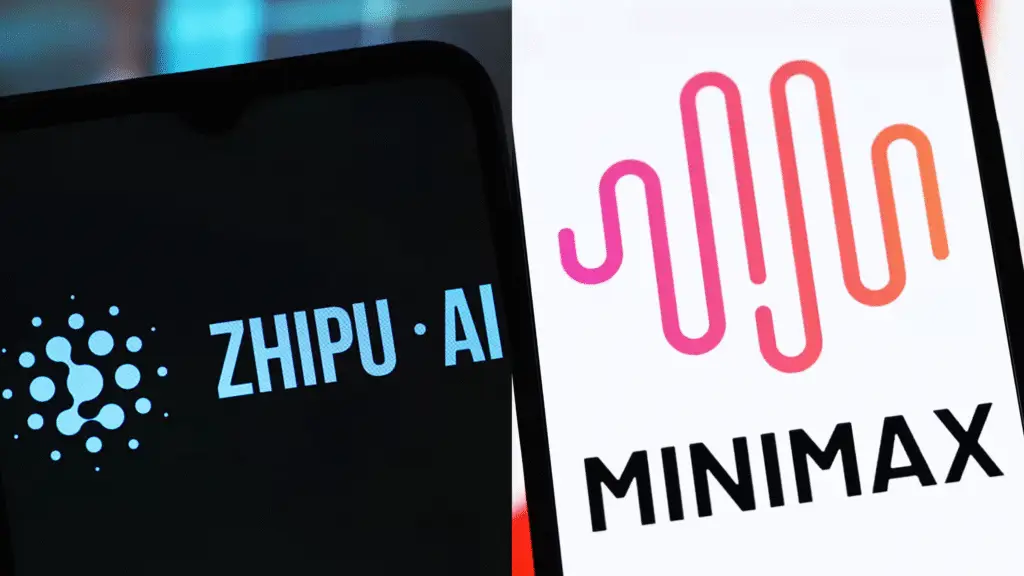
Zhipu AI, also known as Z.ai, is at the front of this financial wave. Its goal is to be the first publicly traded large language model (LLM) developer in the world. The Beijing-based company started selling shares with the goal of raising $560 million. Trading is set to start on January 8, 2026. If the IPO goes well, Zhipu will be worth about $6.6 billion, which would make it a key part of China’s push to build up its AI infrastructure.
Some of the biggest tech companies in China, like Alibaba, Tencent, Meituan, and Xiaomi, support Zhipu. This shows how important it is to China’s goal of becoming the world’s leader in AI development. Experts say that the IPO is a big deal for Zhipu and that it also means that a new wave of public companies in Asia will focus on AI.
MiniMax Gets Global Investors Even Though It Has Legal Problems
MiniMax is another big player in Hong Kong’s AI IPO boom. It is a fast-growing startup that makes high-performance language and multimodal models. The company wants to raise up to $539 million, and Bloomberg says that the offering has already been oversubscribed several times. MiniMax is worth about $4 billion, and its cutting-edge Hailuo AI video generation platform has gotten a lot of attention and some criticism from around the world.
Even though Disney and Warner Bros. have sued them for copyright violations, investors still have faith in them. A lot of people think that MiniMax’s fast growth and high-tech nature are more important than its legal problems. The company’s success shows that there is a global demand for AI-powered media and entertainment tools, even when the government is keeping an eye on them.
Recommended Article: IBM Says AI Becomes a Revenue Engine in APAC by 2026
Hardware Firms Join the AI-Driven IPO Momentum
The rise in AI listings goes beyond just software startups. Companies that make semiconductors, like OmniVision and GigaDevice, are also getting ready to go public in Hong Kong. Their growth fits well with Beijing’s plan to improve China’s semiconductor industry in the face of rising global competition.
These businesses make the hardware that is necessary for China’s AI ecosystem to work. By speeding up the production of chips and sensors, they hope to make China less dependent on Western technology and keep its position as a leader in advanced computing infrastructure.
Western Rivals Fall Behind as Structures Change
Chinese AI companies are moving ahead quickly, but their Western competitors, OpenAI and Anthropic, are still busy restructuring before they go public. OpenAI recently changed its for-profit division into a public benefit corporation, which will eventually allow it to go public. Microsoft now owns 27% of the company after it restructured with them in September 2025. Depending on market conditions, this could lead to future capital raises of between $100 billion and $1 trillion.
Anthropic has reportedly hired a big law firm to help with its IPO preparations, which could happen in 2026. The company is currently in talks for a private funding round that would value it at about $300 billion, which is almost fifty times more than Zhipu’s expected value. This round is being backed by Amazon, Google, and other U.S. investors.
DeepSeek’s Success Ignites China’s AI Stock Boom
DeepSeek, a Chinese large language model that is seen as the most advanced domestic rival to OpenAI’s ChatGPT, has sparked unprecedented interest from investors. Its performance not only boosted faith in China’s AI abilities, but it also caused a flood of money to flow into the country’s AI startups.
After its IPO on December 23, shares of Nuobikan Artificial Intelligence Technology, another company in the same field, went up by more than 360%. The rise showed that both institutional and retail investors see AI as a key part of China’s economic future.
A Change in Global AI Investment
The December IPO wave in Hong Kong is more than just a financial milestone; it shows that the balance of power in the global tech industry is changing. The U.S. is still the leader in AI research and development, but China is using its flexible regulations and huge domestic market to make AI available to a lot of people.
Investors should know that Asia’s public markets are now the testing ground for the next generation of AI companies. As Zhipu AI and MiniMax get ready to trade, experts say that 2026 could see a global race between Chinese and Western companies not only for technological dominance but also for the trust of investors.
From Market Momentum to Long-Term Leadership
China’s quick move to let AI startups trade on public markets shows that the industry is entering a new stage of maturity. Hong Kong is once again a major financial center in the region, and its exchange is becoming a popular place for AI and semiconductor companies to raise money.
As OpenAI and Anthropic get ready for their IPOs, the difference couldn’t be clearer: China’s AI leaders are already trading, but Silicon Valley’s big companies are still reorganizing. The next year will show if this early lead leads to lasting global dominance or just the start of a new, very competitive time in artificial intelligence.