



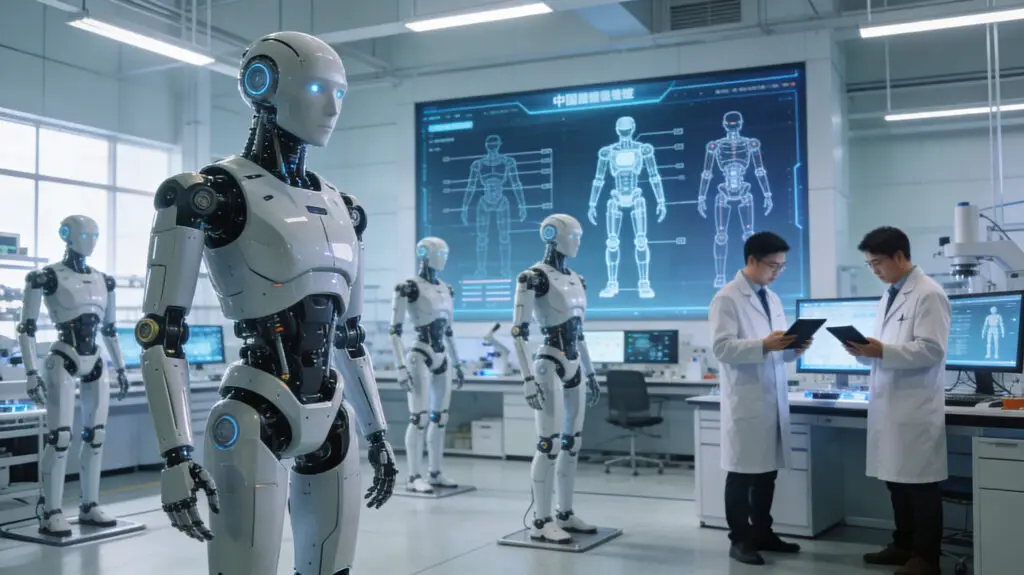
China Unveils Comprehensive Framework For Humanoid Robotics Regulation
China put out a national standard system that will guide the development of humanoid robots throughout their entire industrial lifecycle. At the annual HEIS meeting in Beijing, officials showed off the framework. The initiative shows that there is a growing need to set rules for advanced robotics technologies across the country.
The standards are meant to bring together the different parts of the industry by setting common requirements for new robotic platforms. Officials stressed that well-organized rules encourage new ideas while keeping people safe. After a lot of government-supported implementation efforts, analysts think there will be a lot of alignment in the industry.
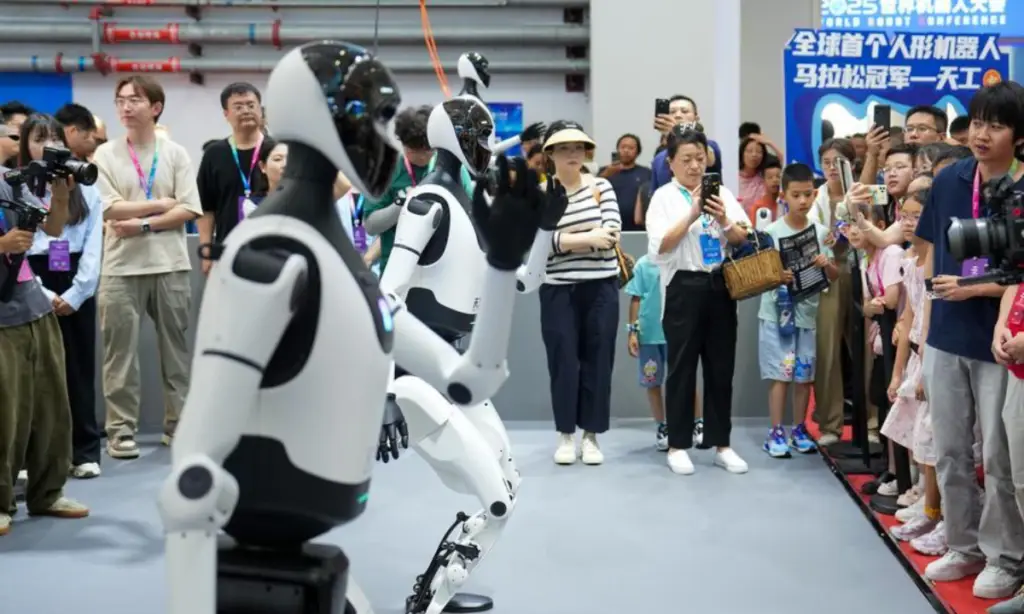
Source: Global Times/Website
HEIS Standard System Structured Around 6 Technical Components
There are 6 categories in the HEIS system that cover the most important parts of how humanoid robots work. These parts deal with basic commonality, brain-like computing, limbs, full-machine systems, applications, and ethics. Designers made the system so that it could control every step, from conceptual engineering to operational deployment.
Technical committees stressed how important the framework is for directing research and business plans. They said that standard parts make it easier for all robotics manufacturers to work together. This method helps the country reach its goals of becoming a leader in advanced intelligent machinery sectors in the long term.
Brain Like Computing Standards Target Embodied Intelligence Development
Brain-like computing standards concentrate on embodied intelligence frameworks that replicate human cognitive processes. These rules control the data processing pipelines that control the workflows for training, development, and deployment. They set standards for neural modeling methods that shape basic smart behaviors.
Developers have to follow strict rules about how to manage the lifecycle of embodied intelligence data. The standards make sure that training is done in a responsible way that promotes openness. These mechanisms make learning environments safer for humanoid intelligence systems that will come after these ones.
Recommended Article: Tesla Ends Model S and X as Focus Shifts to Robots
Application Standards Govern Deployment Across Multiple Real World Scenarios
Application standards tell humanoid robots how to work in different types of businesses. These requirements help people in logistics, healthcare, manufacturing, and household robotics develop new products. Standardized design principles make sure that things work the same way no matter how complicated the situation is in the country.
The rules stress the importance of keeping reliability over long periods of use. To ensure safe functional performance, developers must put in place strong maintenance procedures. This unified approach makes it possible to safely deploy robots on a large scale in markets that are growing quickly.
Safety And Ethics Standards Ensure Responsible Industrial Development
Standards for safety and ethics apply to the whole life of a humanoid robot. They spell out protections against misuse and ways to lower the risks that come with autonomous behaviors. These rules encourage clear responsibility for how smart machines make decisions.
Ethical guidelines promote responsible production methods that lead to good outcomes for society. During system development, they make manufacturers think about how their products will affect society as a whole. Adherence makes sure that robotics technology grows safely as more and more places around the world use it.
National Policies Accelerate Growth Within China’s Robotics Industry
Government programs sped up the production of humanoid robots a lot in 2025. National and local plans made robotics a key area for strategic growth. More than 140 manufacturers in the US released hundreds of new models over the course of the year.
This quick growth made it clear that there needed to be unified standards to make sure growth could continue. Officials said that coordinated frameworks help keep things the same across different manufacturers. These steps bring the goals of the national industry in line with new global technological standards.
New Standards Expected To Guide Future Industry Advancements
The standardized system will give companies that are working on next-generation humanoid technologies important guidance. It gives clear technical information that helps with scalable production and new ideas. The framework is expected to improve quality assurance across the robotics ecosystem by policymakers.
Experts say that structured regulation makes companies more competitive in international markets. Adopting standards makes industrial applications safer, more efficient, and more reliable. These combined benefits put China in a good position to shape the future of humanoid robotics around the world.