

Greg Abel Honors Warren Buffett’s Legacy
Greg Abel talked about his plans for Berkshire Hathaway’s leadership while praising legendary investor Warren Buffett. Abel, the new CEO, wrote in his first letter to shareholders that Buffett had a huge impact on the company. He said that following such a well-respected leader is a big responsibility.
Abel stressed that Berkshire’s philosophy will always be based on the principles of long-term investing. He said that the company will stick to the disciplined way of doing things that has helped it build its reputation over the years. So, investors should expect stability instead of big changes in strategy.
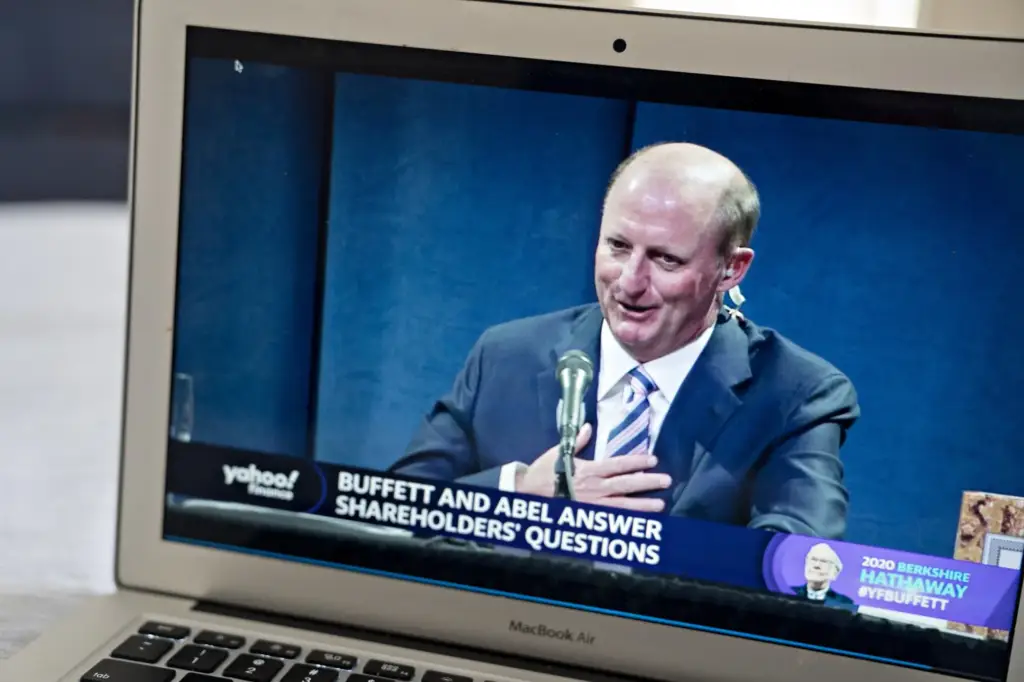
Source: Bloomberg.com
A Lot of Cash Reserves Still Ready to Be Invested
Berkshire Hathaway now has over $373 billion in cash and short-term investments. Abel called this huge reserve “strategic capital” that can be used when good opportunities come up. He said that the company’s large cash reserves do not mean that it is hesitant to make future investments.
Abel instead called the money “dry powder,” which lets the company act quickly when the market is uncertain. Berkshire can make big investments when its competitors are unsure because it has a strong balance sheet. This ability to change has helped the conglomerate take advantage of big market opportunities in the past.
Berkshire Keeps Up Strong Financial Discipline
Abel also told shareholders that keeping Berkshire’s finances strong is still a top priority. The company’s conservative financial structure lets it handle economic shocks and downturns in the market. Berkshire’s stability is seen as one of its most important strategic advantages.
Abel says that the balance sheet lets the company invest with confidence, even when the economy is unstable. When financial storms hit the world markets, Berkshire wants to stay steady and look for opportunities. That way of thinking has helped the company get through many economic cycles in the past.
Recommended Article: Sadiq Khan Invites Anthropic To Expand In London
Portfolio Has Big Investments Around the World
The company still owns a lot of shares in big companies like Apple Inc. and American Express. Abel said that Berkshire has also made a lot of money on paper by investing in a number of Japanese trading companies. Since the first investment, these holdings have more than doubled in value.
But not all investments have done as well as others. Berkshire lost $4.5 billion on its investments in Kraft Heinz and Occidental Petroleum. Even with these changes, the larger portfolio still makes a lot of money over the long term.
Temporary Drop in Operating Earnings
Berkshire made about $19.2 billion in net income in the 4th quarter. Even with the write-downs on investments, this result was close to last year’s earnings. The company’s investment portfolio made some paper gains, which helped keep the overall results stable.
But operating earnings fell by almost 30% to about $10.2 billion. Berkshire usually says that operating earnings are a better way to measure performance because they don’t include changes in investments. Even though the results were lower than expected, they were still better than what analysts had hoped for.
Leadership Transition After Buffett Era
Abel openly said that it would be very hard to find someone to replace Warren Buffett. Buffett turned Berkshire Hathaway into one of the most powerful investment companies in the world. Investors and financial analysts read his annual letters to shareholders a lot.
Buffett is still the chairman of Berkshire and its biggest shareholder, even though he stepped back from day-to-day leadership. His ongoing presence gives the company strategic direction during the change in leadership. Because of this, investors expect Berkshire’s overall direction to stay the same.
Few Major Strategic Changes Expected
Buffett and Abel have both said that Berkshire’s main way of doing business will stay mostly the same. For decades, the conglomerate structure, which includes dozens of independent businesses, has worked well. Executives at Berkshire’s subsidiaries still run their businesses with a lot of freedom.
The company owns businesses in a wide range of fields, including insurance, utilities, manufacturing, transportation, and consumer goods. Dairy Queen, See’s Candies, and a number of large industrial suppliers are some of the most well-known subsidiaries. Abel has been in charge of Berkshire’s non-insurance businesses since 2018, so he knows a lot about how they work.