



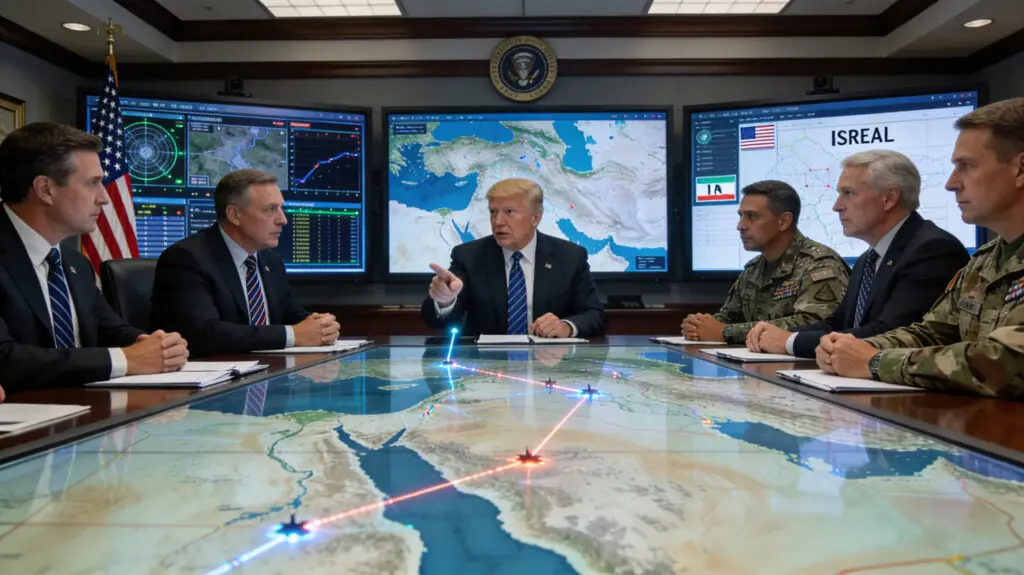
Officials Argue Political Optics Favor an Israeli Initiated Conflict
Reports say that senior advisers to President Donald Trump would rather that Israel attack Iran first. They think that American voters might be more likely to support U.S. military action if the country or its allies are attacked in return. This strategy shows that political factors affect bigger security decisions.
People who know about the talks inside the government say that more and more people believe that the order of events affects the justification for conflict. A perceived defensive response would make people less likely to oppose military action. Polls show that people want a change in government, but they don’t want to put American lives at risk for no reason.
Source: Ynet News/Website
Administration Considers Military Options as Diplomatic Hopes Fade
Officials in Washington admit that they are less hopeful about finding diplomatic solutions with Iran. Negotiators are still trying to reach out, but they don’t know what Tehran wants. Advisers are openly talking about timelines and operational frameworks for possible strikes as tensions rise.
Sources say that many people in the government think that the military will eventually get worse. They think diplomacy is useful, but not likely to stop a fight. Because of this, force scenarios and target prioritization are becoming more common in strategic planning.
Israeli Requests and Joint Operation Possibilities Shape Decision Making
Benjamin Netanyahu, the Prime Minister of Israel, met with Trump officials and told them to take strong action against Iran. He stressed worries about ballistic missile programs for nuclear development and proxy forces in the region. These problems have a big impact on how Israel rates its own national security.
Some advisers want Israel to go first, but most people expect a joint operation. Coordination would lead to better tactical results and shared responsibility. Both countries face complicated risks that require careful coordination of their strategic goals.
Recommended Article: Trump And Netanyahu Push Full-Force Pressure On Iran Strategy
Officials Examine Risks of U.S. Casualties and Munition Shortages
Planners in the administration are still worried about possible U.S. deaths during a major offensive. Iran has weapons that could hurt American troops stationed all over the region. Assets don’t have defense systems like Israel’s Iron Dome technology.
Another worry is the stockpiles of munitions needed for long-term air operations. A lot of troops sent to fight Iran could put a strain on resources and make Asia less ready. Leaders are worried that a lack of supplies could make China feel more powerful when it comes to Taiwan.
U.S. Military Power in Region Expanded Ahead of Possible Strike
Trump sent 2 aircraft carrier strike groups and more planes to the area to make the U.S. presence stronger. This buildup is the biggest group of American military forces in the Middle East since 2003. Officials think that this kind of positioning makes deterrence stronger and gives them more options in the field.
Intelligence agencies say that Iran might respond in an uneven way if it feels threatened. Possible targets are U.S. military bases and infrastructure of allies on several continents. Analysts say that when things get out of hand, the risks go up because things are less predictable.
Officials Consider Limited Strike Options Before Larger Operations
White House strategists are looking at a number of different strike plans. One option at first is a limited attack meant to force Iran to talk. If this doesn’t work, a bigger operation could follow that targets missile systems and nuclear infrastructure.
Some suggestions also include strikes that focus on leadership. Some analysts argue that going after high-ranking officials would change how Iran is run. The system is meant to keep things going, but problems could still hurt important institutions.
Congressional Leaders Receive Briefings as Nuclear Concerns Reemerge
Members of Congress started getting intelligence reports about Iran’s nuclear activities starting up again. Officials gave assessments that showed attempts to get sensitive equipment back. These reports make people worry that Iran might soon be able to speed up its enrichment capabilities.
Republican lawmakers were worried about not being able to share enough information. Democrats said they haven’t been told about important new events yet. Iran, on the other hand, says that its nuclear goals are still peaceful, even though the U.S. is still skeptical.