Eurozone Inflation Signals Policy Breathing Room
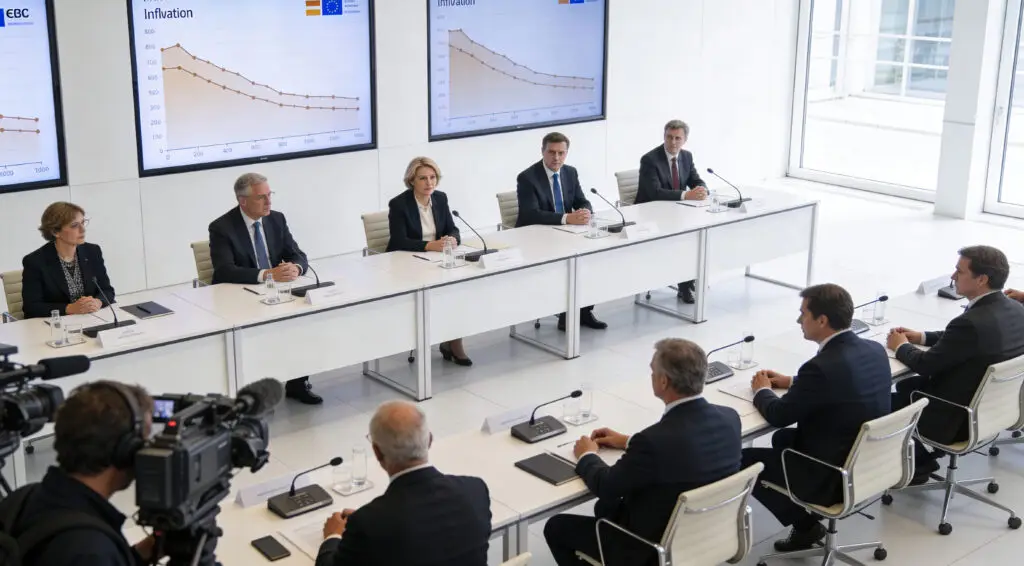
Recent data from Eurostat showed that inflation slowed significantly in January. The annual rate dropped to 1.7%, the lowest level since March 2021. This reading came in below the European Central Bank’s 2% medium-term target.
December’s inflation rate was also revised from 2% to 1.9%. Core inflation, which excludes food and energy, declined to 2.2%. These figures indicate that price pressures are easing across the Eurozone economy.
Source: Equiti/Website
Growth Recovery Complicates Monetary Calculations
Preliminary data showed that Eurozone GDP grew by 0.3% in the fourth quarter. Markets had expected growth to come in closer to 0.2% during the same period. The improvement signals a gradual recovery following a stretch of weak economic activity.
Earlier quarters also displayed modest expansion. Policymakers must balance supporting the recovery while maintaining price stability. Tightening policy too early could jeopardize fragile economic progress.
Manufacturing Weakness Offsets Services Strength
S&P Global purchasing managers’ data delivered mixed signals about economic conditions. Manufacturing remained in contraction territory at 49.7 points. However, the figure slightly exceeded expectations of 49.1.
Meanwhile, the services sector expanded to 51.9 points in January. Still, that reading fell short of the projected 52.6. Divergence between sectors underscores the need for cautious monetary policymaking.
Recommended Article: Bhutan Seeks European Investment as Political Prisoners Endure
ECB Officials Reinforce Steady Rate Expectations
Chief Economist Philip Lane emphasized the importance of stability in near-term policy discussions. He noted that interest rate changes remain unlikely if current trends continue. However, unexpected external shocks could still alter forecasts.
Vice President Luis de Guindos echoed this view. He stated that present interest rate levels are appropriate. Incoming data broadly aligns with institutional expectations.
Market Surveys Signal Policy Pause Through 2026
Analysts at Deutsche Bank expect rates to remain unchanged through 2026. Policymakers appear comfortable given the softer inflation environment. A Bloomberg survey similarly projects deposit rates holding at 2.00% until 2027.
Capital Economics considers early-2026 adjustments highly improbable. A rate cut later in 2026 appears more plausible. Upcoming economic releases will play a decisive role in shaping final decisions.
Potential Euro Reaction Hinges On Tone
One scenario involves steady rates accompanied by dovish communication. Signals pointing toward future cuts could weaken the euro. Currency markets typically respond quickly when easing expectations rise.
Alternatively, a cautious data-dependent stance could stabilize or strengthen the euro. Investors favor clear and predictable forward guidance. Consistency helps reduce volatility across foreign exchange markets.
Lagarde Press Conference Under Intense Focus
Market participants will closely watch President Christine Lagarde’s upcoming remarks. Investors will search her language for clues about future policy direction. Even subtle tonal shifts can influence exchange rates.
The European Central Bank now faces a pivotal moment. Moderating inflation contrasts with tentative growth signals. External risks continue to shape debates surrounding monetary policy.