


Macron And Merz Discuss European Nuclear Umbrella
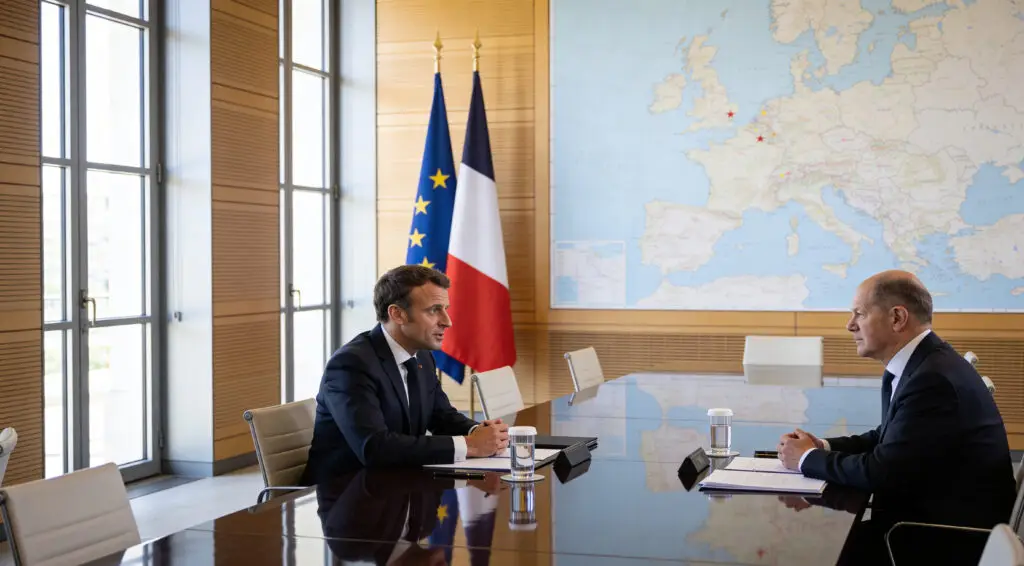
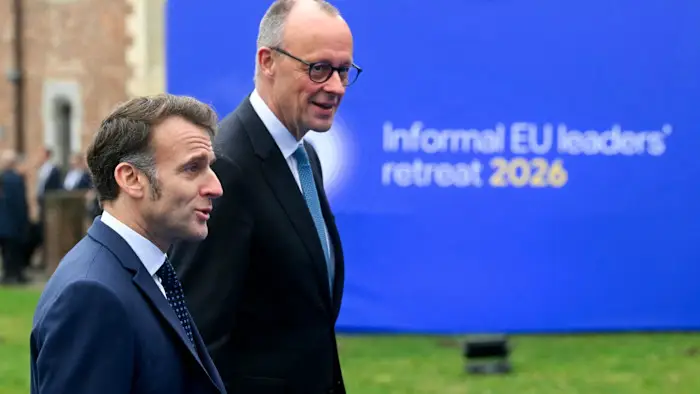
French President Emmanuel Macron and German Chancellor Friedrich Merz have started secret talks about setting up a European nuclear deterrent. The proposal is a response to growing security worries in Europe due to Russia’s military actions and changing geopolitical tensions.
Merz made it clear that the plan would not replace existing transatlantic defense guarantees, but would work with NATO’s nuclear sharing framework. Officials see a protective umbrella that will mostly be supported by France’s weapons for a wider range of European security.
Source: Financial Times/Website
Strategic Shift Driven By Russia And US Uncertainty
The war in Ukraine and Russia’s ongoing military buildup near NATO borders have changed Europe’s security situation a lot. These changes are making policymakers rethink how much they depend on long-standing American nuclear protection agreements.
Washington’s statements and policy signals have made it even less clear whether the US will automatically send troops to Europe in the event of a future crisis. Because of this, Paris and Berlin are carefully looking into whether an extra regional safeguard could make deterrence more believable.
France Supports a Comprehensive Approach to Continental Defense
Macron has been pushing for a long time to change the way Europe protects itself so that it is less dependent on outside powers and has more strategic freedom. His most recent comments stress the need to include French deterrence in a larger continental defense discussion while keeping national command authority.
The French president announced a new strategic reflection meant to make it clearer how national doctrine might fit with the interests of collective security. More information is expected soon, especially about how to work together with Germany and other allies.
Recommended Article: Anduril Eyes $8B Funding To Expand Autonomous Defense Tech
Germany Finds Ways Around Legal Obstacles to Nuclear Participation
Under international law, Germany cannot make, own, or control nuclear weapons. The Nuclear Non-Proliferation Treaty and the 1990 Two-plus-Four Treaty, which set out rules for the time after the Cold War, are 2 examples of these.
So, any European deterrent system must make sure that Germany’s role is more of an advisor than a doer. Policymakers stress following NATO rules and not making interpretations that could break international agreements.
Sovereignty Questions Complicate Deterrence Sharing Plans
Traditionally, French nuclear forces are seen as tools of the state that protect important national interests without outside control. Sharing the power to make decisions could make things less clear when quick action is needed during a crisis.
Analysts say that deterrence depends a lot on enemies thinking that France would put its own safety at risk to protect another country. Unclear command procedures could make people think the strategy isn’t working and make it less effective.
Political Sensitivities And Alliance Risks Persist
The initiative could be affected by politics at home, especially since there are arguments about Macron’s political legitimacy in France. Nuclear cooperation is still very sensitive, and it often makes people in Europe worry and makes parliamentarians look into it.
A bilateral agreement could also make other EU members uneasy because they are afraid of being left out of important decisions. At the same time, Russia could see the move as an escalation, which could make tensions in the region even worse.
Exploratory Talks Signal Early Stage Of Policy Debate
Officials stress that the talks are still in the early stages and that there are still many questions about governance, operational protocols, and NATO integration. The debate brings up important issues of sovereignty that usually need a lot of time and effort to settle through diplomacy.
Even though there are still questions, the conversation shows that Europe is more determined than ever to rethink its defense strategies in a world that is hard to predict. No matter what happens with the idea, it is a big step forward in the continent’s ongoing conversation about security.