



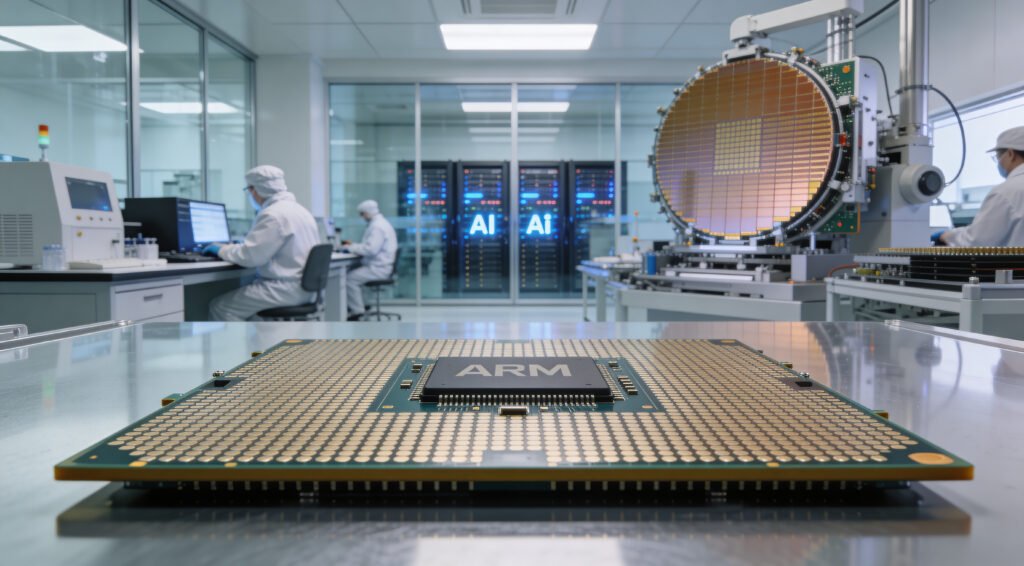
Arm Wants a Bigger Role in the Global Semiconductor Value Chain
Arm has been in a unique position in the semiconductor ecosystem for a long time, powering devices without making chips itself. Its architecture supports billions of products, but most of its money comes from licensing and royalties.
Leadership’s goal now is to have more power by getting more value from the fast-changing chip market. The company is rethinking its old ways of doing things because more people want advanced computing.
Source: The Business Times/Website
Licensing Model Built Ubiquity But Limited Revenue Growth
The company’s licensing system helped Arm designs get into smartphones, tablets, and connected devices all over the world. Customers change those blueprints before making chips on their own or with the help of a third-party manufacturer.
Even though this method made things very big, margins are still limited because the royalty payments are relatively small. As chips get more complicated, executives are more and more likely to see an opportunity in renegotiating terms.
Artificial Intelligence Drives Next Wave Of Chip Demand
Companies need processors that are faster and more efficient, so artificial intelligence is changing the priorities of the semiconductor industry. Arm thinks that its energy-efficient designs make it a good choice for AI workloads on all kinds of devices and infrastructure.
AI adoption is growing the total addressable market, from edge computing to hyperscale data centers. If Arm gets deeper integration, this change could mean higher royalties.
Recommended Article: Microchip Expands Edge AI and EV Tech With Hyundai Deal
SoftBank Pushes Aggressive Expansion Into Data Center Chips
SoftBank, which owns most of Arm, is speeding up its investments to make its semiconductor business stronger around the world. The strategy shows that there is confidence that AI infrastructure will shape the next era of computing.
SoftBank’s support gives them the financial freedom to work on both partnerships and new ideas at the same time. People who watch this think that this alignment is very important for competing with big chip companies.
Data Centers Emerging As Strategic Growth Battlefield
In the past, Arm worked with mobile processors. Now, they are focusing on servers that run cloud platforms and train AI. If this part of the business does well, it could greatly increase royalty streams.
Server chips usually cost more and take longer to deploy than parts for consumer electronics. Entering this space therefore offers meaningful revenue upside.
Competition Intensifies As Chipmakers Chase AI Opportunity
The semiconductor industry is very competitive right now because companies are racing to make processors that are best for AI tasks. Established companies are spending a lot of money to protect their technological edges.
To stay relevant, Arm must stand out by being efficient, scalable, and supporting its ecosystem. Strategic partnerships could be the key to getting business customers.
Royalty Expansion Could Change Arm’s Long-Term Business Model
If the company can get higher royalties, its financial situation could get a lot better. When applied to billions of chips, even small increases become big.
Investors are keeping a close eye on whether Arm can turn its technological relevance into long-term profits. The result could affect its place in a future where AI drives semiconductors.