Manulife’s Global Commitment to Sustainability Grows
Manulife has launched its Impact Forests program, which is a global network of forest restoration sites that aims to improve biodiversity, climate resilience, and community health. The project uses cutting-edge monitoring systems to keep track of environmental and social results as they happen.
The project strengthens Manulife’s long-term commitment to climate adaptation and sustainable investment, with a focus on ecosystems that have been severely harmed by natural disasters. The company wants to lower its environmental risk exposure by restoring important landscapes. This will also help its insurance and asset management businesses reach their bigger sustainability goals.

Source: Insurance Asia
Restoring Forests in Disaster-Impacted Regions
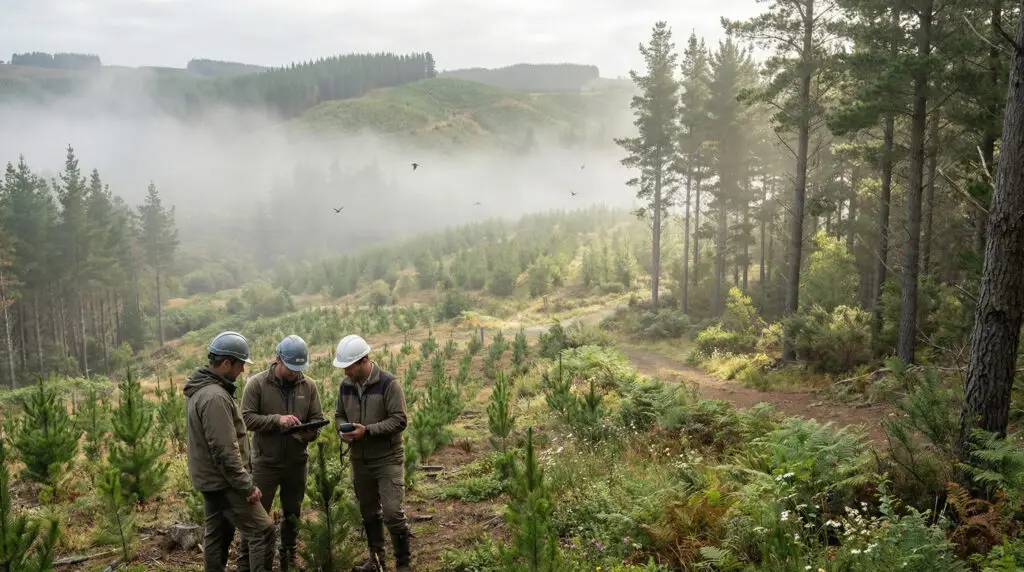
Impact Forests will focus on places that have been hurt by wildfires and bad weather, like the Nicola Watershed in British Columbia and the Rim Fire zone in California. Recent climate events have caused a lot of damage to both areas’ economies and ecosystems.
Manulife’s project will help local ecosystems recover by planting trees, fixing the soil, and bringing back biodiversity. These actions should make local carbon sinks stronger, water systems more stable, and natural barriers against future disasters.
Integrating Smart Forest Technology
Manulife is working with veritree to use Smart Forest technology, a data-driven platform that combines satellite images, bioacoustic monitoring, and ground-level analytics. This will make sure that everything is open and accountable. The system keeps an eye on the health of the forest and the progress of restoration in many areas all the time.
Manulife’s veritree impact platform will share all of the data collected. This will let people see how the reforestation is going in real time. This method improves the accuracy of reports and helps the company measure both climate and social outcomes, which is in line with its focus on measurable sustainability performance.
Recommended Article: Apple Partners with Google to Power AI Upgrade for Siri
Getting Real Results for the Climate and the Community
Since it began, more than 185,000 trees have been planted in Canada, the United States, Cambodia, Japan, and the Philippines, bringing back more than 160 hectares of land. The program looks at both the environmental benefits, like how much carbon it absorbs and how it helps biodiversity recover, and the social benefits, like how many jobs it creates and how it helps people learn.
These combined results give useful information for insurance underwriting and risk assessment because better environmental conditions can lower the risk of natural disasters and make communities more resilient.
Corporate Leaders Emphasize Accountability and Innovation
Ariel Kangasniemi, Manulife’s Global Chief Sustainability Officer, said that the project shows that the company believes “when nature does well, people do well.” She said that Impact Forests are a great example of how Manulife’s global operations combine innovation, responsibility, and caring for the environment.
The partnership with veritree also shows a move toward sustainability investments based on evidence, where checking data is very important for proving claims about climate action and making sure projects succeed in the long term.
Addressing Climate Risks Through Restoration
Insurance companies are putting more and more emphasis on climate adaptation strategies as wildfires, floods, and extreme weather become more common around the world. Manulife’s Impact Forests program helps this change by promoting natural resilience and including ecological restoration in its larger risk mitigation plan.
Healthy forests are like natural defense systems. They soak up carbon, keep temperatures stable, and keep infrastructure safe from flooding and erosion. These functions can help businesses lose a lot less money when disasters happen because of climate change.
A Plan for Companies to Act in a Sustainable Way
The Impact Forests program makes Manulife a leader in corporate responsibility that focuses on climate change. The company shows how insurers can help meet global sustainability goals while also making their operations more resilient by using advanced monitoring technology and ecosystem restoration.
As Manulife grows the project, future ones will likely include partnerships with the community, tools for digital transparency, and climate data analysis. These strategies will work together to make the company better at having a measurable effect on the environment and providing long-term value for people and the planet.