

A Nation Mourns a Historic Leader
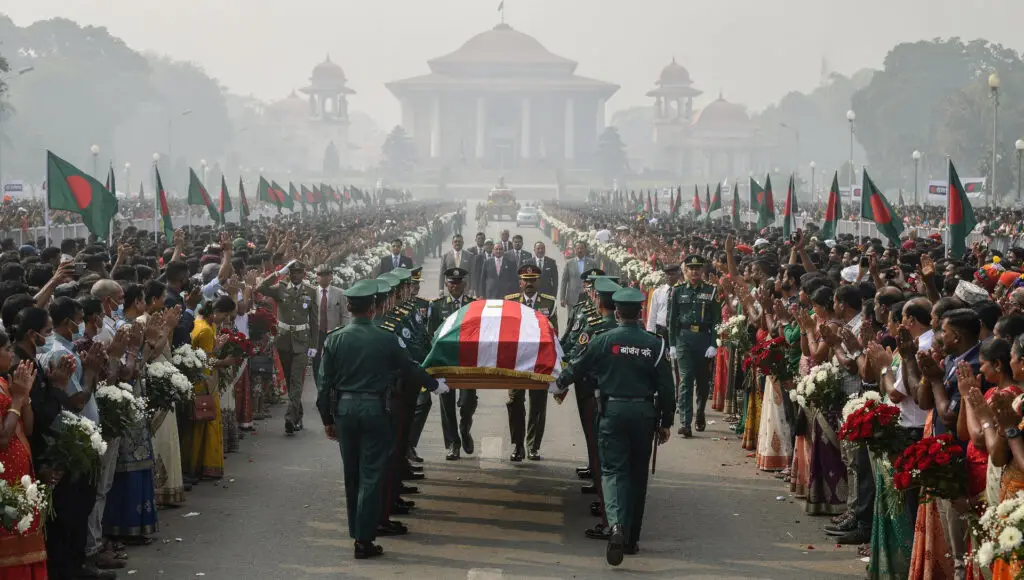
On Wednesday, Dhaka’s streets were full of people as Bangladesh said goodbye to Khaleda Zia, the country’s first female prime minister and a key figure in its political history. A convoy carried her flag-draped coffin to the national parliament, where thousands of people came to pay their last respects. Officials thought that more than 10,000 security personnel were sent to handle the huge crowd.
Zia, who was 79 years old when he died after a long illness, led Bangladesh through times of political unrest and the return of democracy. Her funeral was not only a national event but also a time for millions to think about her as a symbol of strength and change.
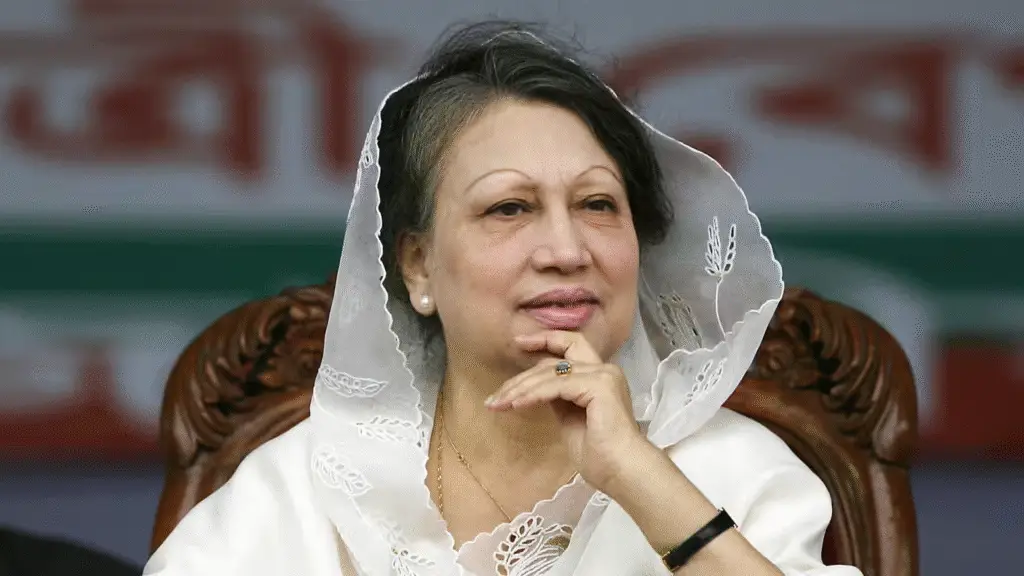
Source: Nikkei Asia
Final Rest Beside Her Husband and Political Partner
Khaleda Zia’s body was buried next to her late husband, former president Ziaur Rahman, who was killed in 1981. This happened after the state ceremony. Dignitaries, military officials, and regular people all came to the burial site to pay their respects with flowers.
Many people who mourned her called her a “beacon of democracy” who led the country through the return of multiparty government in the 1990s. Zia’s three days of state mourning showed how big her legacy was; she brought people together in one of South Asia’s most divided countries.
Emotional Farewell Across Generations
Tanvir Chowdhury, an Al Jazeera reporter in Dhaka, said that people from all walks of life gathered outside parliament to mourn and show support. “Many people are crying,” he said, adding that thousands had come from far away to be there.
Sharmina Siraj, a mother of two, was one of the mourners. She said that Zia had helped girls get an education. She said, “Her stipends changed the lives of so many girls in our country.” Others who had never supported her politically still came and called her a “veteran politician whose contributions will always be remembered.”
Recommended Article: Taiwan Opposition Launches Symbolic Impeachment Drive
Tributes Pour In From Around the World
People from all over the world sent their condolences, and world leaders praised Zia’s work to improve democracy in South Asia. The Indian government sent Foreign Minister Subrahmanyam Jaishankar to Dhaka. This was the highest-level visit by an Indian official to Dhaka since the overthrow of former Prime Minister Sheikh Hasina.
Jaishankar met with Tarique Rahman, Zia’s son and the acting chairman of the Bangladesh Nationalist Party (BNP). He told Rahman that India was “deeply sorry.” Leaders in the region praised Zia’s legacy as a trailblazer who broke down political barriers for women and stood up for Bangladesh’s democratic values even when things were hard for her.
A Political Rival’s Unexpected Message
Sheikh Hasina, Zia’s longtime political rival and the former prime minister who was forced to leave the country and is now living in exile in India, prayed for her dead enemy in an unexpected move. Hasina, who is now banned from the Awami League, said in a statement that she prayed “for the eternal peace and forgiveness of Begum Khaleda Zia’s soul.”
After a lot of people protested in 2024, Hasina lost her job. Later, she was sentenced to death in absentia for her part in a deadly crackdown on protesters. Many people saw her message of condolence as a rare moment of politeness between the two most powerful political families in Bangladesh.
Tarique Rahman Returns to Lead the BNP
Just weeks before the February 2026 elections, Khaleda Zia’s death has changed the political scene in Bangladesh. Her son Tarique Rahman promised to carry on her political vision when he came back to Bangladesh after 17 years in the UK.
He said in a statement that his mother was “a guiding presence that shaped the nation’s democratic aspirations.” He also talked about her “unbreakable resilience” in the face of jail time, political persecution, and poor health. After being in opposition for years, analysts say that Rahman could now lead the BNP to a comeback in the polls.
A Legacy of Struggle and Perseverance
Khaleda Zia’s political career was marked by determination. She became the first woman prime minister of the country in 1991 and had to deal with times of trouble, accusations of corruption, and personal loss. Her imprisonment in 2018 under Hasina’s government and release in 2024 showed both her suffering and how important she still is.
Zia had promised to run for office in the upcoming elections, even though her health was getting worse. This shows how determined she was to see democracy fully restored. People who support her say that she leaves behind a legacy of bravery and leadership that will last for generations.
Bangladesh Reflects on an Era’s End
Khaleda Zia’s funeral marked the end of an era for millions of Bangladeshis that shaped the country’s political identity. As her coffin was carried past the parliament she once led, people who were sad chanted her name together, bringing together people who had been divided by politics for a long time.
The events of the day, which were full of sadness but also gratitude, showed how deeply her impact went beyond party lines. Bangladesh said goodbye to more than just a leader when she died. She was a woman who represented the country’s difficult path to democracy and hope.