YouTube Adds Deepfake Detection Tools For Famous People
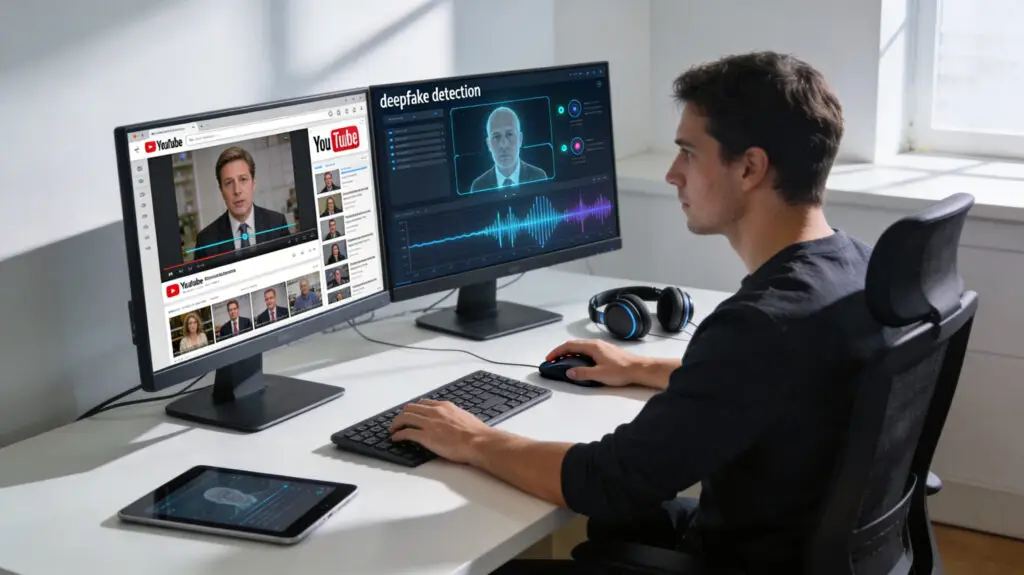
YouTube has made a new tool for finding deepfakes that is only for politicians, journalists, and other public figures. The feature lets people find AI-made videos that look like them online. The goal of the project is to keep people who often talk about politics and breaking news safe.
The company said the tool was part of a larger effort to deal with false information made with AI. Deepfake videos can make public figures’ faces, voices, and actions look and sound very real. Platforms are under more and more pressure to keep this kind of content from misleading people.
Source: The Hollywood Reporter
Tool Helps Detect AI Videos Using Personal Likeness
The detection system finds videos that look like the registered participant’s face. Once users sign up, they get alerts if videos that look like them show up on the platform. This lets them look over the content and ask for it to be taken down if they need to.
Participants must send in proof of identity, such as a government-issued ID and a video of themselves. YouTube can use these materials to make a secure identity profile that can be used to find people. The system can use the information to find possible deepfake impersonations that are going around online.
Expansion Comes After Creator Program’s First Rollout
The new project is based on a similar detection tool that was already available to members of the YouTube Partner Program. That earlier rollout let some creators keep an eye on AI content that looked like them. The company now offers the technology to people who take part in discussions about public policy.
YouTube said that keeping people’s identities safe in political discussions is becoming more important for the site. Journalists, politicians, and public officials are often the targets of false information campaigns. Deepfake videos could hurt people’s reputations or mislead voters at political events.
Recommended Article: LINE AI Agents Turn Messaging Apps Into Sales Channels Fast
Rising Deepfake Technology Raises Misinformation Concerns
Tools for making fake videos have become much more realistic thanks to improvements in artificial intelligence. Modern AI systems can very accurately copy facial expressions, voices, and speech patterns. This quick progress makes people more worried about false information spreading on digital platforms.
Deepfake videos can change how people see things by showing people saying or doing things they never did. This kind of fake news could spread quickly on social media before it is checked for accuracy. Because of this, technology companies are under more and more pressure to find and limit harmful AI content.
YouTube Balances Free Expression With Content Safety
YouTube said its rules protect free speech while addressing the risks of false content. In the past, the platform has allowed parody, satire, and political commentary about famous people. But the company says these uses are not the same as malicious impersonation meant to trick people.
The new tool is only for finding fake AI-made media that uses someone’s likeness. Depending on the situation, the platform may still allow real satire or commentary. YouTube says the system tries to find a balance between protecting people’s identities and allowing them to be creative.
Participants Can Flag And Request Removal Of Deepfakes
Once users sign up, YouTube Studio will notify them when its system finds deepfake videos online. YouTube will flag affected people, who can review the content and decide whether it accurately represents them. They can ask YouTube to remove the video from the platform if necessary.
This system gives people who are directly affected by AI impersonation the power to make decisions. Users decide if flagged content is harmful manipulation or acceptable creative expression. The method makes it easier to report problems with high-profile accounts.
YouTube Plans To Expand Detection Technology To More Areas
YouTube officials say that over time, more and more people will be able to use the deepfake detection program. The business plans to make the technology available to more public figures and creators. As detection algorithms get better, future updates may make things more accurate.
The platform said that the identity information that participants give will not be used to train Google’s AI models. The information will only help the system that finds people who are trying to impersonate someone else. As AI-generated media continues to get better, it may become necessary to make these kinds of tools more widely available.