


Starmer Visit Signals Renewed Sino-British Engagement
Keir Starmer, the Prime Minister of the United Kingdom, finished a 4-day trip to China that included meetings with top leaders in Beijing. President Xi Jinping, Premier Li Qiang, and legislative chairman Zhao Leji all gave the British leader a very formal welcome. The long, 80-minute talk between Xi and Starmer showed that both sides wanted to have a deeper strategic conversation.
Xi stressed the need for a “grand view of history” and called for cooperation that goes beyond differences while encouraging respect and shared success. This kind of language stood out because it doesn’t come up very often when meeting with foreign heads of government. Analysts thought the language was carefully planned diplomatic messaging.
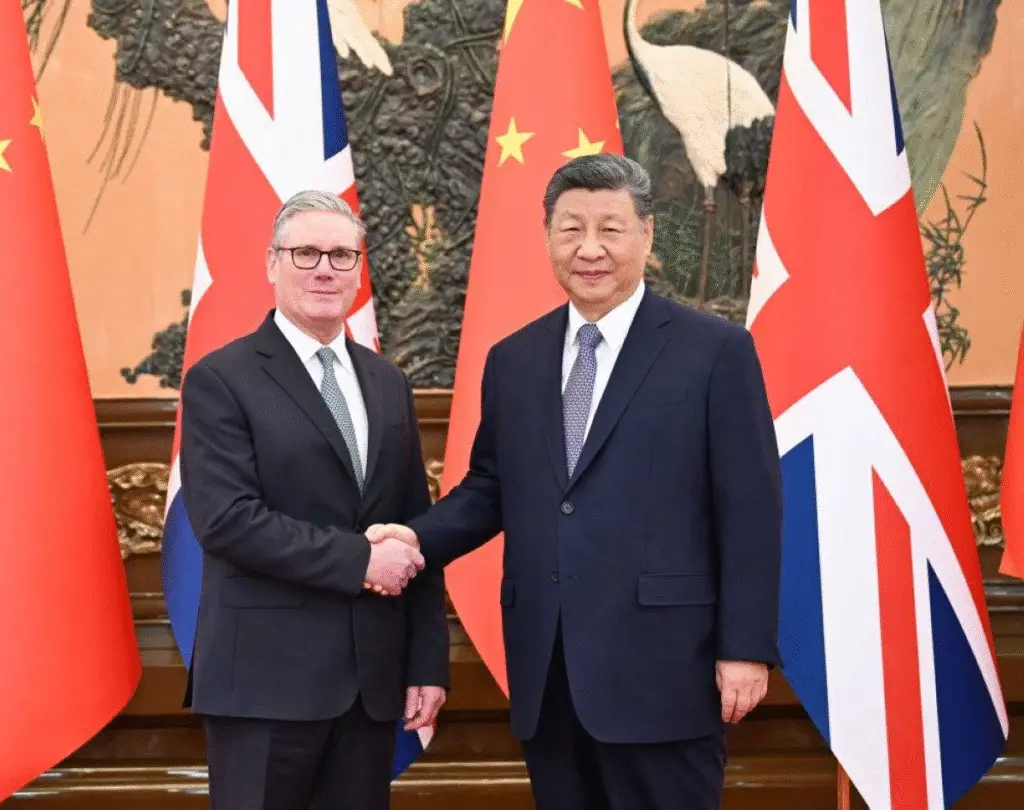
Source: The Manila Times/Website
Grand View of History Has a Strategic Subtext
The idea came up before in discussions among Communist Party members, telling officials to look at historical trends when making long-term plans for the country. Xi seemed to be telling Britain to think about the long-term when it comes to bilateral relations, not just the short-term, by bringing it up in public. People who study Marxist political thought say that the phrase has ideological meaning.
Using this language in a diplomatic setting probably showed how Beijing saw changing Western policies toward China. Some experts see it as a warning against forgetting about strategy when the world is going through a lot of changes. China’s approach to international partnerships is often shaped by its history.
From the Golden Age to Strategic Drift
Starmer warned that relations shouldn’t go from a “golden age” that everyone loved to a long period of diplomatic coldness. That earlier time came after Xi’s state visit in 2015, when both countries saw a full partnership that would help with finance and investment. Britain even became the first Western country to sell bonds in the Chinese currency.
But later changes in the world changed that path when Washington started trade wars with Beijing. London was more and more in line with containment measures that included limiting technology, reducing supply chain risks, and fighting over human rights. These changes effectively ended earlier plans for deeper integration.
Recommended Article: Pope Leo XIV Condemns Human Trafficking as Crime
Britain’s Outreach Seen as Strategic Hedge
Recent overtures toward Beijing don’t seem like a big change; they seem more like a way to protect against growing uncertainty in transatlantic relations. Analysts say that European governments are looking for more diverse partnerships because they can’t count on Washington’s policy signals. In unstable geopolitical situations, being able to change your plans quickly has become more important.
From China’s perspective, renewed engagement may appear opportunistic unless it is accompanied by a consistent long-term commitment. Beijing is said to like partners who can think strategically on their own instead of just reacting to events. So, credibility depends on keeping policies in line.
Western Leaders Increasingly Engage Beijing
Starmer’s trip came at the same time as a larger wave of Western diplomatic activity aimed at building stronger economic ties with China. Earlier, Canada’s prime minister went to Beijing and signed several agreements. He also pushed for partnerships that are both open and safe. Finnish leaders also traveled with business leaders to open up more trade opportunities.
These visits show that people know about China’s big market, stable policies, and role in global supply chains. Even when there are political differences, economic pragmatism often drives people to get involved. Governments seem eager to find ways to grow.
U.S. Policy Uncertainty Reshapes Alliances
Worries about the US acting alone have shaken up traditional alliances and made partners look for other ways to work together. President Donald Trump spoke out against long-standing institutions at international meetings and threatened tariffs against important allies. This kind of talk has made people feel like things are even more unpredictable.
Episodes of territorial commentary and defense obligations exacerbated diplomatic tensions throughout Europe and North America. When reliability is in doubt, countries usually expand their strategic options to lower the risks of dependency. Diversification has become a major theme.
China Wants to Be a Stable Partner in the World
Chinese officials say that multilateralism and a stable economic policy are 2 things that set China apart from other countries and make it appealing to foreign governments that are going through tough times. Some European leaders, like the president of France, have said that working with China could help the world economy become more stable. There are reports that Germany is thinking about doing something similar.
Beijing says it wants partners, not formal allies, and it values working together based on equality and respect. Officials say that being patient is better than using threats and force to get things done. As the world changes, those who want to stay involved for a long time may help shape the next stage of international order.