



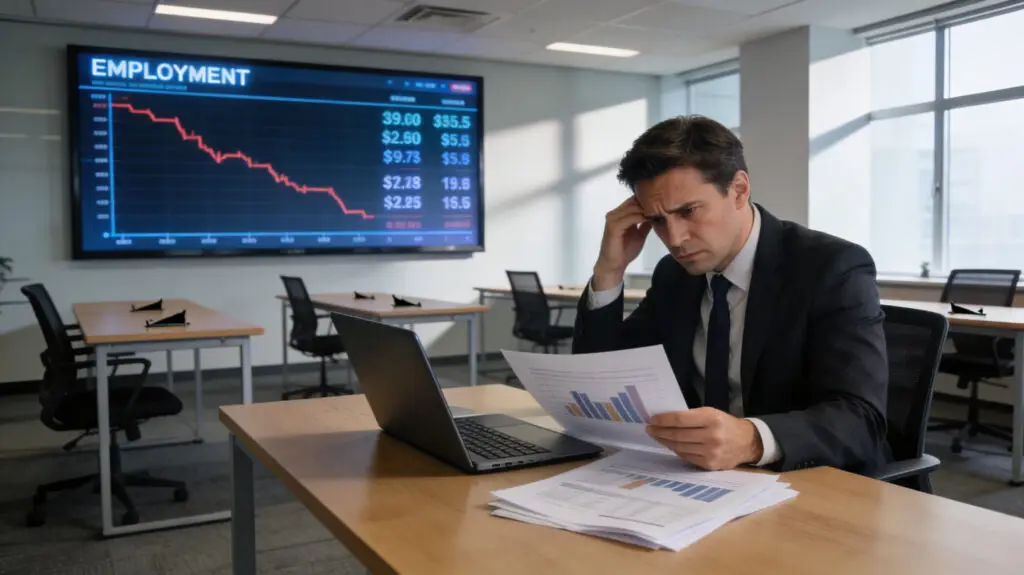
Unexpected Drop in Payroll Shocks Job Market Outlook
Analysts were surprised that the US economy lost 92,000 jobs in February. Economists had expected hiring to remain stable despite mounting economic pressures. The unemployment rate rose to 4.4% during the same period.
This marked the largest monthly decline since the October government shutdown. The data renewed concerns about weakening labor market momentum. Investors reacted quickly following the unexpected contraction.

Source: Fox Business
Job Losses Spread Across Key Sectors
Nearly every major industry reported employment declines last month. Healthcare, typically a strong performer, experienced significant job losses. Labor strikes contributed to reduced healthcare staffing levels.
Federal government employment also continued its downward trend. In February alone, 10,000 federal positions were eliminated. Since October 2024, total federal employment has fallen by 330,000.
Revisions Deepen Concerns Over Hiring Slowdown
The Department of Labor revised December and January payroll figures lower. Those adjustments suggest weaker underlying momentum entering the new year. Hiring in 2025 was already at its lowest level since the pandemic.
Samuel Tombs of Pantheon Macroeconomics rejected narratives of stabilization. He argued the latest data contradicts claims of labor market improvement. Analysts now question whether deeper structural weaknesses are emerging.
Recommended Article: Amber Beverage UK Names New Managing Director
Market Reaction Increases Pressure on White House
Wall Street stocks declined following the employment report release. Investors interpreted the figures as evidence of slowing growth. Market sentiment remains fragile amid broader economic uncertainty.
Donald Trump faces renewed scrutiny over economic performance. Elizabeth Warren and other Democrats criticized administration policies. White House officials minimized the significance of the report.
Oil Price Surge Complicates Economic Outlook
Rising oil prices linked to Middle East tensions add further risk. Higher energy costs can reduce corporate margins and dampen consumer spending. Analysts warn sustained spikes could restrain GDP growth.
Elevated fuel prices may also reignite inflationary pressures. This dynamic complicates policymaking decisions. Geopolitical uncertainty now weighs more heavily on economic forecasts.
Federal Reserve Confronts Policy Dilemma
A weakening labor market typically prompts Federal Reserve rate cuts. Lower borrowing costs can encourage hiring and investment. However, inflation risks complicate straightforward easing.
Ellen Zentner of Morgan Stanley Wealth Management noted policymakers face competing pressures. Rate reductions might support employment but increase price instability. The central bank appears caught between opposing risks.
Outlook Depends on Growth and Policy Response
Kevin Hassett, a White House adviser, expressed optimism about future job growth. He maintained that the economy would remain resilient in coming months. Supporters argue short-term volatility obscures broader trends.
Nevertheless, February’s contraction has heightened investor caution. Continued weakness could intensify recession concerns. The next employment report will be critical in determining direction.