


UNESCO And The Philippines Partner On Ethical AI Development
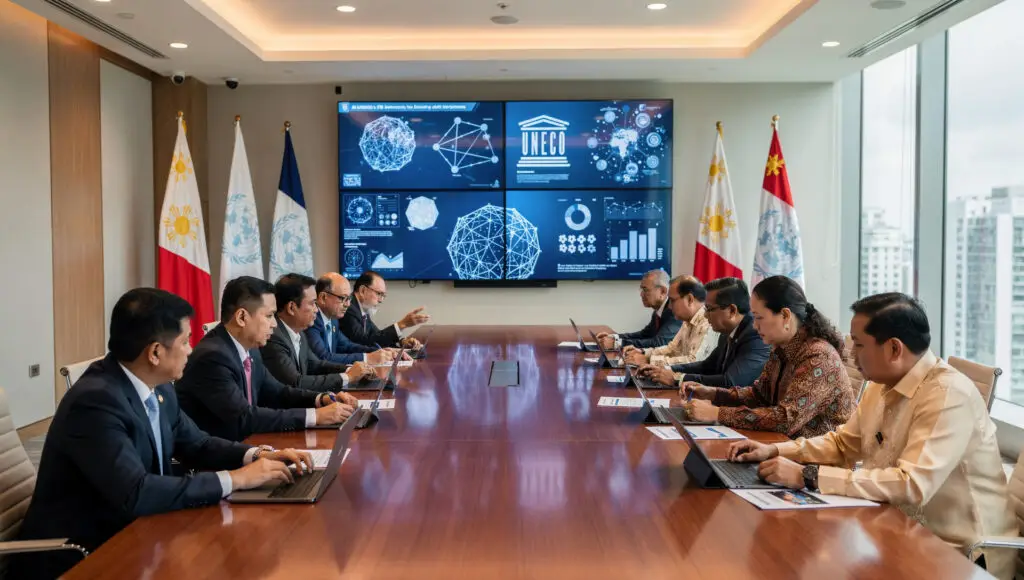
UNESCO has finished the AI Readiness Assessment Report for the Philippines. This is a big step forward in the country’s efforts to have responsible and ethical AI governance. The paper, which was put together with the help of the Department of Science and Technology (DOST), lays out a plan for how to use AI in a way that includes everyone and lasts.
The project started in Manila on November 28, 2025, and it fits with the work on the National AI Strategy for the Philippines (NAIS Ph). It shows that the country is starting to see artificial intelligence as a powerful tool for social and economic growth.

Nationwide Consultations Lay Foundation For AI Readiness
Starting in September 2024, UNESCO and the Philippine government sponsored policy consultation workshops across Luzon, Visayas, and Mindanao. Experts from government, academia, civil society, and business came together for these sessions to look at AI preparedness from five angles: legal, social, cultural, economic, educational, and technological.
The conversations led to the creation of a single AI Readiness Assessment Report that shows both the problems and the chances of developing a responsible AI ecosystem. It wants to make sure that using technology makes innovation and ethical standards that are oriented on people stronger.
UNESCO Emphasizes Human-Centered AI Governance
Maki Katsuno-Hayashikawa, UNESCO’s Director to the Philippines, says that AI must have ethical grounds to stay in line with people. “Technology must be linked to inclusion and sustainable development,” she stated, stressing the importance of including ethics in AI policy frameworks.
She also said that UNESCO’s methods help nations create AI governance models that put equality, social inclusion, and digital literacy first so that technology doesn’t make inequities worse.
Recommended Article: Travelsoft Introduces AI Search Platform For Global Travel
Government Commits To Responsible AI Implementation
Science Secretary Renato Solidum Jr. said again that the Philippines is dedicated to making AI innovation available, ethical, and useful for genuine problems in society. The government wants to reconcile innovation with public accountability and inclusiveness through NAIS Ph.
He saw the UNESCO study as a useful addition to existing national efforts and called it “a collaborative guide to make the Philippines truly AI-ready.”
UN Calls For Inclusive AI And Development Equity
Arnaud Peral, the UN’s Resident Coordinator in the Philippines, stressed the need for making AI policy decisions that include everyone. He said that AI can speed up the growth of a country, but it must also protect human rights and equality.
Peral added, “The Philippines is at a turning point.” “Using AI responsibly can open up new opportunities in many fields, but no one should be left behind.”
The Philippines’ AI Readiness Landscape
The study lists a few problems that need to be improved right away. It wants a single lead agency to bring AI governance together and make sure that current regulations like the Cybercrime Prevention Act of 2012 and the Data Privacy Act of 2020 are in line with each other.
Even if there are problems with infrastructure and not enough people have access to broadband, the Philippines has made progress in gender equality and AI ethics. But people still have conflicting feelings about AI, with worries about job loss, lack of transparency, and data exploitation all present.
Policy Recommendations For A Sustainable AI Future
The paper says that Filipino ethics should be included in AI policies to make it more resilient in the long run. This is backed up by local academic and anthropological studies. It wants the DOST-PCIEERD to set up a National AI Research Fund to pay for indigenous research and innovation.
Investing in research and development (R&D) in key areas including IT-BPO, agriculture, manufacturing, and logistics might help the Philippines stay competitive and reduce the innovation gap. The paper says that to establish an AI ecosystem that is ethical, open to everyone, and ready for the future, everyone in society has to work together.