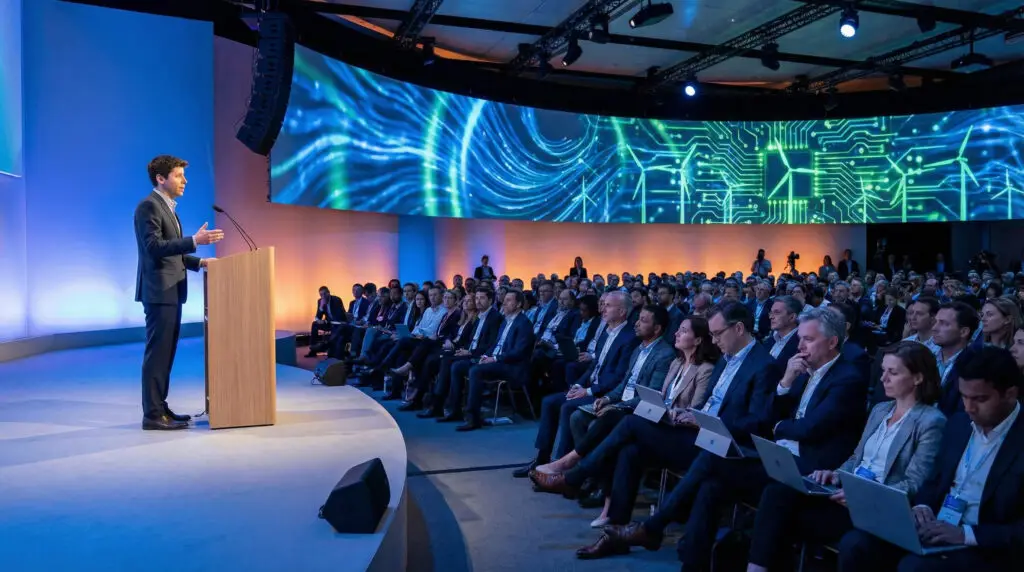
Altman Denies Viral Claims About AI’s Use of Water and Power
Sam Altman said that claims that ChatGPT uses too much energy and water were not true. He said that numbers that were widely accepted were not accurate and had no scientific basis. A lot of assumptions came from old cooling methods that aren’t used in most modern buildings anymore.
He made it clear that today’s data centers use a lot less water that evaporates. Improvements in infrastructure make large-scale computing operations work more efficiently. Altman stressed that false information takes away from important environmental issues that need to be talked about.
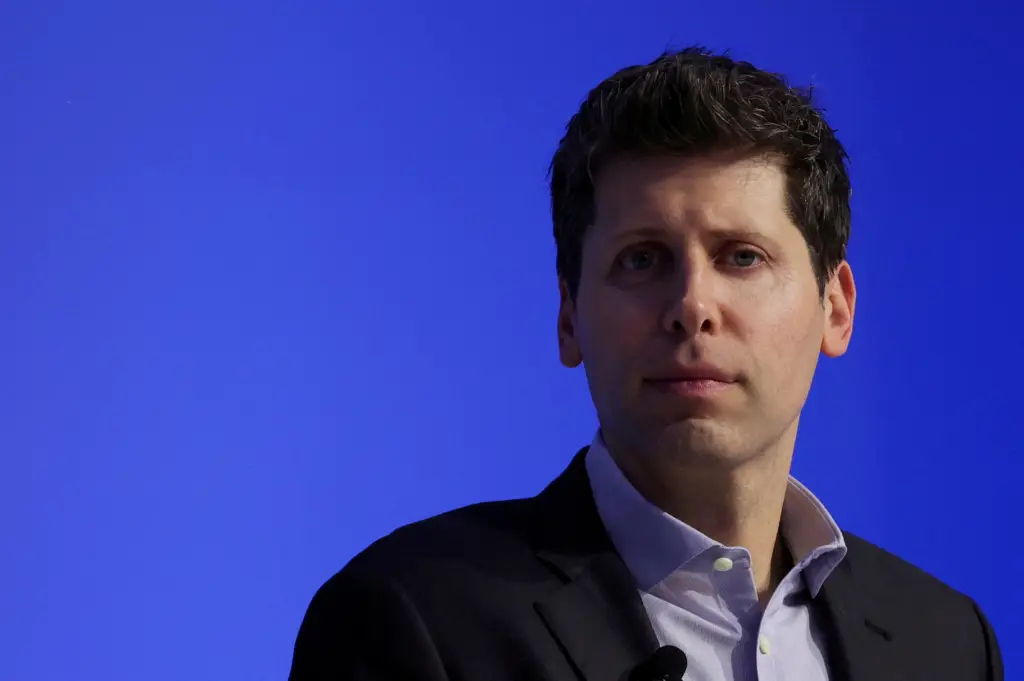
Source: Reuters/Website
OpenAI CEO Says Energy Debate Requires Nuanced Contextual Analysis
Altman said again that the total energy footprint of AI is still a real problem around the world. But he wanted a more balanced comparison instead of a sensationalist narrative framing that is common in online debates. Assessing the demands of the entire life cycle yields a more precise evaluation of the actual resource impact.
He compared short-term inference comparisons to longer-term human development timelines. It takes years of using biological energy for humans to learn before they can do something. He contended that analogous standards ought to govern the equitable assessment of artificial systems.
Altman Compares the Costs of Training AI to the Needs of Human Development
The CEO took issue with people who said that training AI is like doing one task at a time. He said that people need decades of learning about nutrition and how evolution works. Historically, these long-term processes have used up a lot of resources over many generations.
Altman said that AI systems should be compared after they have been trained. He said that answering the same questions shows that systems work at the same level of efficiency. He said that AI performance is now as good as that of trained humans when it comes to energy efficiency.
Recommended Article: OpenAI Approves First Insurer AI App Inside ChatGPT Platform
Clean Energy Expansion Needed To Support Growing AI Adoption
Altman said that the growing use of AI is driving up global energy demand. He pushed for quick investments in nuclear, wind, and solar energy sources that would last. Long-term scalability depends on safely speeding up the growth of renewable energy capacity to support technological progress.
He told policymakers to put modern grid development at the top of their list so that more people could use it. Adding clean energy makes things more reliable and has a big effect on the environment. Future AI infrastructure must be in line with global strategies for reducing carbon emissions.
Altman Rejects Proposals For Orbital Data Centers As Unrealistic
At the India summit, Altman turned down ideas for data centers in space. He said that high launch costs and major logistical problems made it impossible. It is still almost impossible to fix important parts like GPUs in orbit.
Altman said that solutions on land are better for the global infrastructure because they cost less. Power generation on Earth is still much cheaper than sending power to space. He said that space centers won’t really be able to grow with the technology we have now.
Space Based Infrastructure May Emerge Eventually But Not Soon
Altman said that space applications could be useful in the future for certain tasks. But right now, engineering problems make it hard to use across a wide range of computational workloads. Innovation in the near future will focus on land-based systems that offer immediate benefits.
He warned that orbital solutions need big advances before they can be sold. Industry leaders put the most value on improvements that can be made in a reasonable amount of time and money. Altman said again that orbital centers won’t be very important this decade.
AI Summit Highlights Need For Balanced Innovation And Regulation
Altman’s comments added to the larger conversations about how to govern AI around the world. Leaders stressed the importance of responsible development to make sure that technology is used in a way that is fair and long-lasting. Environmental issues are still very important for making policies that will guide international cooperation in the future.
Stakeholders asked for a joint plan that would look at energy ethics and the need to build more infrastructure. The environmental impact of AI will affect discussions about what regulations should look like and how to encourage innovation. Altman asked for more openness to support informed conversation among people all over the world.