

Russia Signals Longer Economic Slowdown
The Russian government has said that the country’s economic slowdown will probably last through the first half of the year. Officials now think that a real recovery won’t happen until 2027. The new outlook takes into account the growing pressures on the economy as a whole.
Maxim Reshetnikov, the Minister of Economic Development, said that policymakers are keeping a close eye on inflation trends and working with the central bank to coordinate their responses. Despite ongoing uncertainty, officials want to stabilize growth. Policy alignment is still very important.
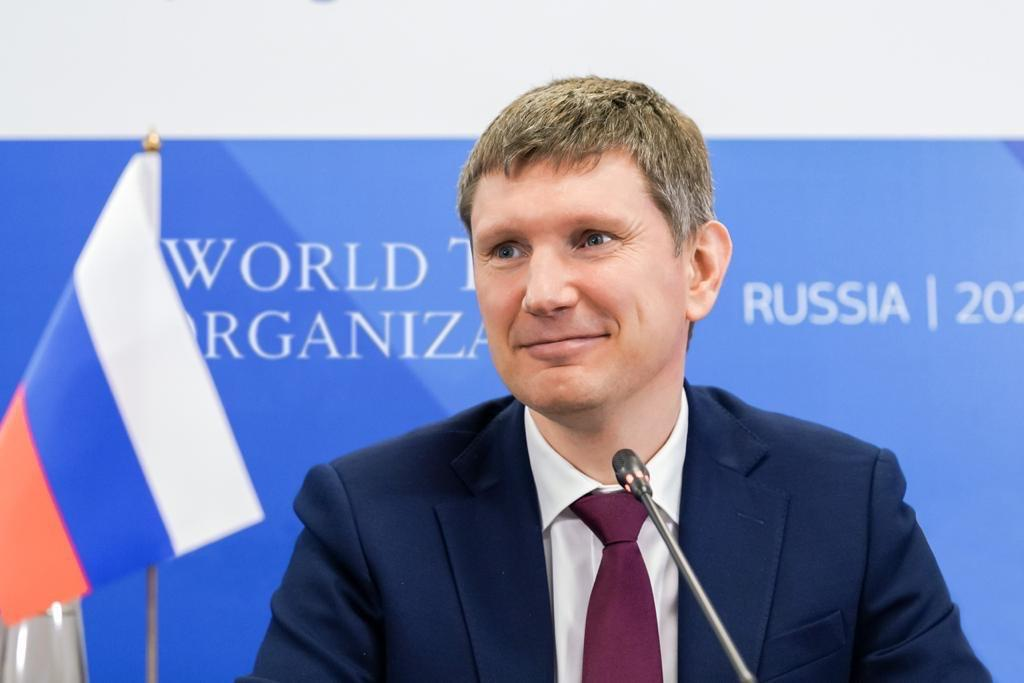
Source: Interfax/Website
Inflation Pressures Shape Policy Decisions
Reshetnikov said that inflation went up in part because the value-added tax changed a little and food prices went up in January. These changes made it harder to keep prices stable for a short time. Volatility in the short term continues.
Officials think that inflation will slowly go down after the initial spike and get closer to the government’s four percent goal. But it usually takes six to nine months for monetary policy to have its full effect. You need to be patient.
It Takes Time for Monetary Policy to Work
Central banks often use delayed transmission mechanisms, which means that changes in interest rates don’t immediately change how the economy works. Because of this, Russia’s leaders are getting ready for a slow process of stabilization. People are still being careful with their hopes.
These kinds of lag effects can make it hard for businesses to plan investments because the costs of borrowing and demand signals change slowly. In these situations, strategic forecasting gets harder. Confidence in businesses may change.
Recommended Article: Russia’s Economy Stalls And What It Means For War
Growth Predictions Stay Low
The central bank of Russia now thinks that the economy will grow by between 0.5% and 1.5% in 2026. These estimates show that the economy is not growing as quickly as it did in previous years. The rate of growth is slowing down.
Analysts see the cautious outlook as proof that structural problems and outside pressures are still holding back growth. The economy is moving into a lower-growth phase, as shown by moderate growth. It looks like an adjustment is happening.
Recent Performance Shows Clear Deceleration
In 2023, the economy grew by about 4.1 percent. In 2024, it grew even more, to about 4.9 percent. But last year, growth dropped sharply to about one percent. The path shows a clear slowdown.
Changes like these usually mean that financial conditions are getting worse, people are spending less, or businesses are investing less. Policymakers need to find a balance between short-term stability and long-term growth goals. There will always be trade-offs.
Tax Changes Influence Short-Term Trends
The choice to change the timing of VAT effectively pushed some price pressures into the new year, which delayed the full effect of monetary policy. The method was meant to control inflation expectations, but it caused short-term problems. Timing is important.
Food inflation also had a big effect on the headline numbers, which was due to changes in the supply chain and prices in the US. People’s views on the economy are often based on the availability of basic goods. Sensitivity is still high.
Recovery Hinges on Stability and Policy Execution
Officials had hoped that recovery would start later this year, but new estimates have pushed that date back even further. Policy discipline over time will probably be the deciding factor in whether stabilization works. Execution is the most important thing.
In the end, Russia’s future depends on keeping inflation in check, rebuilding trust, and encouraging productive investment. Until those things happen, growth may stay slow. It looks like the road to recovery will be slow.