


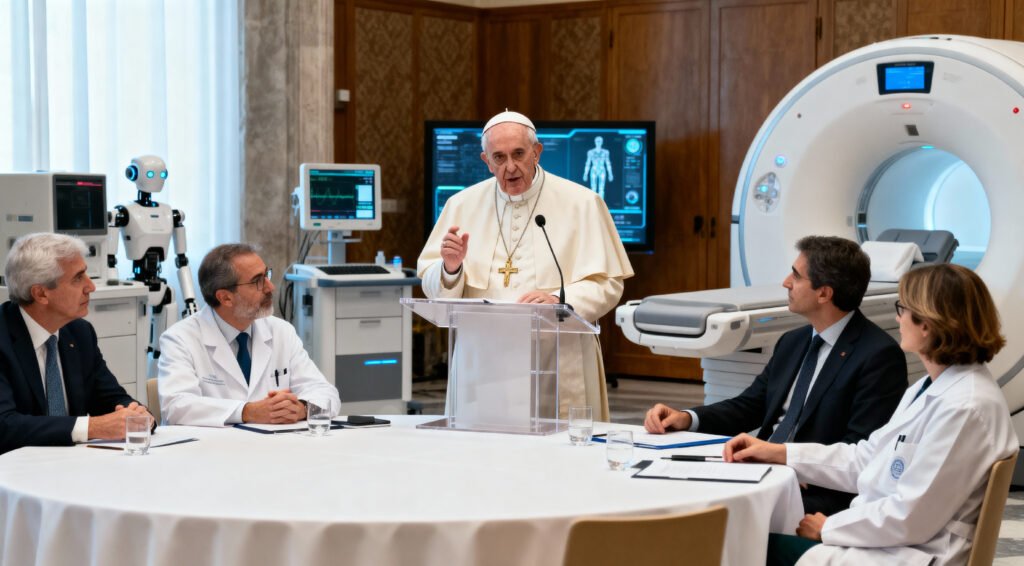
Pope Highlights Human Dignity in AI-Driven Healthcare
Pope Leo XIV has challenged world leaders in medicine and technology to act with more ethical responsibility when using artificial intelligence (AI) in healthcare.
He stressed that the more vulnerable a person’s life, the more responsibility we bear to protect it, regardless of whether that care is delivered personally or with the help of AI.
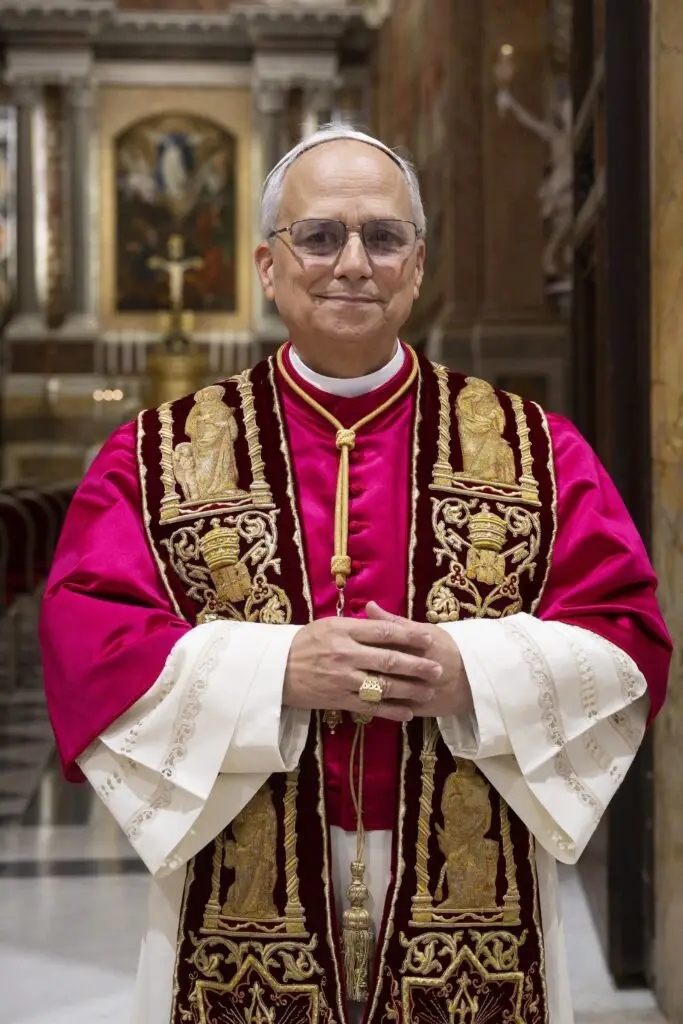
AI Should Strengthen Human Connection, Not Replace It
In a statement delivered to the international conference “AI and Medicine: The Challenge of Human Dignity,” Pope Leo emphasized that artificial intelligence should strengthen, not undermine, the bonds between people in the field of healthcare.
He cautioned that, despite AI’s impressive ability to diagnose and analyze data, it should never replace the empathy and human connection that are vital to the healing process.
Conference Explores Ethics and Human Contact in AI Medicine
The summit, taking place in Rome from November 10 to 12, was a collaborative effort between the Pontifical Academy for Life and the International Federation of Catholic Medical Associations.
The participants reviewed the growing use of artificial intelligence in medicine, including diagnostics, personalized treatments, and radiography. They also focused on the need for maintaining ethical standards and patient confidence.
Recommended Article: Philippines Boosts AI TB Detection To Meet 2030 Targets
A Call for Global Cooperation Beyond Economic Gain
Pope Leo warned against letting business or political interests steer the course of medical AI’s evolution.
He urged a wide-ranging global collaboration, bringing together governments, healthcare experts, and technology specialists. The goal? To make sure that the progress of AI benefits people, not just businesses.
Technology’s Influence on Human Perception and Identity
The Pope reflected on how technology has become a major part of daily life, affecting not only how people think but also how they see themselves and others.
He cautioned that frequent engagement with smart computers would cause people to view them as human conversation partners. This, he said, might slowly chip away at authentic social bonds and the capacity for empathy.
Risk of Losing Human Presence Amid AI Progress
Pope Leo warned that society’s growing dependence on technology might lead to a loss of human connection, causing people to forget what makes them special.
He recognized AI’s impact on health and research, although he stressed the importance of keeping ethical considerations and empathy at the forefront of all advancements.
Defending Human Dignity as a Moral Imperative
Echoing Catholic doctrine, the pope stated that every person is endowed with intrinsic worth, a value “willed, created, and loved by God.”
He concluded that the more fragile life is, the more ethical behavior is needed from those who care for it. This served as a reminder to both scientists and clinicians that moral integrity must accompany technological advancement.