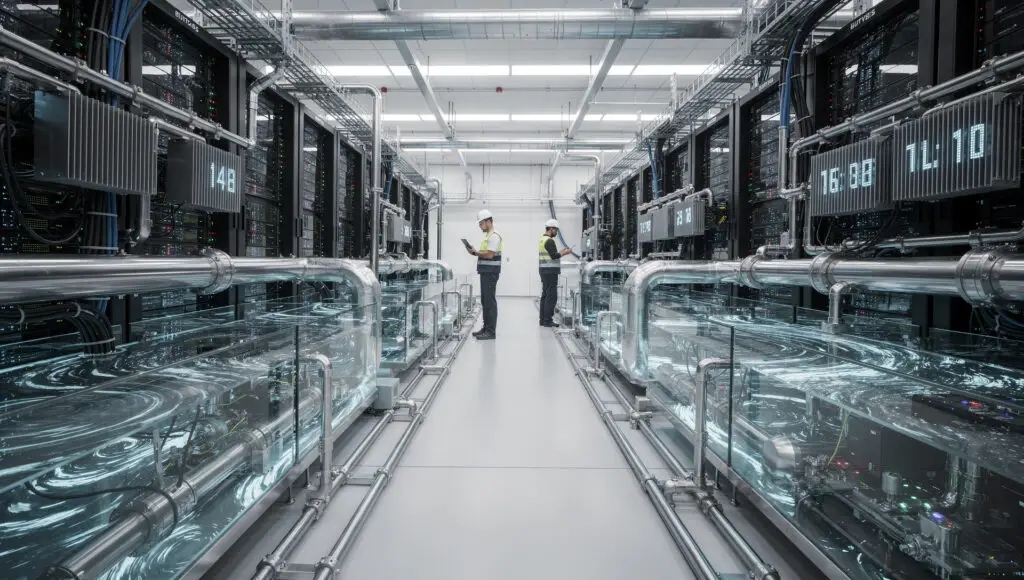
Data Centers Depend on Advanced Cooling to Function Reliably
Modern data centers run all the time at very high speeds, which makes a lot of heat that could make the system unstable. So, advanced cooling systems are necessary to keep hardware from breaking down and causing downtime.
Servers can quickly overheat without proper cooling, and whole buildings can shut down if they do. So, cooling infrastructure is just as important as the hardware that runs the computers.
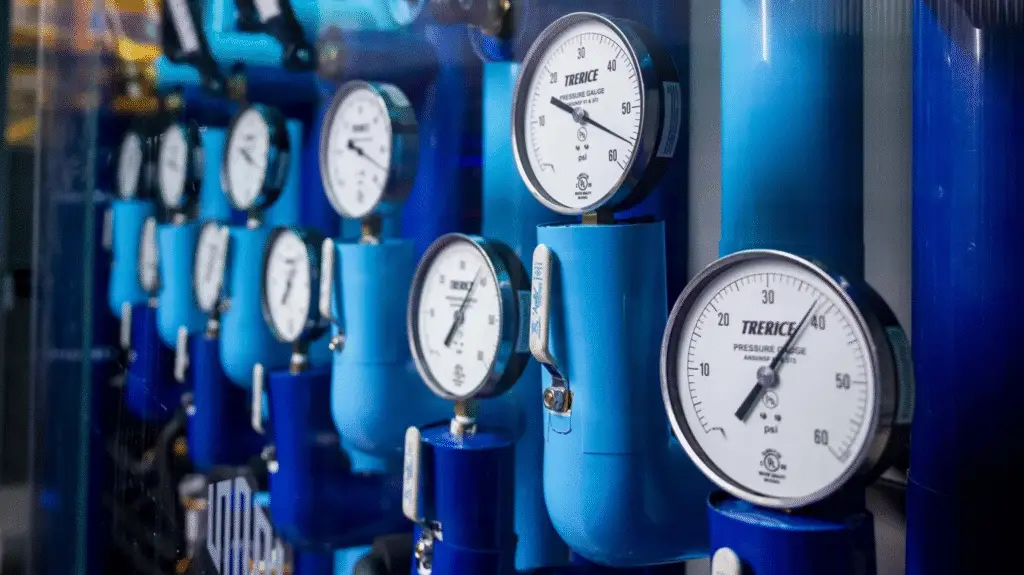
Liquid Cooling Uses Showers and Baths for Chips
Some data centers now use liquid showers that drip directly onto hot parts. So, heat is removed quickly, which lets computers run faster.
In some designs, servers are put in fluid baths that flow around them. Because of this, chips can run safely in overclocked conditions without breaking.
Cooling Failures Highlight Infrastructure Vulnerabilities
A recent failure of cooling in a data center in the United States stopped financial trading systems. As a result, operators added more cooling power to stop future problems.
This event showed how problems with cooling can affect digital infrastructure all over the world. So, redundancy and resilience are becoming more and more important.
Recommended Article: Alexandr Wang Leads Meta’s $14B Superintelligence Revolution
Environmental Concerns Drive Demand for Efficient Cooling
As the need for data centers grows, so does the focus on how much water and energy they use. Because of this, groups that care about the environment have asked for limits on new buildings.
Operators are now looking for cooling technologies that use fewer resources and have less of an effect on the community. Because of this, innovation is speeding up in the whole industry.
Iceotope Promotes Energy-Efficient Liquid Cooling Systems
Iceotope makes liquid cooling systems that use less power and water. Because of this, its technology doesn’t need fans and works quietly.
The company says that its method can cut the cost of cooling energy by a lot. So, making things more efficient helps both sustainability and making money.
Cooling Chemicals Raise Safety and Climate Questions
Some liquid cooling systems use refrigerants that have harmful PFAS chemicals in them. As a result, safety and environmental risks have raised concerns among regulators.
Experts say that some refrigerants can leak strong greenhouse gases. Because of this, manufacturers are looking into safer options.
AI Workloads Intensify Cooling Challenges
More people want to use artificial intelligence workloads, which makes data centers hotter. Because of this, cooling systems need to be able to handle more energy.
Researchers and businesses are still trying out new ways to cool things down. In the end, innovation will decide if data centers can support AI growth in the long term.