


Japan And UNESCO Partner To Strengthen Youth Opportunities
Japan and UNESCO have made their partnership official. Its goal is to help people in Palestine make a living and get their economy back on track. The goal of the initiative is to give young people who have been affected by a crisis the skills they need to meet the changing needs of the job market.
Officials called the deal a strategic response to the ongoing economic problems that are hurting young people. The program’s main goal is to promote stability and create more ways for people to become more resilient over time.
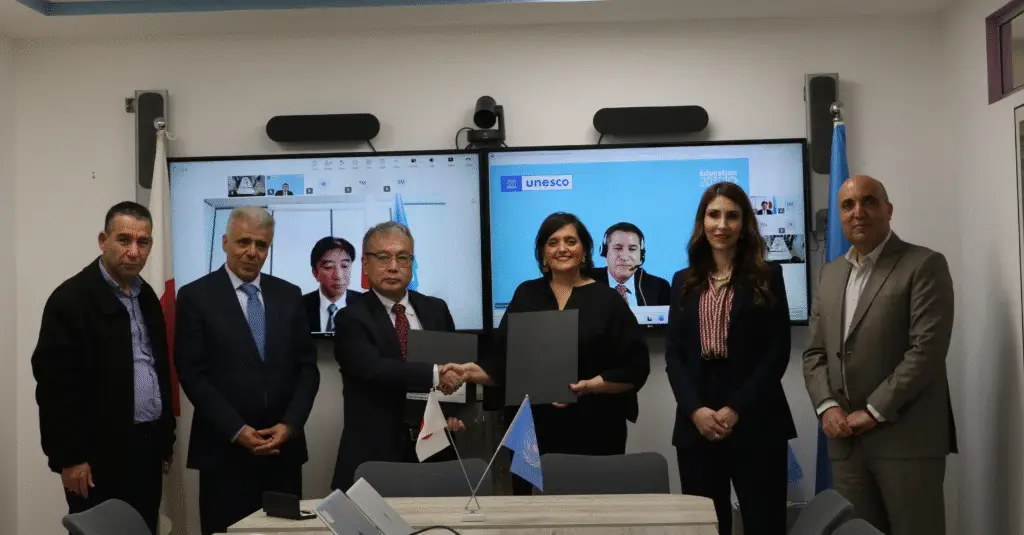
Source: UNESCO/Website
Accelerated Training Aims to Help Palestinian Youth Affected by Crisis
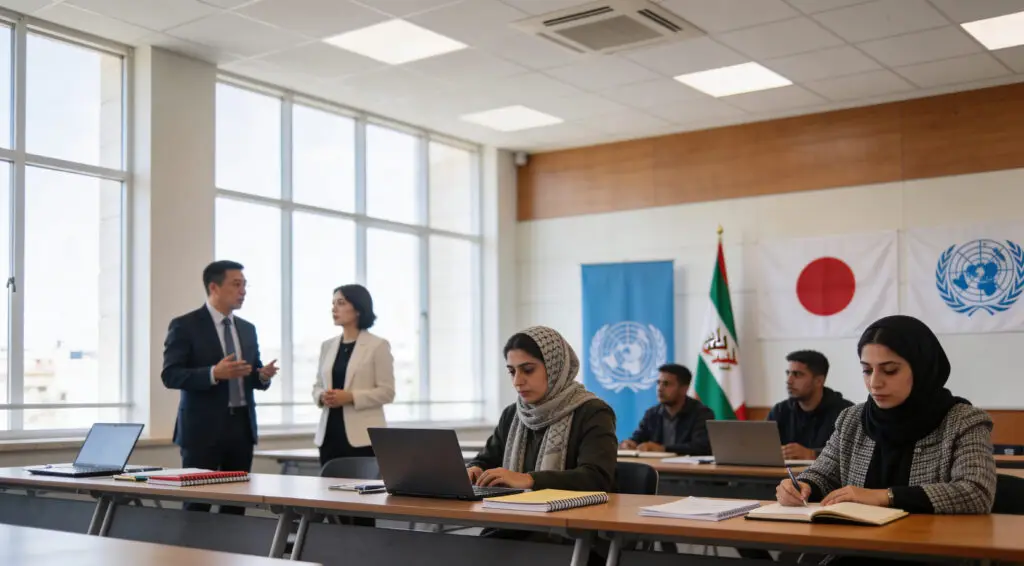
Participants in Gaza and the West Bank who are 15 years old or older will get faster vocational training through the project. Courses are meant to quickly fill gaps in the workforce while also making it easier for people to find work.
Organizers stress flexibility by using blended learning methods that mix in-person and online instruction. This structure makes it possible for training to continue even when there are problems with mobility or infrastructure.
Temporary Learning Spaces Will Expand Education Access
A temporary learning space and vocational training unit will be set up to hold structured training sessions. These facilities want to make safe places where young people can work on improving their skills.
The program builds on UNESCO’s existing educational infrastructure that is already in place in the Gaza Strip. Making these spaces bigger helps make sure that learning is always available, even when things are still unclear.
Recommended Article: Japan Election Landslide Gives Takaichi Powerful Mandate Win
Curriculum Adaptation Aligns Skills With Labor Market Needs
Training sessions will use modified curricula that take into account the current state of the economy and what employers want. Learning materials will focus on real-world skills that make you ready for work right away.
There are also programs to help teachers build their skills so that the quality of education stays high. Improving teaching skills makes sure that participants get the right help during their training cycles.
Mental Health Support Integrated Into Workforce Preparation
Structured psychosocial support will go along with technical training to help people who may not want to participate because of emotional issues. Giving people access to mental health resources shows that people are starting to understand how trauma affects learning.
Leaders of the program think that better health leads to better focus, more confidence, and better chances of getting a job in the long run. Adding support services makes both education more effective and social inclusion stronger.
Collaboration With Ministries Enhances Implementation Capacity
The plan will be put into action with the help of Palestine’s Ministry of Education and Higher Education and Ministry of Labor. The government is expected to help with logistics and make sure that training is in line with national goals.
Working together like this also helps institutions take ownership, which makes it more likely that the program will have long-lasting effects. When international organizations and local governments work together, recovery efforts often move more quickly.
Signing Ceremony Highlights International Commitment To Recovery
A ceremony in Ramallah with high-ranking diplomats and educators made the agreement official. Japan and UNESCO both said again that they would help young people recover.
Leaders said they hoped the program would help all Palestinian communities grow economically. Continued cooperation between countries is still important for rebuilding lives and making sure there are more opportunities in the future.