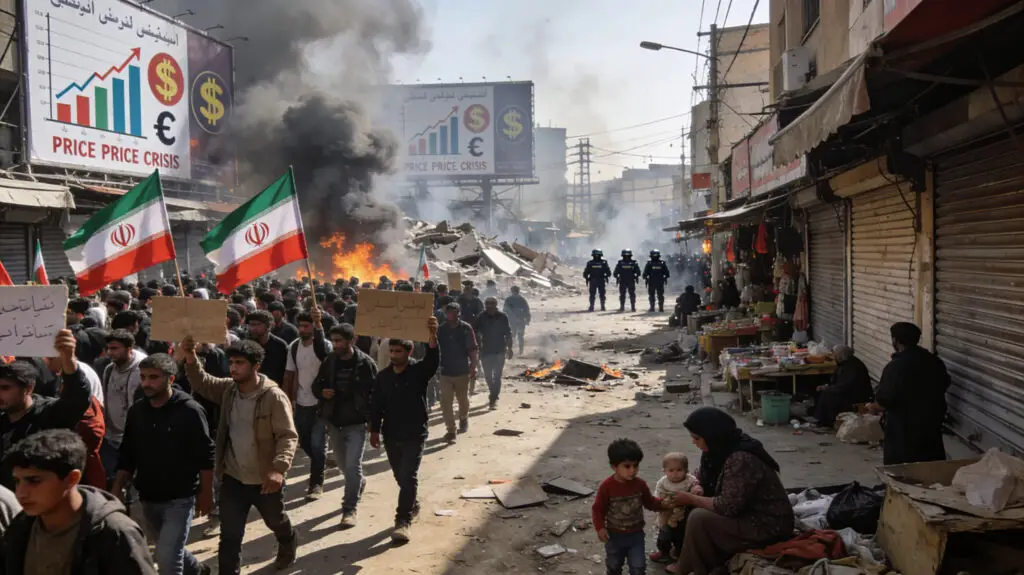
Currency Collapse Accelerated Household Financial Desperation
Iran’s economy deteriorated sharply after renewed sanctions accelerated the rial’s collapse, eroding household purchasing power nationwide. The currency lost more than half its value, which made food, medicine, and other basic services much more expensive very quickly.
Domestic policy decisions compounded external pressure as confidence weakened and savings evaporated across urban and rural communities. Workers with fixed incomes found that their paychecks didn’t mean much anymore because prices were going up and exchange rates were changing all the time.
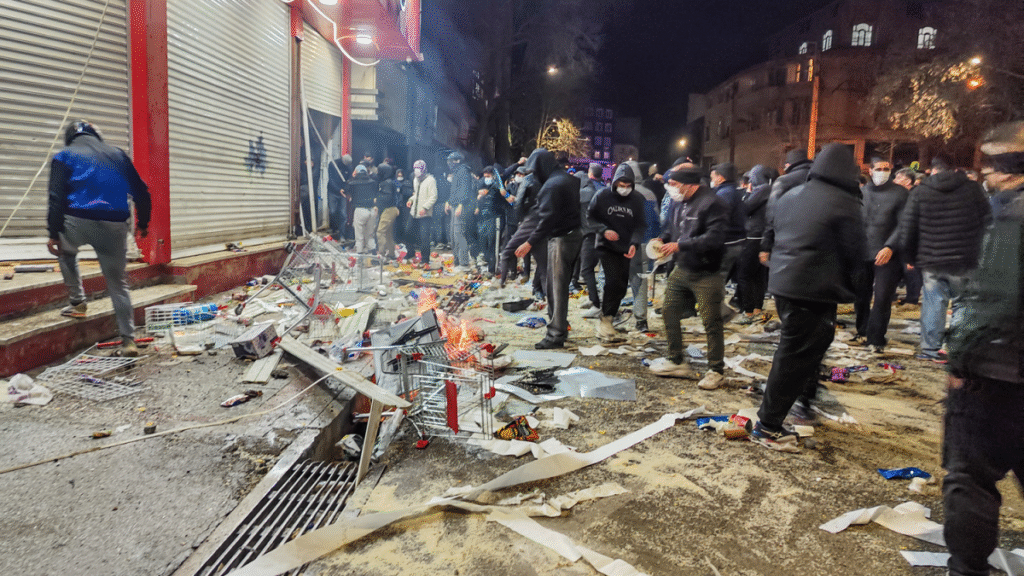
Source: Foreign Policy/Website
Subsidy Removal Triggered Sudden Inflation Shock
The government’s choice to get rid of special import exchange rates caused prices of basic goods to rise right away. Monthly price increases reached near record levels, shocking consumers already struggling under prolonged economic pressure.
Food prices went up the most quickly, making oils, meat, and dairy staples that millions of Iranian families couldn’t afford. Inflation accelerated far beyond wage growth, eliminating coping mechanisms for low-income and informal workers.
Workers Struggle As Food Becomes Unaffordable
Manual laborers and construction workers reported severe declines in living standards as daily survival costs skyrocketed. Eggs, once a cheap protein source, became inaccessible, symbolizing broader food insecurity across cities.
Employment opportunities also dried up as construction slowed and small businesses closed under economic stress. Many workers were forced to abandon families or rely on charity to meet basic nutritional needs.
Recommended Article: Trump Praises Iran After Reported Halt of Mass Execution Plans
Patients Give Up Treatment Because of High Healthcare Costs
Rising medical prices mirrored food inflation, leaving chronically ill patients unable to continue essential treatments. Vaccine doses, medications, and specialist care doubled or tripled in cost within weeks.
Patients had to choose between buying food or paying for life-saving medical care. Families sold their property, got rid of their assets, and took on debt to put off health problems that couldn’t be fixed.
Poverty Becomes Visible In Urban Public Spaces
Child labor and street begging increased dramatically as families exhausted all remaining resources. Intersections and shopping centers became gathering points for hungry children seeking food assistance.
As inflation outpaced social safety nets and informal safety nets fell apart, urban poverty got worse. Visible hardship reinforced public anger toward perceived government mismanagement and indifference.
Bazaar Protests Ignite Nationwide Unrest
The first people to take action after the economy collapsed were merchants and shopkeepers whose businesses were hurt by unstable prices and currency. The closing of bazaars was a rare break between traditional business classes and the government.
Protests quickly grew from complaints about the economy to more general political dissent in many provinces. Protester anger intensified as security forces responded with escalating violence and repression.
Crackdown And Internet Shutdown Deepen Economic Damage
Authorities imposed a nationwide internet blackout to suppress mobilization, severely harming Iran’s fragile digital economy. Online businesses suffered millions in daily losses, further reducing employment and household income.
The violent crackdown resulted in thousands of civilian casualties, intensifying public outrage and international scrutiny. Economic collapse, repression, and isolation combined to entrench Iran’s most severe domestic crisis in decades.