Vietnam Awards 5G Deals To Huawei And ZTE
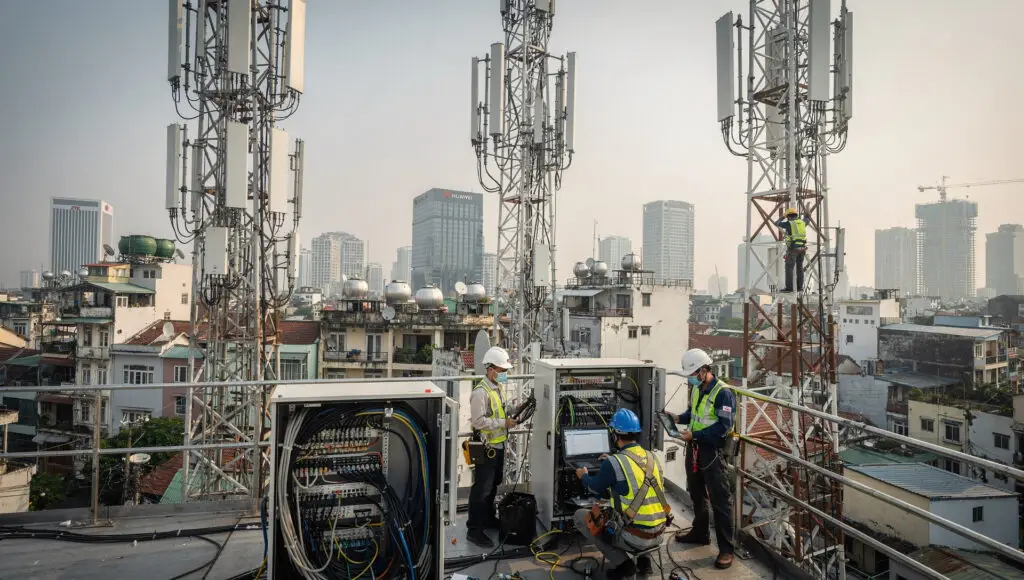
Vietnam has given China’s Huawei and ZTE fresh contracts for 5G equipment. This shows that the country is changing how it deals with Chinese technology as trade tensions with the U.S. rise. At least seven people who know about the situation told Reuters that Chinese companies have started obtaining important 5G contracts that were previously won by Western companies.
After years of being careful about national security dangers, these changes show that Vietnam is becoming less strict with Beijing. The decision has worried Western countries, who have long told Hanoi to stay away from Chinese suppliers when it comes to important digital infrastructure.

Source: Rappler
U.S. Tariffs Put Pressure On Vietnam’s Trade
The contracts come at a time when the U.S. has put additional tariffs on Vietnamese exports, which has made it harder for Hanoi to do business with Washington. Some experts think that the tariffs may have sped up Vietnam’s dealings with Chinese suppliers, who offered better prices and faster delivery.
Ericsson, Nokia, and Qualcomm are still Vietnam’s key suppliers of 5G core networks, but Huawei and ZTE are already getting smaller state-owned operator projects, which gives them a foothold in antenna and network hardware contracts.
Details Of The New Chinese Contracts
A Huawei-led group is said to have received a $23 million agreement for 5G equipment in April 2025, just after the U.S. announced fresh tariffs. ZTE, on the other hand, signed two antenna contracts for more than $20 million, the last of which was signed only last week.
According to tender documents that Reuters looked at, Huawei lost a number of bids early this year but kept offering technical services and looking for strategic collaborations. In June, Huawei inked a deal with Viettel, the military-owned telecom company, to transfer 5G technology. This shows that Huawei still has a lot of power in Vietnam’s telecom industry.
Recommended Article: Ocumetics Launches $2.5M LIFE Offering Led by Centurion One
Western Officials Raise Security Concerns
Western diplomats and security officials are worried that Vietnam is becoming more dependent on Chinese technology. According to reports, high-ranking U.S. officials cautioned at two recent meetings in Hanoi that Chinese 5G providers might put data integrity and network dependability at risk.
One idea that is being looked at is to separate network zones that are supplied by China to limit access to sensitive data. But analysts said that even antenna providers may indirectly get to network data, which makes cybersecurity threats much worse.
Strategic Shifts In Vietnam–China Relations
Vietnam has traditionally had a strategy of strategic independence, keeping good ties with both China and the West. But the current warming of relations with Beijing, together with the economic pressure from U.S. tariffs, seems to have pushed Hanoi to work with Chinese IT companies in a practical way.
Both governments have also restarted infrastructure projects that had been put on hold, such as cross-border rail projects and special economic zones along the Chinese border. This shows that the region is becoming more integrated.
Reasons For 5G Choices Based On Money
People in the telecom industry say that pricing is still the most important consideration for Vietnamese telecom companies when deciding between Huawei and ZTE. An unidentified Viettel official said that Chinese offers were far cheaper than those from Western vendors.
Dr. Nguyen Hung, a supply chain specialist at RMIT University Vietnam, said that in the past, Vietnam had taken a “wait-and-see” strategy when pressured by the West. Now, however, the country wants to focus on becoming economically competitive and technologically independent.
Western Partners Think About What To Do Next
For a long time, the U.S. and certain European countries have seen Vietnam as an important digital partner in Southeast Asia. Because of worries about national security, both Huawei and ZTE are not allowed to use U.S. telecom networks and are limited in other European nations, including Sweden.
Innocenzo Genna, a telecom expert, said that “Western contractors may now have to work with companies they don’t trust,” which may be unpleasant. Having both Chinese and Western suppliers in Vietnam’s 5G ecosystem might make it harder for companies to work together in the future, especially in areas where data is sensitive.
Vietnam’s Balancing Act Continues
Vietnam is still an important part of the global supply chain since it is becoming a technological hub and a key manufacturing base for Apple, Samsung, and Nike. But its choice to diversify its 5G relationships shows that there is a bigger balancing act going on in the world between commercial realism and security alignment.
Washington may see Vietnam’s change as a strategic setback, but the leaders in Hanoi seem more concerned with keeping their independence and making sure that the country’s connectivity aspirations keep moving forward, no matter what happens in the world.