Cambridge Study Reveals Growing Anxiety Among Authors
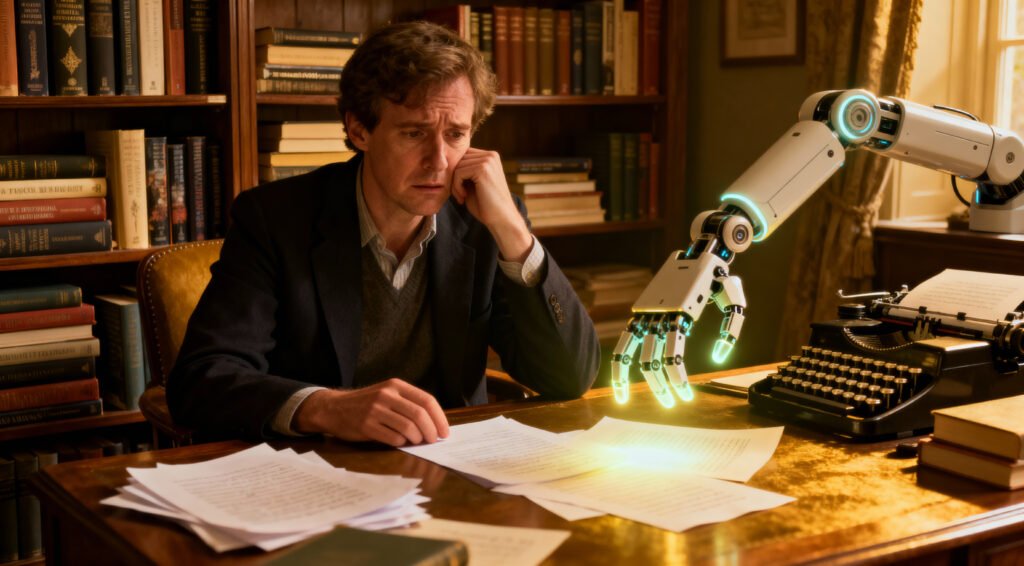
Over 50% of authors in the UK think AI may take their jobs. A team at the University of Cambridge has expressed serious worries about the impact of generative AI on literature and the potential harm to creative professionals.
The research, which included 258 writers and 74 publishing professionals, found that 51% of the participants expected AI technologies to completely replace human roles. Many authors have also stated that their work was exploited without permission to train massive language models, which are the basis for new text-generation systems.

Generative AI Disrupts Literary Markets And Income Streams
39% of those surveyed reported a decline in their earnings, attributing it to the proliferation of AI-generated fiction in various markets. Most anticipate a continued downturn, given the proliferation of automated books on online platforms, which are driving down the perceived value of long-form writing.
Writers reported seeing AI-generated titles falsely linked to their names, along with reviews that seemed to be written by machines. The rise of AI-generated articles, they said, might tarnish reputations and eat into earnings.
Romance And Thriller Writers Most Exposed To Automation
Romance writers were identified as the group most likely to be affected by AI competition, with thriller authors following closely behind. The proliferation of algorithmically generated content has been particularly pronounced in these genres, especially on self-publishing platforms that operate without oversight.
Writers have voiced concerns that AI’s rapid output and little expense give certain firms an edge, enabling them to churn out inexpensive knockoffs. This situation undermines both diversity and creative integrity in a market that increasingly values quantity over quality.
Recommended Article: Philippines Boosts AI TB Detection To Meet 2030 Targets
Copyright Protection And Consent At The Core Of Disputes
Critics of existing copyright laws voiced their concerns about how these frameworks inadequately shield authors from having their work scraped for AI training purposes. The plea was for informed consent, equitable recompense, and more robust government oversight to protect the rights of creators.
The core issue was the idea of allowing AI companies to scrape text unless the original writers specifically said otherwise. Critics said that the strategy erodes artistic rights, perhaps paving the way for exploitation masquerading as progress.
Mixed Feelings On AI Tools Within Creative Workflows
Despite these misgivings, one-third of the writers polled said they used AI for specific, practical activities, including doing research. In contrast, most people opposed using artificial intelligence for creating or editing creative works, citing ethical and artistic reasons.
Dr. Clementine Collett, the report’s author, stated that authors still value the efficiency technology provides. Despite this, people are still cautious about letting computers, which lack human sensitivity and emotional understanding, dominate the story.
Cultural Consequences And Declining Reading Habits
Authors worry that the rise of AI-generated writing might weaken the special connection between writers and their audience. Critics worried that using algorithms to create text might lessen the cultural richness and emotional impact of literature.
This unease aligns with a troubling trend: reading rates are at a record low, especially among the younger generation. A mere 1 in 3 youngsters in the UK now report enjoying reading for pleasure, marking the lowest figure in 20 years.
Legal Battles Highlight Tension Between Writers And AI Firms
The research arrives amid increasing legal examination of how AI developers are using data without permission. In September, Anthropic settled global writers’ copyright infringement charges, agreeing to a $1.5 billion payment.
Writers believe these trials will set legal standards that ensure openness and accountability in how AI systems are trained. For many, the future of storytelling hinges on protecting the value of human creativity from being copied by machines.