



Court Strikes Down IEEPA Tariffs But Fails To Provide Broader Policy Direction
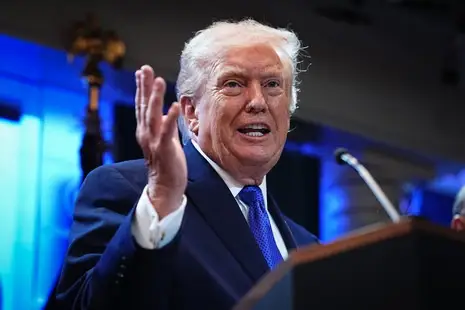
The Supreme Court said that President Donald Trump broke the law when he put global tariffs in place under the IEEPA law. The decision limited the president’s power to impose duties when there was no emergency. This decision threw out the legal basis for Trump’s broad tariff plan.
But the decision only affected IEEPA powers, not all trade tools that are available. So, businesses still don’t know what the government will do next. White House officials said they would use other legal ways to replace tariffs.
Source: The Guardian
Trade Experts Warn Ruling Clarifies Little For Companies Seeking Predictability
William Bain, the head of policy for the British Chambers of Commerce, said that the ruling makes it clear what executives can and can’t do. But he said it doesn’t make the overall trading environment more stable. Many businesses still don’t know what the rules are for compliance.
Bain stressed that Trump can still use other trade laws. The 1974 Trade Act, which allows for even higher duties, is one of these. Because of this, businesses have to deal with a policymaking environment that is always changing and hard to predict.
Countries Seek Guidance As Washington Plans New Tariff Mechanisms Immediately
Olof Gill, a spokesman for the European Commission, said that Brussels is closely looking at the ruling. He said that predictability is very important for trade across the Atlantic. European businesses are still worried that changes in tariffs could mess up their supply chains.
Canada also said it was worried about the same thing. Officials said that new systems might be bigger and more disruptive. They called for coordination to lessen the economic impact on interconnected markets.
Recommended Article: Trump And Netanyahu Push Full-Force Pressure On Iran Strategy
Industry Groups Warn That US May Shift Toward More Aggressive Trade Instruments
The Canadian Chamber of Commerce said that the decision should not be seen as a change in policy. Leaders warned that Washington might use harsher tools to put more pressure on people. This method could make things worse for exporters who depend on US markets.
Other groups pointed out the risks that come with taking unilateral actions. They said that unpredictable changes hurt people’s faith in the world. Businesses in all fields are now keeping an eye out for signs of more government action.
Some Governments View Ruling As Affirmation Of Rules-Based International Trade Principles
The BDI industry group in Germany said the decision was good because it supported the rule of law. Officials said it shows that checks and balances are still strong in the US. They thought the choice would help keep the market stable in the long run.
India also thinks that its export sectors will be greatly affected. Ajay Srivastava, an analyst, said that Indian goods will now not have to pay high tariffs. But he said that some of the recent bilateral deals might not be fair or might not be needed anymore.
US Companies Celebrate Decision As Strengthening Legal Clarity And Supply Chain Stability
Companies in the US that fought the tariffs were happy with the result. Learning Resources said that the decision confirmed the constitutional limits on emergency tariff powers. Their lawsuit made people think again about how much power the president has over trade.
The National Retail Federation said that the decision makes the supply chain clearer. Leaders stressed how important it is to have clear rules for planning operations. After the tariffs that were in dispute are taken away, companies expect less volatility.
Business Roundtable Urges Targeted Measures And Allied Coordination Going Forward
The Business Roundtable, which is made up of top US business leaders, pushed for a review of tariff strategies. Joshua Bolten, the CEO, said that future actions should focus on specific unfair practices instead of broad groups. He said that broad duties that make it harder to compete are bad.
Bolten also said that working together with allies makes the economy stronger in the long run. He said that focused tariffs can work well with economies that don’t work in the market. Stability is still very important for America to reach its full growth potential.