




China Robot A2 Walks Over 106 Kilometers Without Stopping
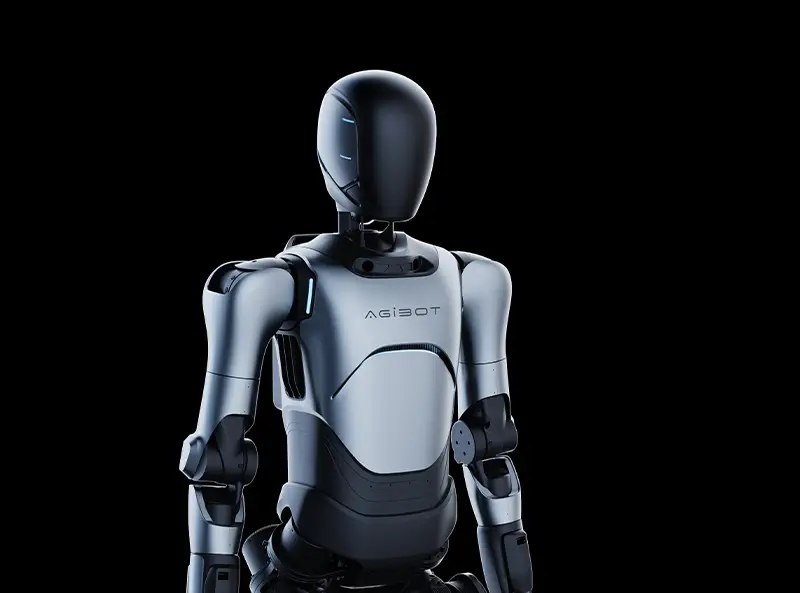
A humanoid robot, created in China, has just snagged a Guinness World Record. Its achievement? Walking continuously from Suzhou to Shanghai. A2, the robot, finished the 106.286-kilometer trek in a shade under three days. This feat demonstrated not just the machine’s mechanical accuracy but also the dependability of its batteries.
Constructed by Agibot, a Shanghai robotics company, A2’s journey started on November 10 and concluded in the early hours of November 13 at Shanghai’s Bund. The announcement came on Thursday, formally confirming A2’s achievement: the first humanoid to walk a significant distance without needing a break.
Advanced Battery System Keeps Robot Powered Continuously
Agibot’s ability to keep going for the whole 106-kilometer journey was due to its fast, hot-swap battery technology. The power module was engineered to facilitate immediate battery swaps, eliminating the need for a system restart.
Senior Vice President Wang Chuang stated that the robot’s performance demonstrated the company’s progress in power management and control systems. “Traversing the distance from Suzhou to Shanghai is a formidable task, even for a person,” he stated, labeling the accomplishment a significant leap forward in robotic endurance.
Navigation Systems Guide Robot Through Complex Terrains
To manage continuously changing road conditions, the A2 robot employed two GPS modules, LiDAR scanners, and infrared depth sensors. It adeptly navigated cityscapes, demonstrating consistent performance regardless of the time of day.
Agibot explained that A2’s cerebellar balancing algorithm was the key to its ability to go through traffic signals, cross bridges, and navigate bustling sidewalks without incident. The technology demonstrated reliable awareness on a variety of surfaces, including asphalt roadways, tiled pathways, tactile pavement, and ramps.
Recommended Article: Global Internet Outage Explained By Tech Analyst After Crash
Robotic Balance Algorithms Reach New Level Of Maturity
Engineers pointed out that A2’s performance confirms the value of years spent studying dynamic equilibrium and how the environment is perceived. The robot altered its walking pattern and posture by itself, keeping its balance even on uneven ground.
Agibot’s skills, as seen, replicate human movement in real-world situations. This shows how advanced balancing systems may function without needing external instruction or preset paths. This accomplishment establishes a new standard for how humanoid robots move.
Record Walk Demonstrates Breakthrough In Endurance Robotics
The robot’s capacity to work continuously for more than 72 hours reveals a considerable improvement in its mechanical reliability. A2’s fluid movement and steady pace showcase improvements in actuator efficiency and the benefits of a lightweight body.
This achievement, according to researchers, might speed up the use of service robots in logistics, inspection, and urban aid. These are areas where constant mobility and accuracy are vital for large-scale operations.
China’s Robotics Industry Expands Global Innovation Footprint
China’s robotics industry is making significant strides, fueled by swift technical advancements. The A2 project fits well within the framework of national plans that champion automation, artificial intelligence, and industrial robots as key engines of economic growth.
Agibot’s accomplishments fit well in with other national successes, such as the employment of humanoids in medical teaching and the automation of manufacturing processes. Officials celebrated the achievement, viewing it as evidence of China’s expanding dominance in robotics engineering and its burgeoning ability for innovation.
Previous Milestones Highlight Rising Humanoid Competitiveness
Earlier this month, the Tien Kung Ultra, a robot created by the Beijing Humanoid Robot Innovation Center, finished a half-marathon. The robot covered the 21-kilometer course in 2 hours and 40 minutes. The achievement showed skill, but it didn’t need lengthy endurance.
The A2’s 106-kilometer achievement eclipses previous attempts, marking a shift from experimental models to humanoid robots ready for the market. A2 represents a significant leap forward in robotic mobility, thanks to its improved sensors, enhanced stability, and sophisticated battery technology.