


Global Competition in Artificial Intelligence Intensifies
Governments and tech companies are putting a lot of money into AI, which is speeding up the race for global leadership in the field. Countries are starting to see AI capabilities as necessary for economic growth, national security, and technological power. Because of this, policymakers are working on ways to make domestic AI ecosystems stronger.
New proposals during China’s yearly political meetings, called the Two Sessions, have made it clear how important it is to keep up with technology. Officials say that relying too much on foreign technologies could make the country less capable. So, making AI systems that work on their own has become a top priority.
Source: South China Morning Post – Website
Liu Qingfeng Supports Full-Stack AI Autonomy
Liu Qingfeng, a member of the National People’s Congress, stressed how important it is to reach full-stack artificial intelligence autonomy. Liu is also the head of iFlytek, one of the best AI tech companies in the country.
Liu says that full-stack autonomy means having control over all the layers of the AI technology ecosystem. This includes chips for computers, data infrastructure, algorithms, and platforms for applications. This kind of approach would make countries less reliant on technologies from outside and boost their ability to come up with new ideas.
Importance of Technological Independence
Liu said that being technologically independent is now very important in a world that is becoming more competitive. A number of countries are already putting a lot of money into AI research and development. To stay competitive, you need to be able to innovate and have strong domestic capabilities.
Countries that don’t have full control over important parts of new technologies risk falling behind. Relying on foreign hardware or software can make important industries less safe. Because of this, Liu called for long-term planning to make sure China stays competitive in AI development around the world.
Recommended Article: Intern Helped Build AlphaGo That Shook World
AI Development Seen as Strategic Priority
Many people think that artificial intelligence is one of the most important areas of technology in the 21st century. Governments think that AI will boost the economy, change industries, and keep the country safe. Because of this, a lot of countries are starting big programs to help AI progress.
China has already started a number of national programs to make its AI industry stronger. These programs are all about building more research institutions, better data infrastructure, and more powerful computers. Policymakers think that these investments will help speed up new technological breakthroughs.
What Domestic AI Companies Do
China’s plan for artificial intelligence relies heavily on companies like iFlytek. The company focuses on AI-powered software platforms, language processing, and speech recognition. Many people use its technologies in schools, hospitals, and smart cities.
Liu stressed that private tech companies need to work closely with government research programs. Strong partnerships between the public and private sectors can speed up new ideas. This kind of cooperation also helps turn new research into useful tools.
Full-Stack Approach Covers Entire AI Ecosystem
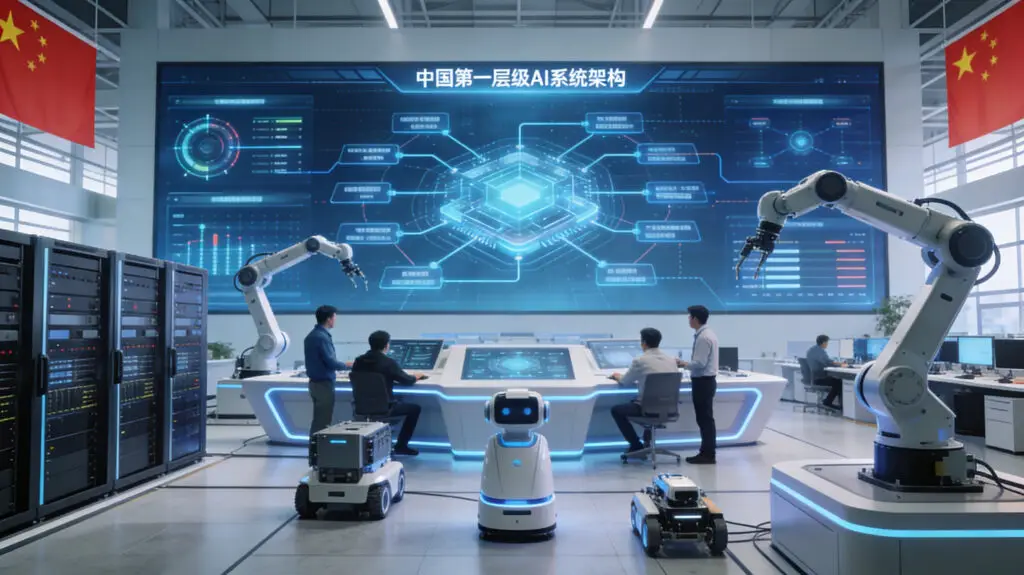
A full-stack AI strategy has many layers of technology infrastructure. Semiconductor manufacturing, computing systems, software frameworks, and data platforms are all part of these layers. For advanced AI systems to work, all of the parts must work together.
Countries can have more control over the development of technology by building skills across the entire stack. This method also makes it easier to deal with problems in the supply chain. Because of this, policymakers see full-stack development as an important part of their long-term technology strategy.
AI Competition Will Likely Change Technology Around the World
In the next few years, the race to be the best at artificial intelligence around the world is likely to get even more intense. Improvements in robotics, automation, and machine learning could change a lot of different fields, from manufacturing to finance. Countries that are at the top of AI development may have big economic benefits.
Liu’s proposal shows that more and more people are realizing that being a leader in technology requires long-term investment and careful planning. As the AI race heats up, governments around the world are looking at ways to boost their own innovation ecosystems. The outcome could change the balance of technological power in the future.