


High-Level Talks Resume After Months-Long Pause
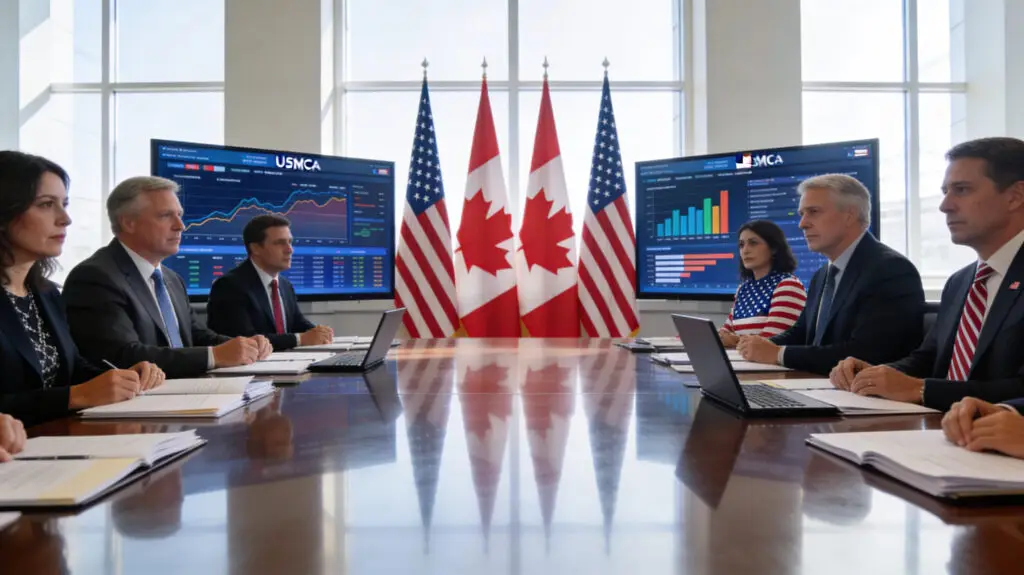
Dominic LeBlanc traveled to Washington to restart trade discussions. This marks the first round of high-level talks since negotiations collapsed last year. Meetings with Jamieson Greer are scheduled to reassess shared priorities.
The mandatory review of the USMCA agreement will dominate the agenda. The agreement governs trade relations among the US, Canada, and Mexico. Both governments aim to stabilize economic ties after prolonged uncertainty.

Source: Reuters
USMCA Review Raises Stakes for North America
The United States-Mexico-Canada Agreement is due for formal review this year. President Donald Trump previously paused tariff dispute negotiations. He also considered withdrawing from or renegotiating bilateral terms.
Canada and Mexico continue to support maintaining the trilateral framework. Leaders warn that dismantling the deal would disrupt deeply integrated supply chains. Economic stability remains a priority despite political tensions.
Tariffs Remain Despite Certain Protections
The USMCA has shielded significant portions of Canadian trade from elevated tariffs. However, sector-specific duties on steel, aluminum, and automobiles remain in place. These measures continue to strain key Canadian industries.
Section 122 introduced a 10% global tariff following Supreme Court rulings. While some emergency tariffs were invalidated, new measures replaced them. Baseline duties could persist regardless of review outcomes.
Recommended Article: Global Reaction to US Israel Strikes on Iran Tensions
Automotive Sector Remains Central Dispute
The automotive industry stands at the center of ongoing negotiations. Approximately 70% of vehicles manufactured in Canada are produced by Japanese firms. Vehicles frequently cross North American borders multiple times before completion.
US officials have advocated relocating more automotive production domestically. Such shifts would disrupt established trilateral manufacturing networks. Tariffs on Canadian auto exports have already led to job losses.
Carney Warns of Fragile Bilateral Relationship
Mark Carney expressed concern about the future of US–Canada relations. He cautioned that weakening or terminating the agreement would carry consequences. Carney argued recent US actions have undermined the pact’s strength.
Canada has historically relied heavily on US export markets. Around 75% of Canadian goods once flowed southward. That share has declined to 67.3% as diversification efforts expand.
Indo-Pacific Outreach Signals Strategic Diversification
Carney recently concluded an Indo-Pacific trade tour aimed at broadening partnerships. He signed a strategic cooperation agreement with Sanae Takaichi in Tokyo. The deal strengthens collaboration in defense, energy, and technology.
Canada also secured multi-billion-dollar agreements with India, including a 10-year nuclear energy partnership. Australia joined Canada’s G7-aligned critical minerals initiative. These efforts demonstrate Ottawa’s commitment to diversification.
Economic Interdependence Keeps Dialogue Essential
Despite tensions, North American economies remain closely interconnected. Seamless cross-border trade is vital for integrated supply chains. Abrupt policy changes could destabilize multiple industries simultaneously.
Resuming talks signals mutual recognition of economic interdependence. Businesses are urging both governments to provide clarity and stability. The USMCA review will likely shape continental trade dynamics for years ahead.