



Bitcoin Stabilizes After Earlier Tariff Market Volatility
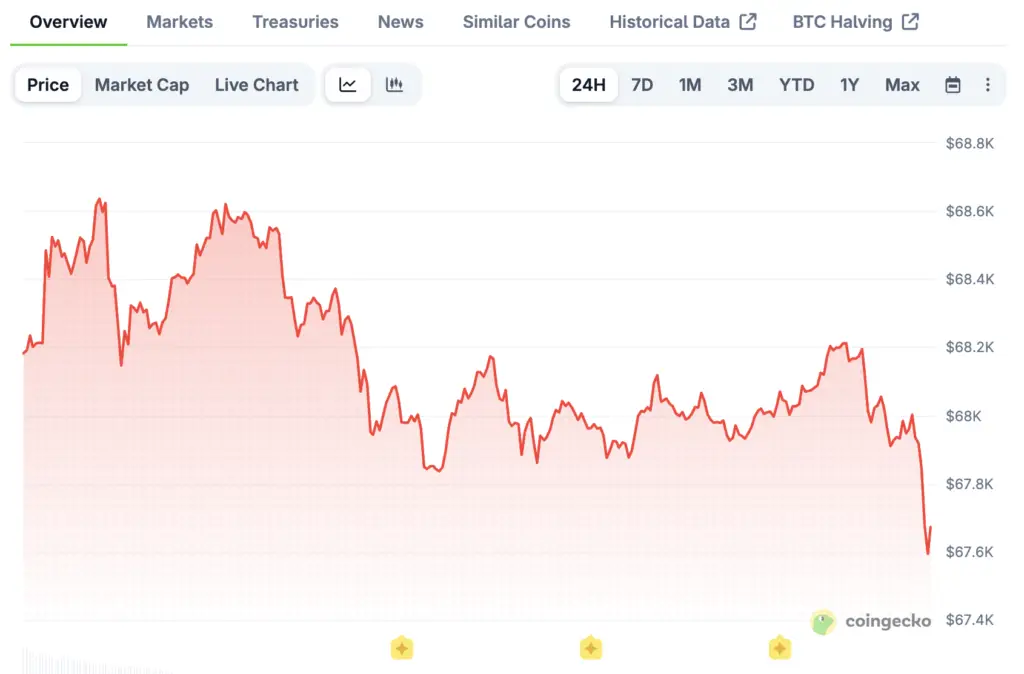
Bitcoin stayed stable around $68,000 as the volatility caused by tariffs slowly went down in other markets. Traders saw that mood had improved, and price action stayed strong in important technical areas. This stabilization gave people who were closely watching macro developments a reason to trust them again.
Because the headline risks went down, the markets could look at the underlying momentum indicators again. Bitcoin stayed strong even though risk-sensitive assets around the world have been having a rough time lately. Investors are paying more and more attention to measurable support areas that could signal a bullish continuation.
Key Technical Support Holds Near The $68,000 Range
Analysts pointed out that there was a lot of support around the $67,500 to $68,000 level during recent trading sessions. The level was still important for figuring out possible near-term directional bias. Keeping a foothold above this area suggested that things were getting better for a possible upside extension.
If momentum picks up, Bitcoin might try to break through resistance near the $70,000 mark. Traders stressed how important it was to get back to overhead zones with steady volume growth. These kinds of changes could mean that buyers are getting back into the market after a period of low activity.
Tariff Uncertainty Eases Allowing Market Recalibration
Earlier volatility was caused by uncertainty about ongoing policy discussions about tariffs. At first, markets reacted negatively because risk assets were being sold off more quickly. As things became clearer, investors slowly moved toward more positive positioning strategies.
As worries about geopolitics faded, people started to focus on the basic factors that shape overall sentiment. Bitcoin’s recent price changes were helped by fewer macroeconomic factors affecting them. This change let people in the market look at the technical structure without any outside noise that could have caused problems.
Recommended Article: Bitcoin Reclaims $70K After Inflation Sparks Market Rebound
Altcoins Show Mixed Movements Amid Bitcoin Stability
Bitcoin stayed stable, but altcoins did different things in different market sectors. Some assets saw small gains as sentiment improved in some areas. Others kept consolidating in established ranges while they waited for stronger catalysts.
These different movements showed that cryptocurrency investors’ risk preferences were changing. The structure of the market showed that there was selective rotation instead of broad speculative momentum. Traders kept an eye on the stories that affected how altcoins acted in relation to Bitcoin’s stability.
Analysts See Market Sentiment That Is Cautious But Getting Better
Commentary said that active traders were still cautious, but their mood was slowly getting better. Market participants kept an eye on important technical levels that affected their expectations for direction. Analysts stressed that macro factors like inflation and interest rate forecasts have an effect on the overall risk appetite.
Even though there was still some uncertainty, signs showed that confidence was growing in digital asset markets. Stability around important levels made people more hopeful that the upside would continue. Analysts thought there would be more decisive movement after supportive economic data was confirmed.
Macro Trends Continue Influencing Crypto Price Behavior
Cryptocurrency markets were still affected by larger macroeconomic events that affected global risk assets. Changes in expectations about monetary policy kept affecting short-term volatility profiles. Bitcoin’s ability to bounce back showed that its market structure was becoming more stable.
Investors looked at upcoming economic indicators to see how they might affect the market. Interest rate trends and inflation readings stayed important guides. These dynamics encouraged cautious positioning while creating chances to take risks.
Market Focus Returns To Technical Structure And Support
As the markets calmed down, they turned their attention back to Bitcoin’s established technical framework. Traders looked at how strong support was and how resistance targets were changing, which affected how prices would move in the future. Sustained consolidation near current zones showed that there was strong underlying demand.
Bitcoin seemed ready for possible breakout attempts as uncertainty faded. Keeping things stable made people feel much more confident in the larger cryptocurrency markets. Participants waited for confirmation before committing to more aggressive directional strategies.