



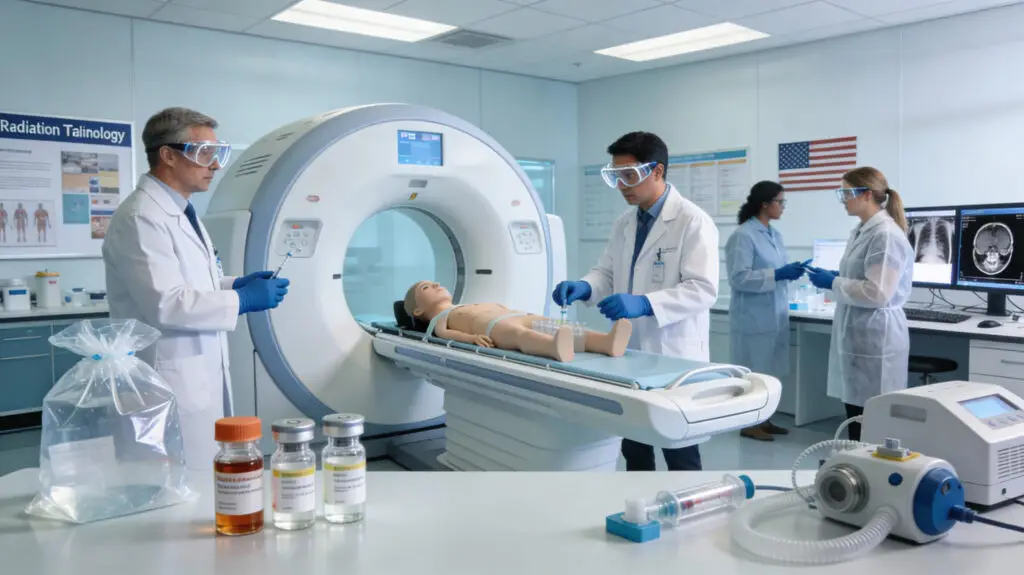
Expanding Access To Radiopharmaceutical Cancer Treatments Nationwide
ASTRO has started a national training program to make it easier for doctors all over the country to get radiopharmaceutical cancer treatments. The program is a response to the growing clinical need for new targeted radiopharmaceutical therapies that are quickly becoming standard in oncology practice.
ASTRO wants to get rid of structural barriers that keep doctors from participating by setting up Authorized User training centers. This method helps more patients get care while also making sure that safety and quality standards are always the same across the country.

Source: Radiology Business/Website
Addressing Workforce Gaps In Precision Oncology Delivery
Many doctors have trouble getting the specialized training they need to do radiopharmaceutical therapy in their area or region. The need for qualified clinicians has grown faster than the current pathways, which has caused problems in cancer care systems.
ASTRO’s program directly addresses this gap in the workforce by giving more supervised clinical opportunities. The project is in line with national warnings that there aren’t enough trained professionals to meet the demand for cancer care.
Authorized User Training Centers Make Structured Pathways
Federal rules say that doctors must finish both classroom training and supervised clinical cases before they can get a license. If there aren’t any radiopharmaceutical programs nearby, access to supervised cases has stayed limited.
The new training centers offer a structured, free way for qualified doctors to meet the requirements for authorization. This design makes it easier for more oncology practices across the country to use radiopharmaceutical therapy.
Recommended Article: PAHO and Ferrero Launch Partnership to Boost Health in Americas
Multidisciplinary Training Emphasizes Safety And Quality Standards
Participants get to work with real patients while being guided by experienced radiation oncology specialists. Training settings stress working together across disciplines and following standard clinical protocols to make sure therapy is safe.
ASTRO also lets people use its Beyond the Beam educational series and other helpful materials. These tools help cancer centers that are taking part follow best practices and do things the same way every time.
Industry Support Accelerates Educational Infrastructure Development
Novartis Pharmaceuticals gave the program an educational grant, which will help build infrastructure all over the country. This help speeds up the availability of training without putting more financial strain on the doctors who are taking part.
ASTRO stresses that patient safety and educational independence are still top priorities. The way that industry funding is set up makes sure that learning happens while keeping clinical integrity and professional standards.
Strengthening Cancer Care Capacity Across Community Clinics
ASTRO wants every cancer clinic that offers radiation services to be able to offer radiopharmaceutical therapy. Increasing the number of trained providers helps make sure that everyone can get care, not just those who go to big academic medical centers.
Community clinics gain by incorporating advanced therapies without significant internal training expenditures. This model helps spread new ideas more evenly across healthcare systems in different areas.
Building Long-Term Infrastructure For Emerging Cancer Therapies
ASTRO leaders say that the project is a building block for future cancer research and development. Workforce development makes sure that new therapies are given to trained doctors and safe delivery systems.
By increasing training today, ASTRO prepares cancer care teams to handle more work in the future. The program shows a long-term commitment to making precision oncology available to everyone and putting patients first.