


Apple Expands Human Centered AI With Q.ai Acquisition
Apple’s confirmed purchase of Israeli AI company Q.ai shows that it is still making progress in human-centered technology. The financial terms are still secret, but the strategic implications suggest that AI will be more deeply integrated into everyday communication tools. With this move, Apple can change the way devices understand what people want.
The purchase shows that Apple has always been more interested in intuitive interaction than command-driven computing. Apple wants to close the gap between people and technology by making devices better at understanding how people act. This direction is based on years of small investments in AI in both hardware and software.
Source: Elets CIO – Elets Technomedia
Q.ai Technology Goes Beyond Normal Facial Recognition
Q.ai is an expert in cutting-edge audio and imaging technologies that use machine learning algorithms. Its systems can pick out quiet sounds, making things clearer even in noisy and complicated places. This feature already makes it easier for devices to understand sound.
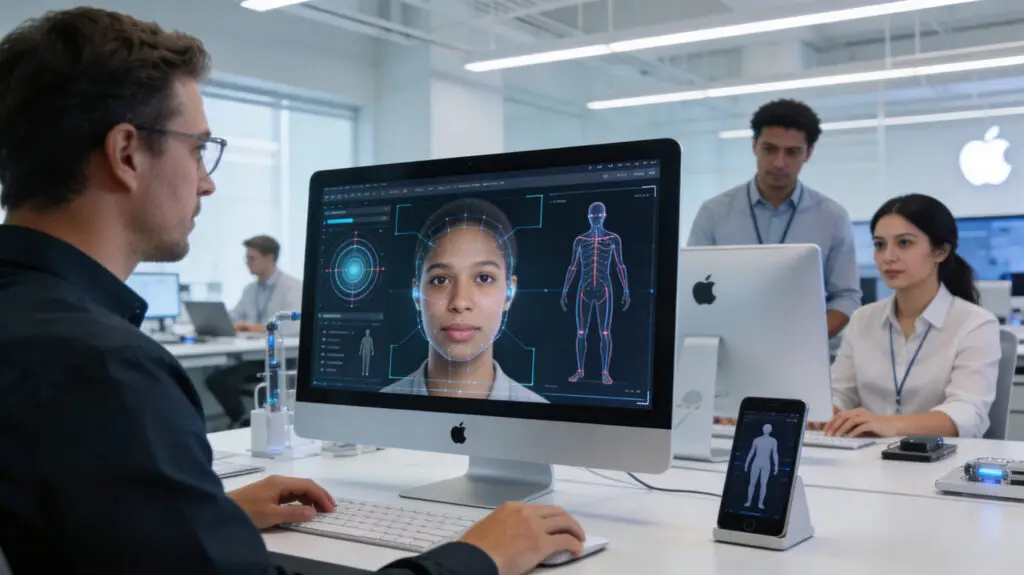
Q.ai’s innovation is even more impressive because it goes beyond sound to include how facial movements are seen. The technology picks up on tiny movements in the skin on the face to understand softly spoken words or silent cues. This method takes facial recognition from simply identifying to truly understanding.
Micro Expressions Help Us Understand Silent Communication
Q.ai’s systems look at tiny facial movements and micro expressions. These signals can show what someone wants even if they can’t hear or see them. Devices can accurately interpret nonverbal communication conveyed through facial expressions.
This ability connects spoken language and feelings in a smooth way. It lets machines respond to signals from people that software couldn’t understand before. This kind of interpretation makes interaction more like a natural, human exchange.
Recommended Article: Mercedes-Benz Launches AI-Powered S-Class Redefining Luxury
Patents Show More Ways to Use Health and Emotions
Q.ai filed patents that describe how facial movement analysis can be used for more than just speech recognition. Some uses are checking emotions, estimating heart rate, and keeping an eye on breathing. These insights come from small changes in the skin on the face that can be seen.
These kinds of abilities make it possible that future devices will be able to understand both emotional and physical states. This turns technology from tools that respond to you into companions that understand you. The effects are felt in areas like accessibility, health, and personalized computing experiences.
Apple Integrates AI Across Audio And Immersive Devices
Apple has been steadily improving AI features in all of its products, especially in audio experiences. Real-time translation and adaptive sound processing are now built into AirPods. These changes show that Apple is working on real-world communication problems.
Q.ai technology could work with devices like the Vision Pro headset and iPhones. Being able to see facial muscle activity could make spatial computing and immersive interaction better. This kind of integration fits in with Apple’s bigger plan for hardware innovation.
Accessibility And Discreet Communication Gain New Possibilities
Face reading technology could make things easier for people who have trouble speaking. Devices can understand what someone means without them having to speak, which makes communication more accessible. This is a big step toward making technology design fair for everyone.
It’s also easier to talk to people in public places without being heard. People could use devices without screens or spoken commands to talk to them. This opens up more practical uses in both personal and professional settings.
Apple Changes How People and Technology Work Together
Apple is getting closer to making truly smart personal technology by being able to read body language. Devices learn about feelings, intentions, and the situation. This awareness makes interactions smoother and more responsive.
As development goes on, Apple devices may be able to guess what you need instead of waiting for instructions. Getting to know users as a whole builds trust and makes things easier to use. This change is a big step forward in how people and technology get along.