


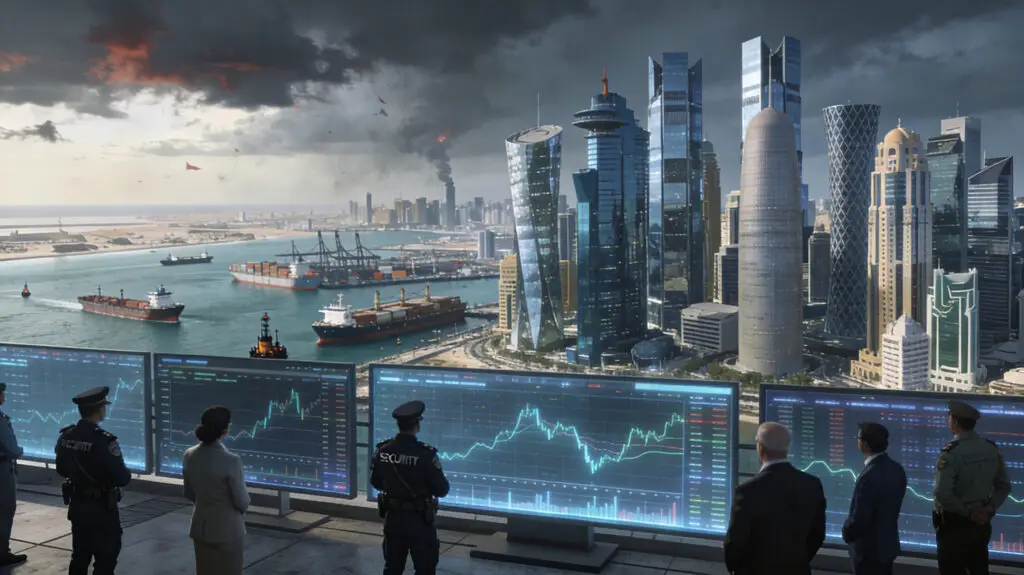
Iran Expands Conflict Through Economic Warfare Strategy
Iran has stepped up its strategy of confrontation by attacking economic infrastructure in addition to military retaliation. The goal of the approach is to hurt the economies of the Gulf by breaking up their transportation, technology, and financial networks. Analysts call this strategy “economic warfare” because it is meant to hurt regional stability.
Iran has focused on assets related to global trade instead of just oil facilities. These are places like airports, shipping ports, financial centers, and digital infrastructure hubs. These kinds of goals help international trade, finance, and technology networks that work in the Gulf region.
Source: iStock
Attacks On Important Gulf Economic Infrastructure
According to reports, several major businesses in the Gulf have become targets in this economic conflict strategy. These include data centers for technology that are used by big international companies, like Amazon’s installations. This kind of infrastructure helps cloud computing networks that businesses all over the world depend on.
Financial centers like the Dubai International Financial Centre are also important parts of the economy in the region. Dubai International Airport and other major airports serve millions of travelers each year through international flight paths. Strategic shipping hubs like Jebel Ali port are also very important parts of global supply chains.
Attacks Disrupt Trade And Technology Networks
Attacking economic infrastructure can hurt many industries at once all over the world. Data centers handle huge amounts of data that businesses, banks, and governments all over the world use. If these systems were to break down, it could stop digital services on several continents.
Ports and airports are other places where global logistics networks that connect international trade routes can get stuck. When transportation hubs are disrupted, it takes longer for cargo to move and delivery costs go up a lot. These kinds of interruptions affect a wide range of industries, from manufacturing to tech services.
Recommended Article: Pakistan Economy Struggles As Global Oil Prices Surge
Investor Confidence In Gulf Economies Is Under Pressure
The Gulf region has always attracted foreign investors because it is known for being stable and having a growing economy. Cities like Dubai and Doha became important business centers that connected Europe, Asia, and Africa. But rising geopolitical tensions are now making this view harder to hold.
Investors are more and more rethinking how much risk they are willing to take on in areas where there is military and economic conflict. When infrastructure security is in doubt, financial markets tend to respond quickly. Multinational corporations often don’t want to make long-term investments when they think the risk is higher.
Capital Flows Begin Shifting Toward Alternative Markets
As geopolitical risks rise, businesses and investors may move money to areas that are seen as safer. Some reports say that some money flows are starting to move toward markets in East Asia and other well-known financial centers. Cities like Hong Kong are still important places for international financial transactions.
When choosing a regional headquarters or technology infrastructure location, businesses often think about how stable the geopolitics are. Changes in how companies invest could slowly change the balance of trade around the world. These kinds of changes don’t usually happen right away, but they can speed up during long-term crises.
Global Supply Chains Face Increasing Strategic Risks
Analysts say that Iran’s economic warfare shows that global supply chains are even more vulnerable than they seem. Reliable logistics, digital infrastructure, and stable financial networks are very important to modern economies. Problems with any of these systems can have big effects on the economy.
Policymakers may see economic disruption as a way to get Iran to change its behavior, since international sanctions are already making it harder for Iran to trade with other countries. Targeting infrastructure that is connected to the rest of the world could put pressure on the people and groups involved in the conflict. These kinds of strategies take geopolitical conflict beyond the usual battlefields of war.
Conflict Could Change The Geography Of The Global Economy
Experts say that the changing conflict could have an effect on trade flows and long-term patterns in the global economy. Businesses could make their supply chains more diverse and less reliant on infrastructure in areas that are not stable. This change could slowly change the logistics networks that connect continents.
International trade could also be hurt by higher insurance costs, fuel costs, and financing risks. When geopolitical uncertainty goes up a lot, financial markets usually raise risk premiums. This situation shows how conflicts in 1 part of the world can change economic ties between people all over the world, not just on the battlefield.