




Ethereum Network Activity Reaches Record High Levels
Ethereum’s blockchain activity has reached all-time highs in a number of important usage metrics. During February 26, 2020, there were almost 2 million daily active wallet addresses. This level was higher than the activity seen at the peak of the last bull market in 2021.
Smart contract calls across the network also went up a lot, to more than 40 million per day. These transactions are automatic instructions that are carried out by decentralized applications and protocols. More interactions show that the ecosystem is being used more and more.
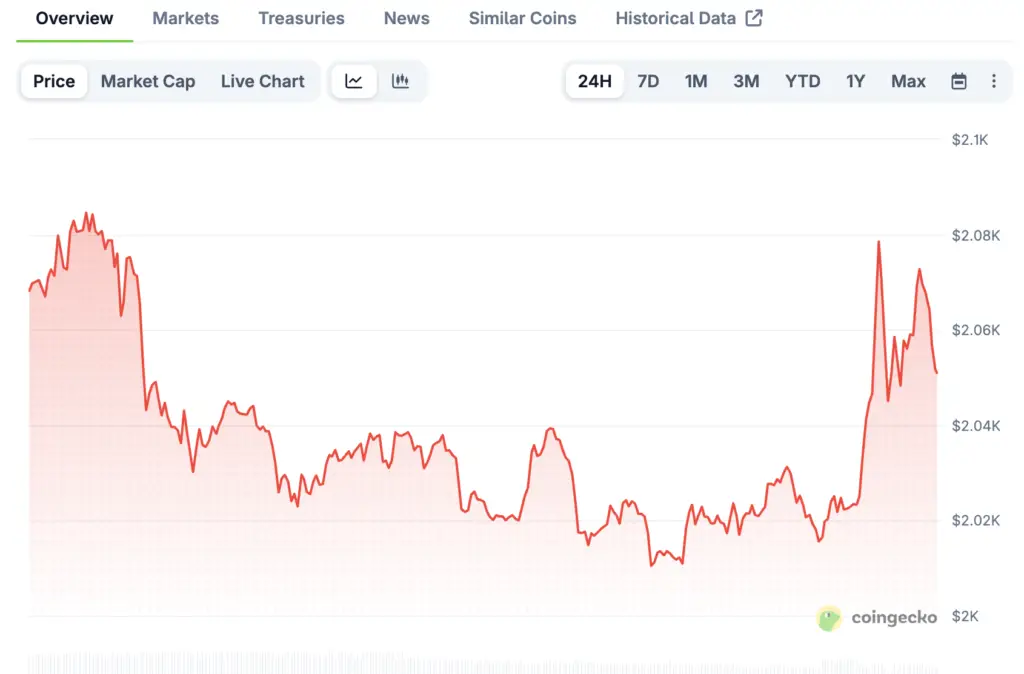
Ether Price Declines Despite Growing Network Usage
Ethereum’s native cryptocurrency ether has had a hard time lately, even though there has been a lot of activity. The price of the asset has dropped by about 30% in the last 6 months. This drop happened even though more and more people were using the network.
Historically, more activity on the blockchain has often led to higher token prices. But it looks like the relationship is weaker in the current market. Analysts are now seeing a bigger gap between usage and price performance.
Capital Outflows Make The Ether Market Weak
According to CryptoQuant analysts, capital flows now do a better job of explaining ether price trends than network activity does. Exchange flow data shows that more and more ether is being sent to trading platforms. These kinds of movements usually mean that investors are under more pressure to sell.
Ethereum’s realized capitalization has also gone down over the past year. This number shows how much money has been put into the network over time. Negative readings mean that money is leaving the ecosystem.
Recommended Article: Ethereum Whales Defend $2,000 Support As Price Rebounds
Exchange Deposits Signal Rising Selling Pressure
Data shows that ether deposits on cryptocurrency exchanges are going up compared to bitcoin flows. This pattern often means that traders are getting ready to sell their assets. So, during times of uncertainty, market pressure may get stronger.
Higher exchange balances can make more goods available in trading markets. More supply often slows down the rise in prices. This trend might be one reason why ether hasn’t been doing well lately.
Ethereum Fees Lag Behind Rival Blockchain Networks
Ethereum is still the most popular smart contract platform, but it is making less money from fees. According to the data, the network made about $10 million in transaction fees last month. Several competing networks now have more than this.
During the same time, Tron made about $25 million in fees. Solana also made about $20 million a month in fees. These comparisons show that blockchain ecosystems are becoming more competitive.
Layer Two Networks Change How People Work
The growing layer 2 ecosystem of Ethereum is changing the way money is made. Networks like Base and Polygon can handle a lot of transactions for less money. These platforms do things that used to happen on Ethereum’s base layer.
Layer 2 networks make things more scalable, but they also move economic value around the ecosystem. These networks still charge lower transaction fees for the base chain. Because of this, Ethereum gets less money directly.
Stablecoins Keep Ethereum Adoption Going
One of the best things about Ethereum is that it is growing in the use of stablecoins. There are about $162 billion worth of stablecoin assets on the network. This is more than half of all stablecoins in the world.
Stablecoins make decentralized finance trading and payments across borders possible. But this activity hasn’t directly led to higher ether prices. So, the growing ecosystem creates value that the native asset only partially captures.