



Researchers Investigate Linguistic Characteristics of Contemporary Fake News
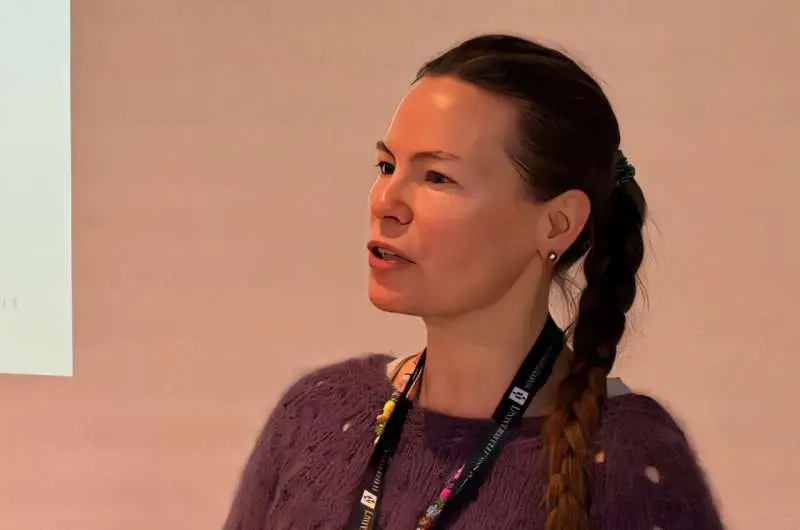
Linguist Silje Susanne Alvestad examines language patterns that influence the perceived credibility of fake news. Her comparative research analyzes English, Russian, and Norwegian texts to identify markers of deceptive communication. The study explores how differing motivations shape stylistic decisions in fabricated narratives.
Researchers also reviewed historical examples, including false reports written by former journalist Jayson Blair. His fabricated stories frequently relied on present-tense narration, suggesting deliberate stylistic manipulation. Authentic journalism, by contrast, contained longer words, consistent grammar, and a less conversational tone.
Source: Phys.org
Fake Content Shows an Informal Style and Distinct Pronoun Usage
Analysts observed that fabricated stories often use informal language, shorter words, and emotionally charged expressions. Intensifiers such as “truly” and “really” appeared frequently, reinforcing assertive tones. Pronoun patterns varied significantly depending on the writer’s intent.
Motivation strongly influenced linguistic structure across analyzed samples. Financially motivated deception tended to avoid elaborate metaphors and favored direct storytelling. Ideological misinformation, however, incorporated metaphors from war and sports to evoke emotion.
Fake News Often Uses Stronger Certainty to Persuade Readers
Researchers identified heightened expressions of certainty within misleading texts. Words like “obviously” and “evidently” were repeatedly employed to project authority. Russian-language samples showed particularly strong patterns of confident phrasing.
Such stylistic features aim to reduce reader skepticism by presenting claims as unquestionable. When information appears definitive, audiences may perceive it as more credible. Linguistic certainty can therefore mask underlying inconsistencies within fabricated narratives.
Recommended Article: OpenAI Develops Smart Speaker and AI Glasses Devices
Fact-Checking Tools Struggle With Cross-Linguistic Variability
In collaboration with the research institute SINTEF, scholars developed a prototype fact-checking tool. However, cultural and linguistic differences complicate automated detection systems. Fake content varies widely depending on social context and communicative norms.
Robust verification models require balanced and carefully labeled datasets. Researchers argue that classification systems need precise definitions to minimize genre confusion. Ambiguity in language makes universal detection algorithms difficult to implement effectively.
AI Accelerates the Global Spread of Hard-to-Detect Falsehoods
Advances in artificial intelligence have intensified misinformation challenges worldwide. The NxtGenFake project was launched to examine AI-generated disinformation patterns. Researchers analyze how AI strategically blends accurate details with misleading narratives.
AI systems frequently combine factual information with distorted context to obscure deception. These hybrid narratives exploit weaknesses in digital verification mechanisms. Partial truths embedded within persuasive framing complicate detection efforts.
AI Propaganda Relies on Repeated Persuasive Frameworks
Early findings from NxtGenFake indicate limited diversity in AI persuasion techniques. AI-generated propaganda commonly employs Appeals to Authority and vague expert references. Such strategies often lack verifiable sources.
AI narratives frequently conclude with Appeals to Values emphasizing unity, fairness, or growth. Moral framing strengthens perceived authenticity despite fabricated content. These rhetorical endings subtly influence audience interpretation.
Studies Show Readers Find AI Disinformation Surprisingly Credible
Researchers studied American participants evaluating both AI-generated and human-authored misinformation. AI texts were rated as more credible and informative overall. Although emotionally less intense, AI content inspired greater trust.
These findings suggest AI can replicate familiar, authoritative structures effectively. Elevated trust increases the likelihood that readers will accept inaccurate claims. Scholars emphasize understanding these dynamics as AI adoption continues expanding.