


Viral Deepfake Video Sparks Croydon Controversy
A viral deepfake showed young men sliding into a filthy pool at a fake Croydon water park. The video had AI-made “roadmen” characters in balaclavas and padded jackets. Millions of people watched and shared similar videos on TikTok and Instagram.
Creators have copied the idea, making thousands of fake decline content variations. These posts say they show real taxpayer-funded buildings in neighborhoods in South London. At first, a lot of people think the AI scenes are real footage.
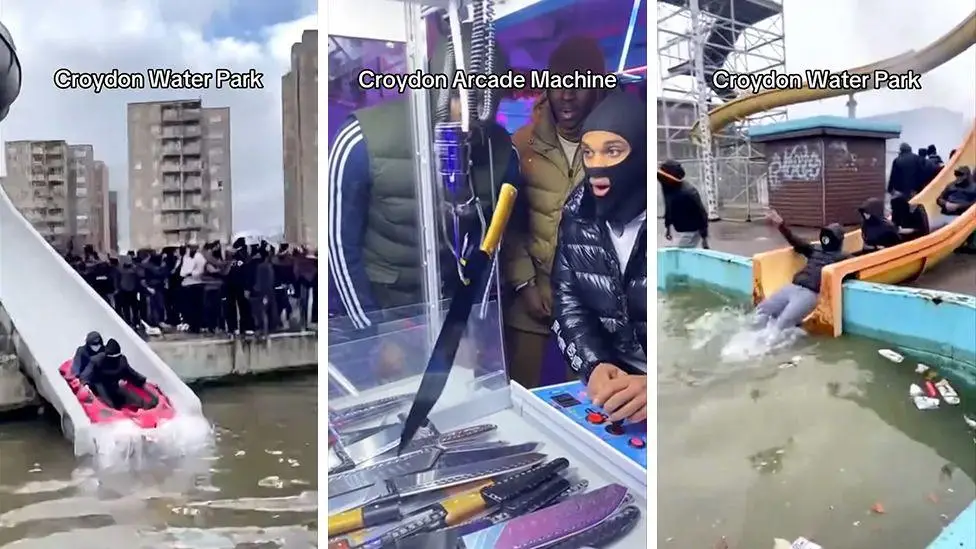
Source: BBC
Viral AI Videos Portray Cities as Crime Hotspots
Influencers are more and more showing big cities like London, Manchester, and New York as falling apart because of crime and immigration. Some of the content is meant to be funny, but the way it is shown makes people think it is real evidence. This makes people who are easily angered and racialized angry.
The BBC investigation shows how these kinds of images can trick people by making them feel strong emotions. These over-the-top depictions add to the online conversation about conspiracy theories. Researchers say that this trend makes people less aware of what life is like in cities.
BBC Exposes Source of Viral Croydon AI Videos
The BBC found out that the person who made the first Croydon deepfakes went by the name RadialB. He said that the videos were meant to look real so that people wouldn’t scroll past them. He thinks his content is “funny,” but he knows that some people might believe it.
RadialB said he used AI prompts that showed “roadmen” on purpose because he thought the character was funny. He has never been to Croydon, even though he has drawn it many times. Within days, millions of people had seen some of his most graphic posts.
Recommended Article: EU Probes Grok AI Over Deepfakes Targeting Women and Children
Racist Comments Follow Viral Croydon Deepfake Clips
Some of the comments on the videos made racist assumptions about neighborhoods in London. Platforms say they will take down comments like these, but people still see the clips through a racialized lens. People who live there say the videos unfairly stereotype their neighborhoods.
A TikTok user from Croydon named C. Tino said that the trend was not true to his neighborhood. He said that people who are not from the UK might think the scenes are real. His response video got a lot of attention from angry locals.
AI Tools Make Complex Deepfakes Easier to Create
RadialB said that recent improvements in generative AI made it easy for him to make complicated deepfakes. He thinks that a lot of accounts share his work just to get more likes and make money. Some people in Israel, Brazil, and the Middle East copy the trend to get more people to see it.
Dozens of pages that pretend to be British news sites now only share AI-generated decline content. These accounts use recommendation algorithms to get a lot of people to see them. Experts are worried that this will spread false information faster on global platforms.
Deepfake Thumbnails Fuel London Misinformation
Some people post real pictures of vandalism, homelessness, or theft but take away the context to make it look like society is falling apart. More and more, AI is replacing real footage with completely made-up settings. It’s hard for casual viewers to put these clips into groups.
Kurt Caz, a travel YouTuber, got in trouble for using AI edits to change the thumbnail of a video about London. Even though the original footage showed normal streets, Arabic signs and a masked cyclist were added. Caz brushed off worries, saying that the changed picture was just clickbait.
AI Videos Fuel Debate Over Britain Urban Decline
Business tycoon Elon Musk has backed up claims that migration is making Britain worse. What he said at a rally fit with the stories that were spreading through content that focused on decline. People who believe these claims often use AI videos as proof.
But YouGov polling shows that what people think and what is actually happening are not the same. Most people in the UK who don’t live in London think the city is dangerous, but most people who do live there say they feel safe. False images still shape people’s opinions, even when there is evidence to the contrary.