


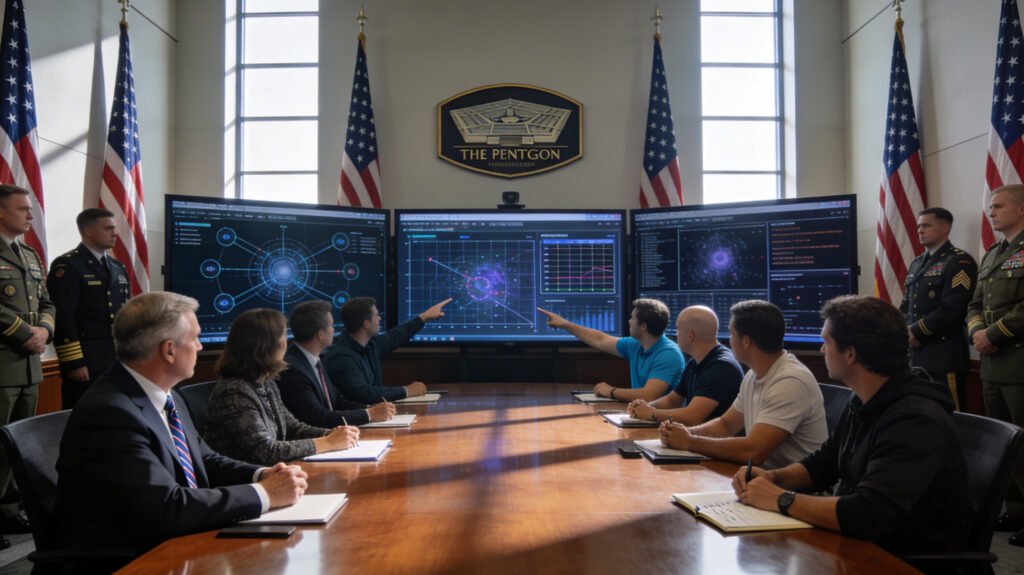
Pentagon Moves to Cut Ties After Anthropic Says No to More Military Use
US defense officials said they were close to ending their partnership with Anthropic because of disagreements that had not been resolved. The Pentagon asked the company to let more people use its Claude AI model, but the company said no. This caused a big break in what had been a growing partnership.
Reports say that the Pentagon thought about calling Anthropic a supply-chain risk. This kind of designation would stop future federal contracts from being made by several agencies. The move shows how angry they are about stalled talks and ongoing ethical disagreements.
Source: Union-Bulletin/Website
Ethical Guardrails Become Major Point of Contention in Ongoing Negotiations
Anthropic said that its safety rules had to stay the same for applications that are very risky. These include autonomous deadly weapons and surveillance operations that target people in the US. Company leaders said that taking away protections puts the development of responsible AI at risk.
The Pentagon, on the other hand, asked for operational flexibility for legal defense missions. Military leaders thought that restrictions made technology less useful. This made people have different ideas about how to keep an eye on AI in national security situations.
Trump Administration Orders Federal Agencies to Remove Anthropic Systems
The Trump administration stepped in directly after talks stalled. Officials told federal agencies to stop using Anthropic systems. The phase-out affects all departments, including the State and Treasury.
President Donald Trump backed the Pentagon’s stance on operational freedom. The administration said that national security needs flexible technology tools. This choice greatly shrinks Anthropic’s federal footprint.
Recommended Article: US Military Used Anthropic’s Claude AI in Venezuela Raid
Fundamental Disagreement Emerges Over Scope of Acceptable Military AI Deployment
Anthropic leaders said that ethical safeguards are necessary to stop people from using things in the wrong way. They stressed the dangers of strong autonomous systems that don’t have strong oversight systems. Some of these risks are uncontrolled surveillance and death that can’t be predicted.
Defense officials disagreed, saying that private company ethics codes should not limit legal missions. They said that national defense needs operational reliability in a lot of different situations. This disagreement made both sides even less trusting of each other.
Industry Analysts Warn of Long-Term Implications for AI Ethics and Security Policy
Experts say this disagreement shows that there is more and more tension between the needs of the military and the ethics of commercial AI. When government missions need wider access, companies with strong safety rules are under pressure. These tensions could affect how the federal government buys things in the future.
Some people are worried that pressure from the federal government could lower ethical standards across the board. Some people say that the Pentagon needs as much flexibility as possible to protect the country’s interests. Both of these worries show how hard it is to find a balance between safety and security when it comes to innovation.
Competing AI Companies Expected to Fill Federal Gaps as Contracts Shift
With Anthropic leaving federal systems, other companies seem ready to grow. Companies like OpenAI and Google might get more defense contracts. Their willingness to talk about operational frameworks will affect future partnerships with the federal government.
This change is part of a bigger change in the way governments and businesses work together. Agencies are more and more looking at which companies fit with national goals. As a possible operational limit, ethical rigidity may now be taken into account when making procurement decisions.
AI Governance Debate Deepens Over Military Use
The conflict brings up a bigger national conversation about how to govern AI. Some people say that ethical limits should not be changed, even when the military is pushing for them to be. Some people think that national security needs require flexible use of technology.
This debate will have an effect on future talks about AI policy rules. It might also decide how far businesses will work with the government. The standoff between Anthropic and the Pentagon shows how unresolved tensions affect strategic decision-making.