



Strategic Partnership Aims for Next-Generation IoT Connectivity
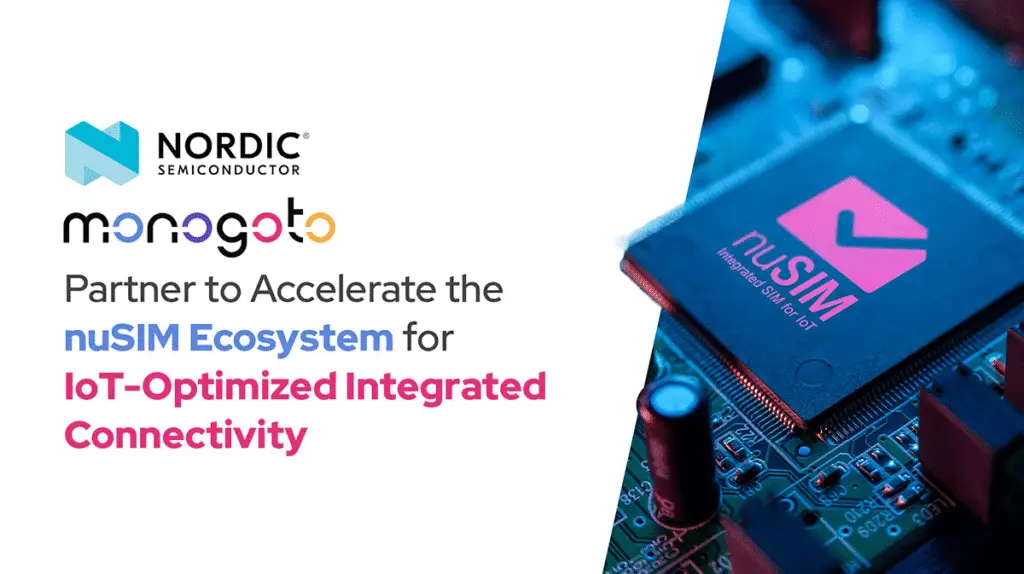
Nordic Semiconductor and Monogoto have announced a strategic partnership to speed up the use of integrated SIM technology in Internet of Things deployments. The goal of the partnership is to make it easier to make cellular modules by putting nuSIM directly into them. This will also make it easier for devices to connect to the internet around the world. Executives say that the project is a step toward making it possible to use it on a large scale in business.
As more and more devices are connected around the world, businesses need seamless activation and secure communication from the time of deployment. Integrated solutions promise to get rid of operational bottlenecks that have slowed down large-scale rollouts in the past. People who watch the industry see this partnership as a way to keep the momentum going toward software-defined connectivity ecosystems.
Source: Monogoto/Website
nuSIM Integration Signals Industry Transition
The partnership shows a bigger trend away from removable SIM cards and toward integrated SIM architectures that work best with small devices. By putting nuSIM inside Nordic’s nRF9151 module, you can set up connectivity during production instead of having to do it later. This method makes things more efficient and makes device-level security stronger.
Integrated SIM designs also make hardware less complicated by getting rid of physical card slots and other parts that go with them from product architectures. Manufacturers benefit from easier assembly and fewer places where things could go wrong. These benefits are especially useful when deploying a lot of them.
Reduced Costs And Complexity Encourage Adoption
Monogoto’s pre-integrated terrestrial and non-terrestrial connectivity cuts down on manufacturers’ bill-of-materials costs and logistical overhead. Getting rid of manual SIM provisioning cuts down on steps that used to cause delays and extra work for administrators. Lower deployment thresholds might make more people willing to try out IoT solutions.
When businesses want to expand their connected infrastructure to more than 1 region, they need to be able to predict costs. Integrated connectivity makes it easier to manage the whole lifecycle, from prototyping to mass production. Financial savings often speed up the approval of new projects by executives.
Recommended Article: Farm Startup ITS Hits £35m With Rapid Fibre Growth
Software-Defined Connectivity Gains Momentum
Monogoto leaders said that nuSIM is at the heart of the new software-defined connectivity revolution that is changing the way telecommunications companies compete. Instead of relying on physical distribution, operators are using application programming interfaces, policy controls, and global coverage capabilities to set themselves apart. This change puts more focus on digital service layers in strategy.
Software-centric models let businesses change how they connect to each other without having to replace hardware in the field. This kind of flexibility makes it easier to respond to changes in regulations or operational needs. Analysts think that these features will shape future connectivity frameworks.
Development Kit Gives You Instant Access Around the World
The Nordic nRF9151-SMA-DK development kit now comes with Monogoto connectivity, which gives developers access to networks that work best all over the world. This integration gets rid of the old provisioning problems that made it hard to test and experiment in the early stages. Engineers can then start working on new products sooner.
Immediate connectivity also speeds up time to market by shortening the time between validating a concept and launching it commercially. Faster iteration cycles often lead to better competitive positioning. Developers are putting more and more emphasis on platforms that make it easy to try out new things quickly.
Hybrid Networks Support Expanding Device Fleets
The partnership lets customers use cellular, satellite, and private network connections in a single operational framework that follows nuSIM principles. Hybrid coverage keeps devices connected even in places where there isn’t any land-based infrastructure. Reliability is what makes it stand out.
As IoT ecosystems grow to huge sizes, designs that use very little power and are always connected become more and more important. Integrated technologies help keep performance up while using less energy. These traits make it possible to deploy things for a long time.
Embedded Connectivity Will Change IoT Ecosystems in the Future
Nordic leaders stressed that the future of IoT depends on how well silicon, software, connectivity, and cloud environments work together. Companies can put more money into new ideas instead of keeping things running by taking away SIM logistics. So, embedded connectivity helps with strategic agility.
Monogoto and Nordic want to create an open ecosystem where secure connectivity is available to everyone by lowering barriers to entry together. Programmable infrastructure lets businesses change as technology changes. The initiative shows how deeply integrated stacks could shape the architecture of the next generation of IoT.