


Historic Spanish Performance Changes the Super Bowl Stage
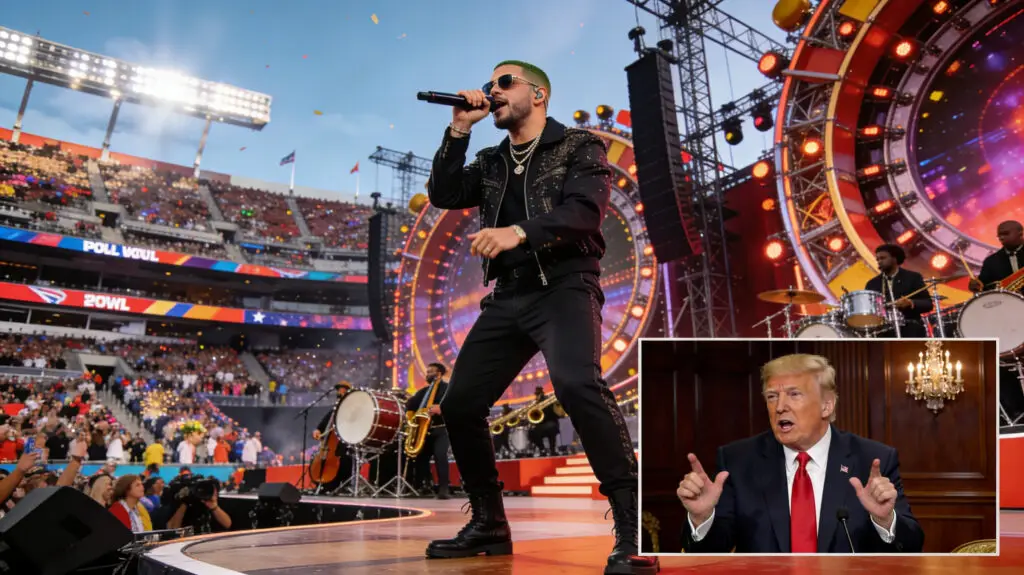
Bad Bunny was the 1st artist to perform a Super Bowl halftime show that was all in Spanish. The milestone highlighted how cultural dynamics are changing in 1 of the most popular TV shows in the US. His performance celebrated being Latin and stressed the need for unity across the Americas.
The 14-minute set combined music, symbols, and visual stories based on Puerto Rican culture. Instead of the usual pop theatrics, audiences saw a show that was meant to show off cultural pride. The moment meant more representation.
Source: Times of India/Website
Star-Studded Guests Make the Cultural Celebration Bigger
Lady Gaga and Ricky Martin were among the stars who performed, along with Pedro Pascal, Cardi B, Karol G, and Jessica Alba. They turned the stage into a lively tribute to Latin culture. The event was more popular around the world because of the collaborative energy.
Set pieces recreated everyday life in Puerto Rico, with a stylized casita standing in for traditional island homes. This immersive design helped people feel emotionally connected to the story as it unfolded. The choices made during production made it more real.
Trump Calls Show an Un-American Spectacle
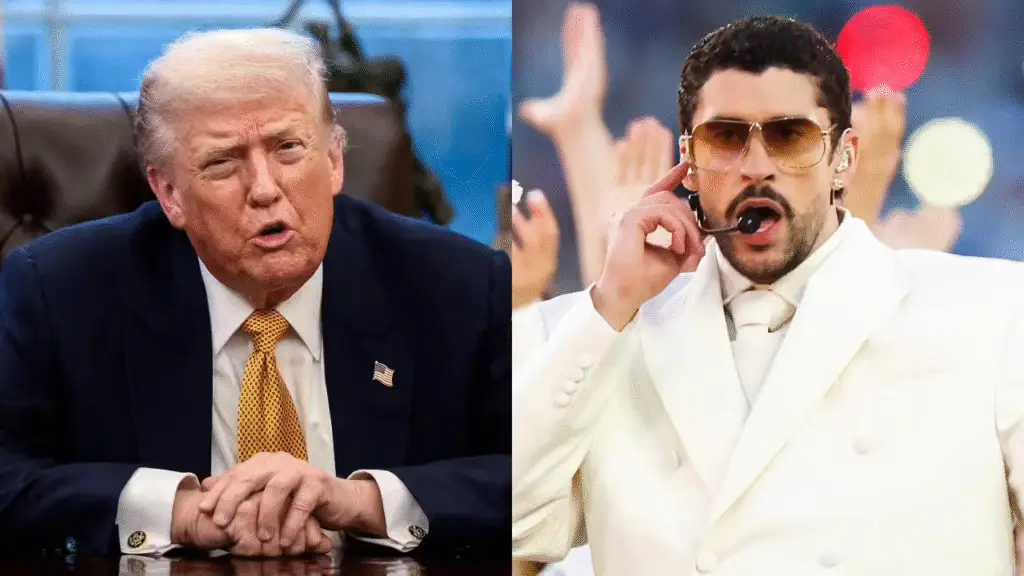
Donald Trump used social media to criticize the performance, saying it was “absolutely terrible,” even though it was meant to be a celebration. He said that the Spanish-language format hurt American culture and that people had trouble understanding the lyrics. The comments quickly sparked a political debate.
Conservative commentators said similar things, saying that the show was not in line with national traditions. Others disagreed with that view and focused on Puerto Rico’s place in the United States. The reaction showed how different cultures are.
Recommended Article: GOP Support For Trump Shows Early Signs Of Erosion
Performance Carried Messages Of Unity And Pride
Bad Bunny spoke English for a short time to say “God bless America” before naming countries in Central, South, and North America. Dancers carried flags behind him, and a billboard said that love is stronger than hate. The pictures showed unity instead of conflict.
He finished by holding up a football that said “Together, We Are America,” which reinforced the idea of a shared identity. People who saw the symbols thought they showed a vision of national belonging that included everyone. The message struck a chord with many people.
Puerto Rican Heritage Was the Main Event
Benito Antonio Martínez Ocasio was the artist’s real name. He used the sights and sounds of his home country to make the show. Scenes showed landscapes, neighborhoods, and cultural traditions that Puerto Ricans all over the world would know. This kind of storytelling made more people aware.
A tribute that mentioned the destruction caused by Hurricane Maria and honored the lives lost during the disaster was 1 of the symbolic elements. The gesture showed strength and brought back memories of arguments that were never settled about how the federal government should respond to disasters. Memory changed the story.
Political Undertones Emerged Without Direct Statements
Some people noticed that Bad Bunny had said things in the past that were against immigration enforcement policies, even though the performance didn’t directly criticize them. In his most recent award speeches, he called for changes that would affect agencies like U.S. Immigration and Customs Enforcement. Some people who heard these comments changed how they thought about the halftime themes.
His earlier choice not to tour the mainland United States also showed that he was worried about the safety of his fans. The halftime show, on the other hand, put cultural storytelling ahead of overt activism. Discussion was sparked by uncertainty.
Latin Culture Gains Spotlight On Global Stage
The event showed off Latin art to a huge global audience, which was a big step forward for representation. Analysts in the entertainment industry say that this kind of visibility shows how demographics are changing the markets. Diversity is becoming more and more important in mainstream programming.
Bad Bunny showed how powerful inclusive storytelling can be for business by combining cultural authenticity with a big show. The performance sparked more discussions about identity in American culture, whether people liked it or not. Its effects will probably last longer than the last encore.