



Nestlé Accelerates Regenerative Agriculture Across Global Supply Chains
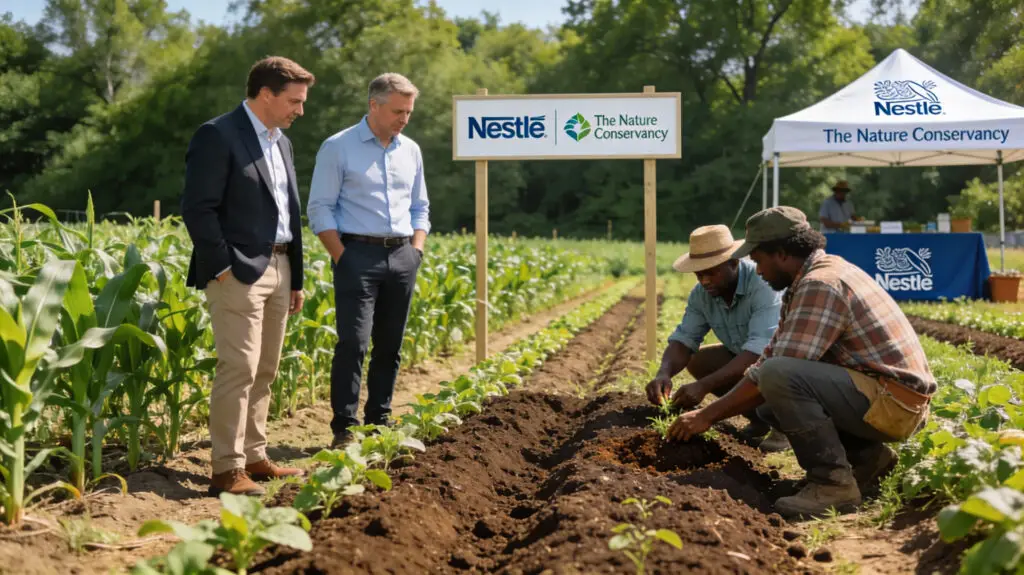
Nestlé is expanding its regenerative agriculture strategy by forming partnerships that will help spread environmentally friendly practices across its global supply chains. The project is a response to increasing pressure on food companies to protect ecosystems and make sure that farming is productive in the long term.
Leaders of the company say that regenerative agriculture makes the soil healthier, makes farmers more resilient, and improves climate outcomes all at the same time. This makes supply security stronger for future generations. The goal of these partnerships is to make sustainability a normal part of farming around the world, not just in pilot projects.
Partnership With The Nature Conservancy Advances Farming Framework
Nestlé is working with The Nature Conservancy to create the Nestlé Agriculture Framework, which will help farmers switch to regenerative farming. The framework’s main goals are to increase yields, farmer incomes, and environmental stewardship in a wide range of farming systems.
The partnership wants to speed up the use of proven regenerative practices around the world by combining scientific knowledge with business size. Both groups stress the importance of measurable results and models that can be scaled up to fit the needs of farmers in different areas.
Source: VoLo Foundation/Website
Framework Aims for Both Economic and Environmental Results
The Nestlé Agriculture Framework includes soil regeneration, protecting biodiversity, and managing water as part of its main farming advice. It also stresses the importance of economic viability, making sure that farmers make money while switching to more environmentally friendly methods.
Nestlé thinks that making sure that environmental goals and farmer profits are in line is important for widespread use. Regenerative agriculture could stay limited to niche programs instead of becoming the norm in the industry if there are no economic incentives.
Using Goodwall to Get Young People Interested in Digital Learning
Nestlé is also working with the youth-focused platform Goodwall to make digital lessons about regenerative agriculture. The project uses games and other interactive tools to get younger people to pay attention.
Nestlé wants to get students and young professionals interested in sustainable farming ideas early on. The company thinks that getting young people involved is very important for making long-term changes to farming systems.
Recommended Article: UK Businesses Raise Fears Over Major Reservoir Project
Gamified Curriculum Builds Skills and Awareness Simultaneously
Goodwall’s curriculum will include both general discussions about sustainability and hands-on lessons about farming. Interactive challenges get people in global learning communities to think about problems and share their ideas.
Nestlé hopes that getting people involved online will make it easier for them to understand the complicated problems in agriculture. Making sustainability easy to understand helps people around the world accept regenerative farming practices more widely.
Regenerative Agriculture Supports Business and Food System Resilience
Nestlé’s leaders say that regenerative agriculture is important for the company’s future and for food security around the world. The long-term stability of supply across all commodities is at risk from climate change, soil degradation, and the loss of biodiversity.
Nestlé wants to lower operational risks and help the environment by investing early. Executives say that resilience is good for both business and farming communities around the world.
Partnerships Are Based on Bigger Commitments to Sustainability
These partnerships build on Nestlé’s previous work with groups like the World Farmers’ Organization to make food systems that can handle climate change. The company sees regenerative agriculture as one of the most important parts of its long-term plan for sustainability.
Nestlé sees itself as a catalyst for change across the whole industry, not just in its own business. The plan is to make regenerative practices normal in the food and drink industry around the world.