


Apple Expands AI Capabilities With Q.ai Purchase
Apple has acquired Israeli artificial intelligence startup Q.ai, confirming the deal on Thursday without disclosing financial terms. The startup mostly worked in secret, but its main focus was on AI-powered technologies that improve audio and communication.
The acquisition fits Apple’s long-standing approach of buying smaller, highly specialized firms whose technology can be quietly embedded into existing products. Rather than pursuing headline-grabbing mega-deals, Apple continues to favor precision acquisitions that strengthen its hardware and platform ecosystem.
Source: CXO Digital Pulse
Leadership Ties and Strategic Continuity
Aviad Maizels, an entrepreneur who had worked at Apple before selling PrimeSense in 2013, was in charge of Q.ai. PrimeSense’s depth-sensing technology later became a foundational component of Face ID, highlighting how earlier acquisitions evolved into core Apple features.
Johny Srouji, Apple’s senior vice president of hardware technologies, said the company was enthusiastic about bringing Maizels and his team on board. His comments show that Apple thinks that leadership skills and engineering knowledge are just as important as the technology itself.
Strengthening Audio and Hardware Intelligence
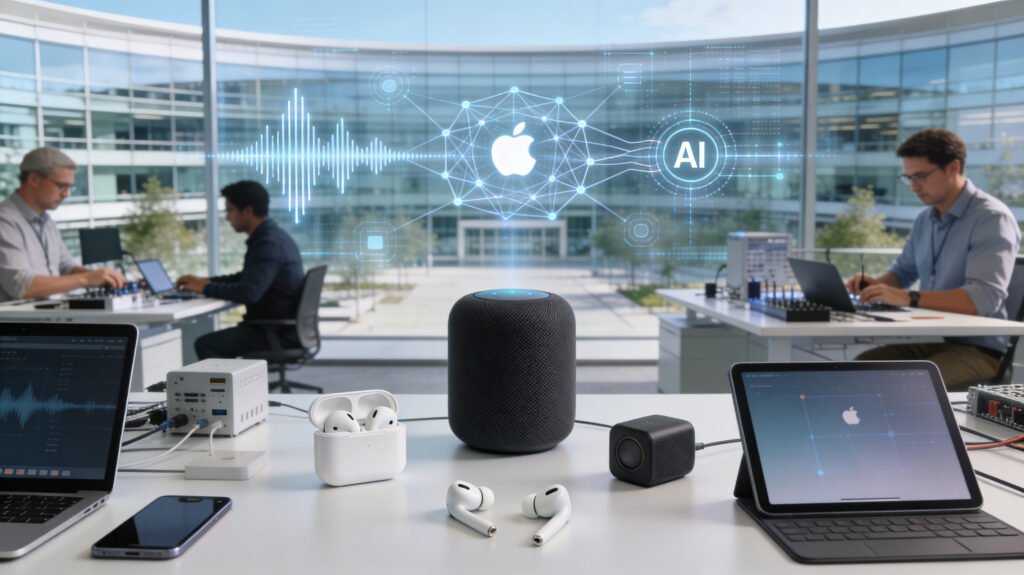
While Q.ai never publicly launched a product, investor disclosures suggest it focused on advanced audio processing and communication enhancement. This is very similar to the new AI features that Apple added to AirPods, such as smart noise cancellation and real-time translation.
By folding Q.ai’s technology into its hardware roadmap, Apple may accelerate improvements in spatial audio, voice interaction, and on-device intelligence. These improvements help Apple reach its bigger goal of making AI features that work smoothly, are private, and are tightly linked to its silicon and operating systems.
Recommended Article: Apple Partners with Google to Power AI Upgrade for Siri
Competitive Context in the AI Race
Apple is under more and more pressure as competitors put a lot of money into big AI models and cloud infrastructure. Some investors have wondered if Apple is going fast enough, especially since features like a more personalized Siri have been delayed.
The Q.ai deal strengthens Apple’s other strategy, which focuses on building intelligence into devices and making smart partnerships instead of making huge models. Recent collaboration with Google to use Gemini models for certain Apple Intelligence features further reflects this hybrid approach.
Long-Term Implications for Apple’s AI Strategy
Tim Cook, the CEO of Apple, has said many times that the company is open to mergers and acquisitions that speed up its plans. Q.ai seems to fit that philosophy perfectly. The deal makes Apple’s internal AI knowledge stronger without messing up its tightly controlled product development cycle.
Apple is adding AI to more and more hardware, audio, and user interactions. Acquisitions like Q.ai show that the company is building intelligence one piece at a time. This could mean fewer big announcements, but Apple’s devices will have more long-lasting competitive advantages built right in.