


PIDS Projects Moderate Philippine Economic Growth Through 2026
The Philippine Institute for Development Studies says that the economy will grow by 5% in 2025, even though there are problems at home and abroad. Recent predictions say that growth will pick up a little bit and reach 5.3% in 2026. Researchers say that the outlook is stable but open to a number of risks related to structure and governance.
During a public webinar put on by the state think tank, senior research fellow John Paolo Rivera showed what he thought would happen. He stressed that the forecasts from major multilateral organizations that keep an eye on economic trends in Southeast Asia should be in line with each other. The projections show cautious optimism in the face of ongoing uncertainties that are affecting investment and consumption across the country.
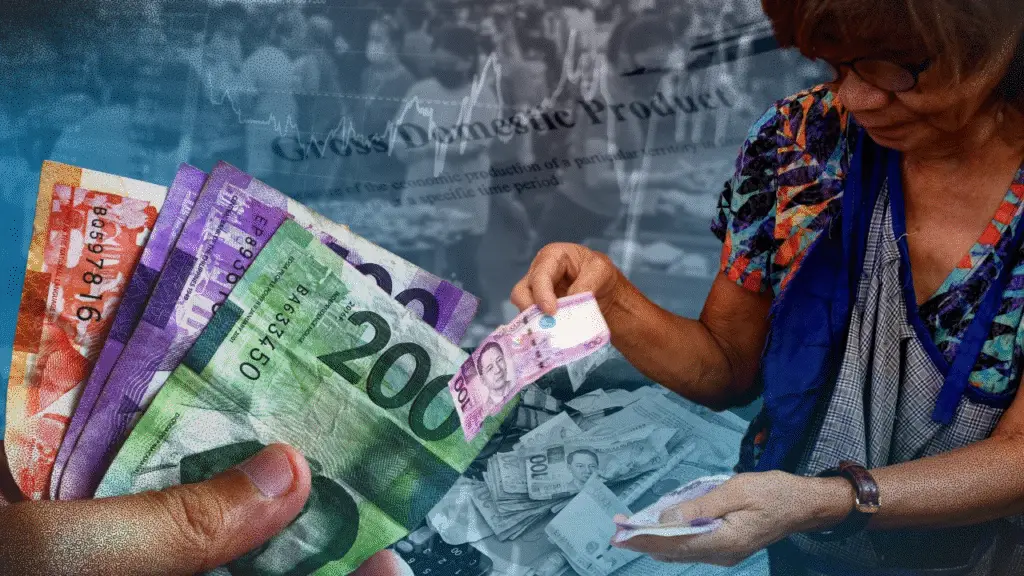
Source: Inquirer Business – Inquirer.net
Multilateral Lenders Confirm Similar Outlook for Philippine Growth
The Asian Development Bank also said that growth would be 5% in 2025 and 5.3% in 2026. Its December outlook said that spending on infrastructure would go down because of investigations into corruption in flood control projects. Even though the demographic fundamentals are strong, these financial constraints might slow down short-term growth.
The World Bank thought that growth would be 5.1% in 2025 and 5.3% in 2026. Analysts pointed out shocks in the country, such as natural disasters and investors being hesitant because of problems with governance. Both institutions warned that there were risks that could hurt medium-term development goals.
Government Unlikely to Meet Higher Growth Target Range
The Department of Economy Planning and Development said that goals between 5.5% and 6.5% are still unlikely to be met. Officials said that worries about corruption were making people less confident in business and less likely to spend money. Changes to forecasts suggest that people should be careful about their hopes for a quick improvement in the economy.
Planners of the economy said that public trust is still very important for reaching higher investment-driven growth goals. Even if monetary conditions are good, private capital inflows could stay low if confidence doesn’t return. Structural changes are still needed to bring projections and official growth goals closer together.
Recommended Article: UBS Predicts Global Economic Rebound in 2026 as Tariffs Ease
Economic Performance Remains Below Pre Pandemic Potential Levels
Rivera said that the current growth is still below the economy’s pre-pandemic expansion capacity, which was reached during previous cycles of development. He stressed that stability does not yet mean real economic change or progress driven by productivity. Comparing regions shows good results, but not enough convergence with peers who make more money.
During the first 9 months of 2025, the average growth of gross domestic product was 5%. The growth rate for the 3rd quarter dropped sharply to 4%, the lowest quarterly result in 4 years. This slowdown showed that there are still weaknesses in manufacturing, construction, and export-oriented sectors.
Governance Challenges Emerge as Dominant Long Term Economic Risk
PIDS found that governance and policy credibility were the biggest threats to future economic stability. Weak institutions make external shocks worse, while strong governance helps the economy recover faster and keeps investors’ trust. Rivera said that the quality of institutions has a bigger impact on long-term growth than short-term stimulus measures.
He said that good governance is the most effective way for developing economies to keep their economies stable. It draws in private investment without putting too much strain on the public debt or the budget. During times of political uncertainty and global market volatility, strong institutions also help people feel safe again.
Global Slowdown and Climate Risks Threaten Expansion Outlook
PIDS said that a slowing global economy and rising protectionism could make people want to buy fewer Philippine goods. Trade fragmentation could make it harder for regional supply chains to work together and make it less likely that people will invest in manufacturing. These trends could make it harder to create jobs and bring in foreign currency.
Climate shocks and rising food prices also put people’s buying power and agricultural productivity at risk. Extreme weather events are making it harder for people in rural areas to make money and for logistics networks to work across the country. Even though wages are expected to grow at a moderate rate, inflationary pressures may limit consumer spending.
Investment Recovery Remains Fragile Amid Credibility Concerns
Due to uncertainty about regulations and a loss of trust in governance, private investment recovery is still weak. Businesses are hesitant to invest long-term capital when the rules about how policies are enforced are not clear. Infrastructure projects that are delayed make the multiplier effects on regional economies even smaller.
PIDS said that rebuilding trust in institutions is still important for long-term development. If we had more open procurement systems and stricter rules against corruption, our finances would work much better. Projected growth rates may stay structurally capped for a few years if there is no reform momentum.